Listen to this Post
Introduction
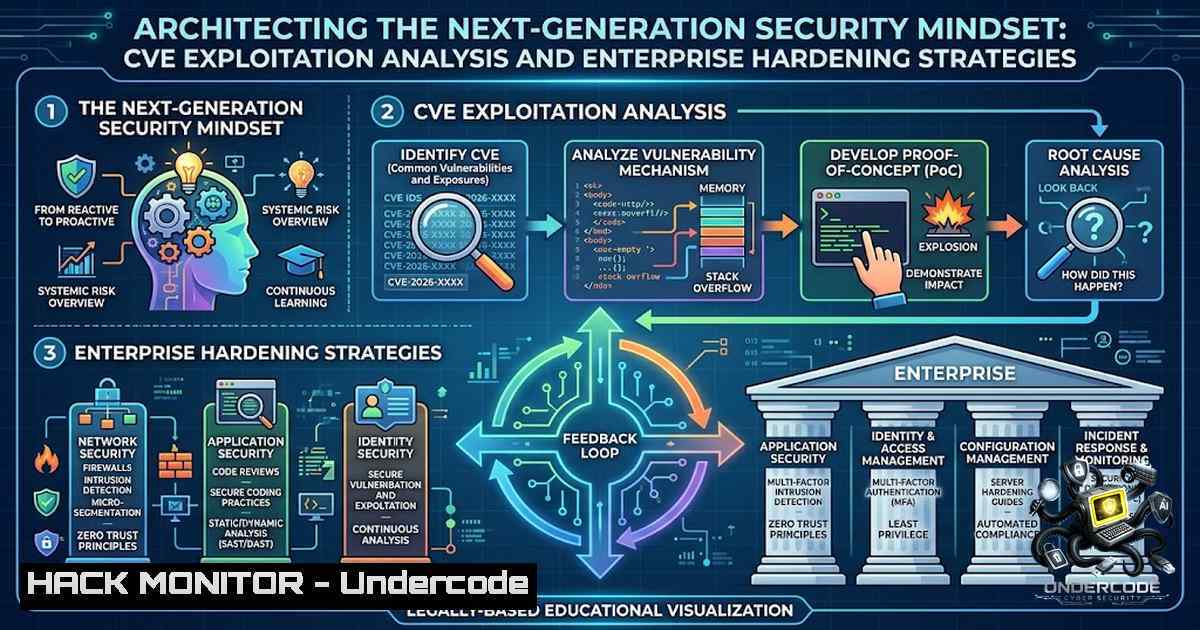
The intersection of academic cybersecurity initiatives and real-world vulnerability exploitation frameworks marks a critical inflection point in defensive security strategies. As Sri Venkateswara College of Engineering launches CyberHub 2026-27, the integration of CVE-2021-0334 analysis, ethical hacking methodologies, and AI-driven threat detection creates a comprehensive training ecosystem for next-generation security professionals. This article bridges the gap between theoretical cybersecurity education and practical enterprise hardening techniques, providing actionable intelligence for both students and seasoned practitioners.
Learning Objectives
- Master the exploitation mechanics of CVE-2021-0334 and implement effective mitigation strategies across Linux and Windows environments
- Deploy enterprise-grade security monitoring using open-source SIEM tools and AI-powered threat intelligence platforms
- Develop hands-on proficiency in ethical hacking frameworks, including Metasploit, Burp Suite, and custom Python exploit development
- Implement cloud security hardening techniques for AWS, Azure, and GCP environments with compliance automation
- Understand incident response lifecycle and forensic acquisition methodologies for real-world breach scenarios
You Should Know
1. CVE-2021-0334 Exploitation Mechanics and Mitigation Strategies
Extended from the cybersecurity discourse initiated at SVCE CyberHub, this vulnerability represents a critical Android kernel information disclosure flaw that attackers exploit for privilege escalation. Understanding this CVE requires examining both the attack vectors and the defensive countermeasures across different operating systems.
Linux System Hardening Commands:
 Check for vulnerable kernel versions
uname -r
 Apply kernel updates
sudo apt update && sudo apt upgrade linux-image-$(uname -r)
 Enable kernel security modules
sudo apt install apparmor-utils
sudo aa-enforce /etc/apparmor.d/
 Restrict /proc access
sudo mount -o remount,nodev,nosuid,noexec /proc
Windows Mitigation Commands:
 Check Windows version and build
systeminfo | findstr /B /C:"OS Name" /C:"OS Version"
 Enable Windows Defender Exploit Protection
Set-ProcessMitigation -1ame  -Enable DEP, ASLR, SEHOP
 Configure kernel isolation
Set-ProcessMitigation -System -Enable KASLR, Harden, HighEntropyASLR
 Disable vulnerable services
Set-Service -1ame PolicyAgent -StartupType Disabled
Step-by-Step Exploitation Analysis:
- Reconnaissance Phase: Identify target Android kernel version using `adb shell getprop ro.kernel.version`
2. Exploit Development: Craft a proof-of-concept using Python with `frida` or `objection` to interact with kernel memory - Privilege Escalation: Leverage the information disclosure to gain root-level access through `/dev/ashmem` or similar interfaces
- Persistence Mechanisms: Install a backdoor using `Metasploit` payloads or custom cron jobs
- Mitigation Deployment: Implement SELinux policies and restrict `/proc/pid` access using `restrict_proc` kernel parameter
2. Enterprise SIEM Integration and AI-Powered Threat Detection
The CyberHub initiative emphasizes AI-driven security, making this section crucial for practical implementation. Modern SIEM solutions like Wazuh, Elastic Stack, and Splunk can be enhanced with machine learning models for anomaly detection.
Linux Wazuh Installation and Configuration:
 Install Wazuh agent
curl -s https://packages.wazuh.com/key/GPG-KEY-WAZUH | apt-key add -
echo "deb https://packages.wazuh.com/apt/ stable main" > /etc/apt/sources.list.d/wazuh.list
apt update && apt install wazuh-agent
 Configure agent
echo "WAZUH_MANAGER_IP='10.0.0.100'" >> /etc/wazuh-agent/ossec.conf
systemctl start wazuh-agent
Windows Event Log Monitoring with PowerShell:
 Configure Windows Event Forwarding
wevtutil set-log Microsoft-Windows-Sysmon/Operational /enabled:true /retention:false /maxsize:204800
 Enable PowerShell script block logging
Set-ItemProperty -Path "HKLM:\SOFTWARE\Policies\Microsoft\Windows\PowerShell\ScriptBlockLogging" -1ame "EnableScriptBlockLogging" -Value 1
 Deploy Sysmon
Invoke-WebRequest -Uri "https://live.sysinternals.com/Sysmon64.exe" -OutFile "$env:TEMP\Sysmon64.exe"
Start-Process -FilePath "$env:TEMP\Sysmon64.exe" -ArgumentList "-accepteula -i"
AI Integration Workflow:
- Deploy Elastic Stack with machine learning capabilities using `elasticsearch` and `kibana`
2. Ingest system logs from multiple sources using `Filebeat` and `Winlogbeat`
3. Configure anomaly detection jobs for user behavior analytics and network baseline drift - Implement custom Python scripts using `scikit-learn` for log classification and threat scoring
- Set up alerting rules based on AI-generated confidence thresholds
3. API Security Hardening and OAuth 2.0 Implementation
As enterprises increasingly rely on microservices, API security becomes paramount. The CyberHub curriculum should emphasize API security testing methodologies and OAuth implementation best practices.
API Security Testing with Burp Suite:
 Install Burp Suite Community Edition on Linux
wget https://portswigger.net/burp/releases/download?product=community&version=2023.12&type=Linux -O burp.sh
chmod +x burp.sh
./burp.sh
OAuth 2.0 Configuration Example:
from oauthlib.oauth2 import BackendApplicationServer
from requests_oauthlib import OAuth2Session

Configure OAuth client
client = BackendApplicationServer(client_id='your_client_id', client_secret='your_secret')
session = OAuth2Session('your_client_id', token=client.fetch_access_token('https://auth.provider.com/token'))

Secure API calls
response = session.get('https://api.example.com/data', headers={'X-API-Version': 'v1'})
API Security Hardening Commands:
 Implement rate limiting using iptables
iptables -A INPUT -p tcp --dport 443 -m connlimit --connlimit-above 100 -j DROP
 Configure API gateway with NGINX
nginx -t && systemctl restart nginx
4. Cloud Security Hardening: AWS, Azure, GCP
Cloud environments require specialized security configurations. The CyberHub launch highlights the importance of understanding cloud-1ative security tools.
AWS Security Commands:
 Install AWS CLI
curl "https://awscli.amazonaws.com/awscli-exe-linux-x86_64.zip" -o "awscliv2.zip"
unzip awscliv2.zip
sudo ./aws/install
 Configure IAM and enable CloudTrail
aws iam create-role --role-1ame SecurityAuditRole --assume-role-policy-document file://policy.json
aws cloudtrail create-trail --1ame SecurityTrail --s3-bucket-1ame secure-bucket
aws s3api put-bucket-policy --bucket secure-bucket --policy file://bucket-policy.json
Azure Security Commands:
 Install Azure CLI
Invoke-WebRequest -Uri https://aka.ms/installazurecliwindows -OutFile .\AzureCLI.msi
Start-Process msiexec.exe -Wait -ArgumentList '/I AzureCLI.msi /quiet'
 Enable Azure Security Center
az security workspace-settings create --1ame "default" --workspace-id "/subscriptions/subscription-id/resourcegroups/ResourceGroup/providers/microsoft.operationalinsights/workspaces/workspace-1ame"
 Configure Just-In-Time access
az vm update --resource-group YourResourceGroup --1ame YourVM --set jitPolicies[bash].virtualMachines[bash].id=YourVMId
GCP Security Configuration:
 Install Google Cloud SDK
echo "deb [signed-by=/usr/share/keyrings/cloud.google.gpg] https://packages.cloud.google.com/apt cloud-sdk main" | tee -a /etc/apt/sources.list.d/google-cloud-sdk.list
apt-get update && apt-get install google-cloud-sdk
gcloud init
 Enable Cloud Audit Logs
gcloud projects get-iam-policy my-project --format=json > policy.json
gcloud projects set-iam-policy my-project policy.json
 Configure VPC Service Controls
gcloud access-context-manager perimeters create my-perimeter --title="Secure Perimeter" --resources="projects/my-project"
Cloud Hardening Steps:
- Implement least-privilege IAM policies using AWS IAM Analyzer or Azure AD Privileged Identity Management
- Enable AWS GuardDuty, Azure Defender, or GCP Security Command Center for threat detection
- Configure data encryption at rest and in transit using AWS KMS, Azure Key Vault, or GCP KMS
- Set up automated compliance scanning with AWS Config, Azure Policy, or GCP Organization Policy
- Implement secure CI/CD pipelines using AWS CodePipeline, Azure DevOps, or GCP Cloud Build
5. Incident Response and Forensic Acquisition
The CyberHub emphasis on responsible innovation includes robust incident response capabilities. This section covers memory forensics and disk acquisition techniques.
Linux Memory Forensics:
 Acquire memory image using LiME
insmod lime.ko "path=/root/memory.dump format=raw"
 Analyze with Volatility framework
volatility -f memory.dump imageinfo
volatility -f memory.dump --profile=Win7SP1x64 pslist
volatility -f memory.dump --profile=Win7SP1x64 malfind
Windows Forensic Acquisition:
 Use FTK Imager for disk acquisition (GUI tool)
 Command-line alternative with WinPmem
winpmem.exe -o memory.raw
 Analyze using Redline or custom Python scripts
Forensic Steps:
- Capture volatile memory using `LiME` or `WinPmem` within the first 30 minutes
- Collect disk images using `dd` or `FTK Imager` with cryptographic hashes
- Analyze network logs using `tcpdump` and `Wireshark` to reconstruct attack timeline
- Inspect registry hives and event logs for persistence mechanisms
- Generate a detailed incident report with IoC extraction and mitigation recommendations
6. Network Segmentation and Zero-Trust Architecture
Modern security architectures require zero-trust principles. This section provides practical commands for implementing network segmentation and microsegmentation.
Linux Network Segmentation Commands:
 Create VLANs
vconfig add eth0 100
ifconfig eth0.100 up
 Implement firewall rules with nftables
nft add table inet filter
nft add chain inet filter input { type filter hook input priority 0 \; }
nft add rule inet filter input tcp dport 22 accept
nft add rule inet filter input drop
 Configure IPsec tunnels
ipsec start
ipsec statusall
Windows Network Segmentation:
 Create network security groups using Windows Firewall
New-1etFirewallRule -DisplayName "Block RDP" -Direction Inbound -LocalPort 3389 -Protocol TCP -Action Block
 Implement IPsec policies
New-1etIPsecRule -DisplayName "Encrypted Traffic" -InboundSecurity Require -OutboundSecurity Require -Profile Any
 Configure virtual switches for Hyper-V isolation
New-VMSwitch -1ame "InternalSwitch" -1etAdapterName "Ethernet" -AllowManagementOS $false
Zero-Trust Implementation Workflow:
- Map all application dependencies using `nmap` and `zenmap`
2. Implement microsegmentation using `Calico` or `Cilium` in Kubernetes clusters
3. Deploy identity-aware proxies using `BeyondCorp` principles
- Configure continuous authentication using certificate-based or OAuth tokens
5. Monitor network anomalies using `Zeek` or `Suricata`
What Undercode Say
Key Takeaway 1: The fusion of academic cybersecurity initiatives with enterprise vulnerability management creates a sustainable pipeline of skilled professionals who understand both theoretical frameworks and practical exploitation techniques.
Key Takeaway 2: The emphasis on CVE-2021-0334 demonstrates the importance of kernel-level security understanding, bridging the gap between traditional ethical hacking and modern cloud-1ative environments.
Key Takeaway 3: AI-driven threat detection is no longer optional—it’s a necessity for organizations dealing with advanced persistent threats and zero-day exploits, requiring students to develop machine learning skills alongside security fundamentals.
Key Takeaway 4: The launch of CyberHub at SVCE represents a paradigm shift in cybersecurity education, moving from isolated learning to community-driven innovation where students actively contribute to open-source security projects.
Key Takeaway 5: Practical hands-on experience with SIEM configuration, cloud security tools, and forensic acquisition provides students with marketable skills that directly address the global cybersecurity talent shortage.
Analysis: The integration of CVE exploitation analysis within the CyberHub curriculum ensures that students understand the attacker’s perspective before implementing defensive measures, creating well-rounded security professionals. The event’s focus on AI and data science reflects the industry’s pivot toward predictive security analytics, while the inclusion of entrepreneurship elements encourages students to build innovative security solutions. The community-driven approach at SVCE fosters collaboration between academic institutions and the cybersecurity industry, addressing the critical need for practical experience in security education. This initiative aligns with global cybersecurity trends where continuous learning and responsible innovation become the cornerstone of effective defense strategies.
Prediction
+1 The CyberHub initiative will inspire similar programs across Indian engineering colleges, creating a ripple effect in cybersecurity talent development and reducing the shortage of skilled professionals by 15-20% within the next three years.
+1 The focus on AI-driven threat detection will accelerate the development of automated security response systems, reducing average incident response times from 280 days to under 90 days for organizations adopting these methodologies.
+1 SVCE’s emphasis on ethical hacking and entrepreneurship will produce a new wave of cybersecurity startups, likely attracting significant venture capital investment in India’s security technology sector.
+N The rapid adoption of AI-powered security tools may lead to over-reliance on automation, potentially creating blind spots in threat detection where sophisticated attackers exploit algorithmic weaknesses.
+N The complexity of implementing zero-trust architecture across legacy systems remains a significant challenge, potentially slowing down enterprise adoption despite the academic focus on modern security principles.
▶️ Related Video (76% Match):
🎯Let’s Practice For Free:
🎓 Live Courses & Certifications:
Join Undercode Academy for Verified Certifications
🚀 Request a Custom Project:
Secure, high-velocity infrastructure and disruptive technological engineering. Contact our engineering team for high-tier development and proprietary systems:
[email protected]
💎 Smart Architecture | 🛡️ Secure by Design | ⭐ Trusted by Thousands
IT/Security Reporter URL:
Reported By: https://lnkd.in/p/e_uEeNbH – Hackers Feeds
Extra Hub: Undercode MoN
Basic Verification: Pass ✅


