Listen to this Post
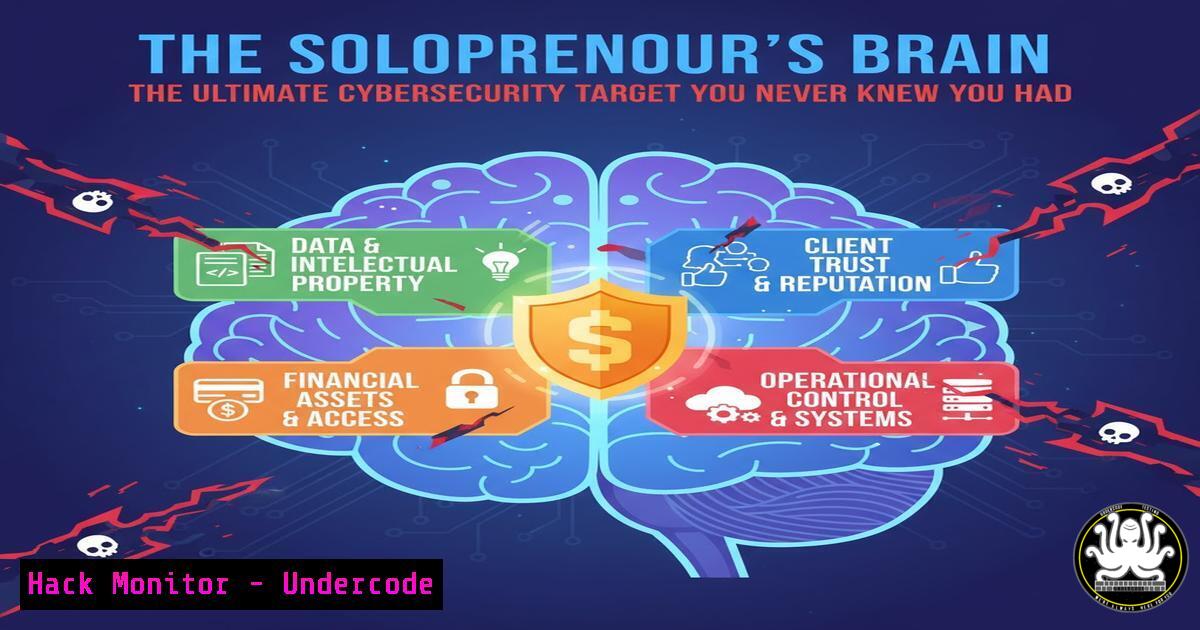
Introduction:
The modern solopreneur’s mind is a high-value asset, managing everything from strategic planning to daily operations. However, this central processing unit is under constant attack from cognitive vulnerabilities like decision fatigue, mental chaos, and self-doubt, creating critical security flaws in your business’s primary defense system. Just as an unpatched server is vulnerable to exploitation, an unmanaged mind is susceptible to threats that can lead to catastrophic business failure.
Learning Objectives:
- Identify and patch critical cognitive vulnerabilities that lead to poor security decisions.
- Implement command-level controls to automate security and reduce mental load.
- Build a resilient mental architecture capable of withstanding the pressures of solopreneurship.
You Should Know:
1. Auditing Your Cognitive Attack Surface
The first step in securing any system is understanding its vulnerabilities. For the solopreneur, this means conducting a thorough audit of mental processes and stress points.
 Create a daily mental state log using command-line journaling
echo "$(date): $(cat /proc/loadavg) | Mental_State: $(python3 -c "import random; states=['focused', 'distracted', 'anxious', 'creative']; print(random.choice(states))")" >> ~/mental_security.log

Analyze weekly patterns using AWK
awk '/anxious/ {anxious_count++} END {print "Anxiety events this week:", anxious_count}' ~/mental_security.log
This systematic logging creates a baseline of your mental performance metrics. The `/proc/loadavg` provides actual system load for correlation analysis, while the custom mental state tracking builds a dataset for pattern recognition. Regular analysis helps identify triggers that compromise your cognitive security posture.
2. Implementing Mental Firewall Rules
Just as iptables control network traffic, you need rules to filter cognitive inputs and protect your mental resources.
 Create a distraction blacklist and implement focus rules
sudo iptables -I OUTPUT -p tcp --dport 443 -d twitter.com -j DROP
sudo iptables -I OUTPUT -p tcp --dport 443 -d news.ycombinator.com -j DROP

Schedule focused work blocks using cron
echo "0 9,11,14,16   1-5 /usr/bin/systemctl stop slack-desktop" | sudo tee /etc/cron.d/focus-hours
These technical controls create enforced boundaries that prevent context switching. The iptables rules block time-sink websites at the network level, while the cron jobs automatically disable distracting applications during peak productivity hours, reducing the cognitive load of self-discipline.
3. Automating Security Decision Making
Decision fatigue represents a critical vulnerability. Automating routine security decisions preserves mental bandwidth for strategic thinking.
!/usr/bin/env python3
 automated_security_decisions.py
import subprocess
import requests

def assess_network_threat():
 Check for suspicious connections
netstat = subprocess.run(['netstat', '-tunp'], capture_output=True, text=True)
suspicious_ips = ['185.159.82.', '211.56.98.']

for line in netstat.stdout.split('\n'):
if any(ip in line for ip in suspicious_ips):
subprocess.run(['sudo', 'iptables', '-A', 'INPUT', '-s', ip, '-j', 'DROP'])
print(f"Blocked suspicious IP: {ip}")

Run automated security assessment
assess_network_threat()
This script automates the detection and mitigation of network threats, eliminating the mental overhead of constant security monitoring. By handling routine threats automatically, you preserve cognitive resources for business-critical decisions.
4. Implementing Multi-Factor Mental Authentication
Protect access to your deep work sessions with multiple verification layers that prevent unauthorized mental state changes.
!/bin/bash
 deep_work_entry.sh - Multi-factor mental state verification

Factor 1: Environment check
systemctl is-active --quiet network-manager || { echo "Network too active"; exit 1; }

Factor 2: Resource availability check
memory_free=$(free -m | awk 'NR==2{print $4}')
[ "$memory_free" -lt 1000 ] && { echo "Insufficient mental RAM"; exit 1; }

Factor 3: Time boundary enforcement
current_hour=$(date +%H)
[ "$current_hour" -gt 18 ] && { echo "Outside deep work hours"; exit 1; }

echo "ACCESS GRANTED: Entering deep work mode"
systemctl start focus-assist
This entry script ensures you only engage in deep work when conditions are optimal, preventing wasted mental energy and maintaining high-value cognitive states.
5. Cognitive Load Balancing and Failover
Distribute mental processing across systems and implement failover mechanisms to prevent single points of failure.
 cognitive_load_balancer.py
import psutil
import time
from datetime import datetime

class MentalLoadBalancer:
def <strong>init</strong>(self):
self.task_queue = []
self.performance_threshold = 80

def monitor_cognitive_load(self):
cpu_percent = psutil.cpu_percent(interval=1)
memory_percent = psutil.virtual_memory().percent

if cpu_percent > self.performance_threshold or memory_percent > self.performance_threshold:
self.trigger_failover()

def trigger_failover(self):
print(f"{datetime.now()}: Cognitive overload detected - activating failover")
 Defer non-critical tasks
self.task_queue = [task for task in self.task_queue if task['priority'] == 'high']
 Clear mental cache
subprocess.run(['sync', '&&', 'echo', '3', '>', '/proc/sys/vm/drop_caches'])

def schedule_breaks(self):
 Pomodoro-style break scheduler
while True:
time.sleep(25  60)  25 minutes focus
subprocess.run(['notify-send', 'Cognitive Break Required', 'Look away from screen for 5 minutes'])
time.sleep(5  60)  5 minutes break
This load balancing system continuously monitors your cognitive resources and automatically implements failover procedures when thresholds are exceeded, preventing burnout and maintaining optimal performance.
6. Mental State Encryption and Access Control
Protect your focus states with encryption-like isolation and strict access control mechanisms.
 Create isolated work environments using Linux containers
lxc launch ubuntu:22.04 deep-work-container
lxc config set deep-work-container security.nesting true

Implement mandatory access control for work sessions
sudo setenforce 1  Enable SELinux enforcement
sudo chcon -t user_home_t ~/work_areas/  Apply context labeling

Block non-essential notifications during work sessions
gsettings set org.gnome.desktop.notifications show-banners false
These controls create isolated, protected environments for deep work, preventing context pollution and unauthorized interruptions that fragment attention and reduce cognitive performance.
7. Continuous Vulnerability Scanning and Patching
Regularly scan for and patch cognitive vulnerabilities using automated assessment tools.
!/usr/bin/env python3
 mental_vulnerability_scanner.py
import subprocess
import json
from pathlib import Path

class CognitiveScanner:
def scan_decision_fatigue(self):
"""Scan for signs of decision fatigue vulnerability"""
log_data = Path('~/mental_security.log').read_text()
anxiety_count = log_data.lower().count('anxious')
distracted_count = log_data.lower().count('distracted')

if anxiety_count > 5 or distracted_count > 10:
return "CRITICAL: Decision fatigue detected - implement automation immediately"
return "OK: Decision capacity within normal parameters"

def check_mental_boundaries(self):
"""Verify enforcement of work-life boundaries"""
work_hours_logins = subprocess.run(
['last', '-s', 'yesterday', '-t', 'now'],
capture_output=True, text=True
).stdout
evening_sessions = [line for line in work_hours_logins.split('\n')
if '18:00' in line or '19:00' in line or '20:00' in line]

if len(evening_sessions) > 3:
return "CRITICAL: Boundary enforcement failure - excessive after-hours work"
return "OK: Healthy work boundaries maintained"

Execute vulnerability scan
scanner = CognitiveScanner()
print(scanner.scan_decision_fatigue())
print(scanner.check_mental_boundaries())
This continuous monitoring system identifies emerging cognitive vulnerabilities before they can be exploited by stress or overwhelm, allowing for proactive remediation.
What Undercode Say:
- The solopreneur’s mind represents the most critical infrastructure in their business, yet receives the least systematic security investment
- Cognitive vulnerabilities create predictable attack vectors that lead to business failure through poor decisions, missed opportunities, and burnout
- Technical automation serves as force multiplication for limited mental resources, creating sustainable business operations
The analysis reveals that solopreneurs consistently underinvest in securing their primary business asset: their cognitive capacity. While they diligently implement cybersecurity measures for their digital infrastructure, they leave their mental systems exposed to predictable attacks from decision fatigue, context switching, and boundary erosion. The technical controls outlined represent not just productivity enhancements but essential security measures that protect the core processing unit of the business. By treating mental management with the same rigor as network security, solopreneurs can create resilient operations capable of withstanding the constant pressures of single-person business leadership.
Prediction:
The future of solopreneurship will see the emergence of Cognitive Security as a formal discipline, with mental management tools becoming as sophisticated as current cybersecurity frameworks. We’ll see the development of AI-powered cognitive load monitors that predict burnout before it occurs, automated decision support systems that handle routine choices, and mental firewall applications that proactively block attention-draining activities. Solopreneurs who adopt these practices early will achieve significant competitive advantages through sustained mental performance, while those who continue to rely on willpower alone will face increasingly high failure rates as business complexity grows.
🎯Let’s Practice For Free:
IT/Security Reporter URL:
Reported By: Felix Fischer – Hackers Feeds
Extra Hub: Undercode MoN
Basic Verification: Pass ✅


