Listen to this Post
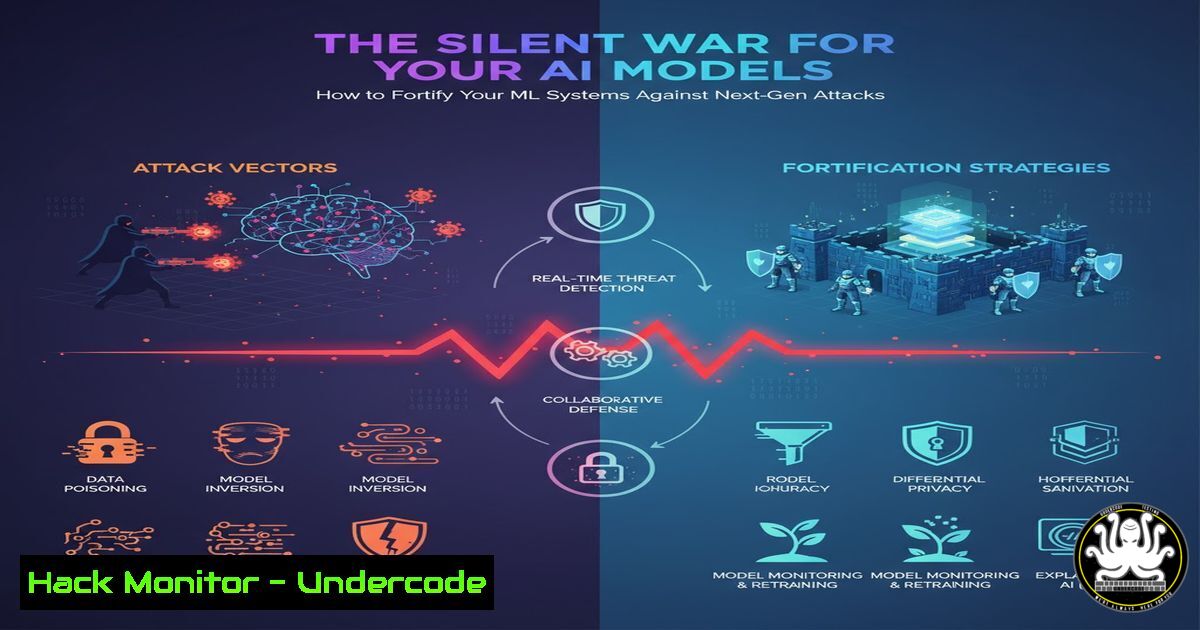
Introduction:
The recruitment of top-tier AI security talent, as exemplified by Cylert’s recent acquisition of Hesham Hanfy, signals a critical shift in the cybersecurity landscape. Organizations are no longer just defending traditional network perimeters; they are now actively fortifying their machine learning (AI/ML) systems against a new class of sophisticated threats. This article delves into the practical steps needed to secure your AI assets, from data pipelines to production models.
Learning Objectives:
- Understand the top three vulnerability surfaces in a modern MLOps pipeline.
- Learn actionable commands and configurations to harden your AI training and inference environments.
- Implement monitoring to detect data poisoning, model evasion, and model theft attempts.
You Should Know:
1. Securing Your AI Training Data Pipeline
The integrity of your AI model is entirely dependent on the integrity of its training data. Adversaries can inject poisoned or biased data to manipulate model behavior, a threat known as Data Poisoning. This is often the first and most damaging attack vector.
Step‑by‑step guide explaining what this does and how to use it.
Step 1: Implement Data Provenance and Hashing. Track the origin of every data sample and use cryptographic hashes to detect tampering.
Linux Command (Generate SHA-256 hash):
sha256sum training_data.csv
Store this hash in a secure log. Any future change to the file will result in a different hash, alerting you to potential tampering.
Step 2: Validate and Sanitize Input Data. Use automated scripts to check for outliers, inconsistencies, and maliciously crafted inputs before they enter the training pipeline.
Python Snippet (Basic Anomaly Check):
import pandas as pd
from sklearn.ensemble import IsolationForest

Load your dataset
data = pd.read_csv('training_data.csv')
 Initialize the anomaly detector
clf = IsolationForest(contamination=0.01)
preds = clf.fit_predict(data)
 Filter out anomalies (where prediction == -1)
clean_data = data[preds != -1]
clean_data.to_csv('clean_training_data.csv', index=False)
This uses an isolation forest to identify and remove anomalous data points that could be poison.
Step 3: Enforce Strict Access Controls. The data pipeline should be isolated. Use Role-Based Access Control (RBAC) to ensure only authorized personnel and systems can modify training datasets.
2. Hardening the Model Inference API
The endpoint where your model serves predictions is a prime target for attacks like Model Evasion (Adversarial Examples) and Model Stealing.
Step‑by‑step guide explaining what this does and how to use it.
Step 1: Implement Robust Input Validation. Never trust user input directly. Define strict schemas for the type, range, and size of input data.
Example using a Python Flask API:
from flask import request, jsonify
from pydantic import BaseModel, ValidationError, conlist
import numpy as np

Define a strict input schema
class ModelInput(BaseModel):
features: conlist(float, min_items=10, max_items=10)  Must be exactly 10 floats

@app.route('/predict', methods=['POST'])
def predict():
try:
data = request.get_json()
user_input = ModelInput(data)
 Convert to numpy array for model
input_array = np.array(user_input.features).reshape(1, -1)
prediction = model.predict(input_array)
return jsonify({'prediction': prediction.tolist()})
except ValidationError as e:
return jsonify({'error': 'Invalid input format'}), 400
This prevents attackers from sending malformed payloads that could crash the API or exploit underlying code.
Step 2: Rate Limiting and Throttling. Protect your API from being overwhelmed by automated queries aimed at model stealing or denial-of-service.
Using Flask-Limiter:
from flask_limiter import Limiter
from flask_limiter.util import get_remote_address

limiter = Limiter(app, key_func=get_remote_address)

@app.route('/predict', methods=['POST'])
@limiter.limit("100 per hour")  Max 100 requests per hour per IP
def predict():
 ... prediction logic ...
3. Preventing Model Theft and Unauthorized Access
Your trained model is a valuable intellectual property asset. Attackers can reverse-engineer it or steal it directly if not properly protected.
Step‑by‑step guide explaining what this does and how to use it.
Step 1: Obfuscate and Protect Model Files. On your deployment server, make it difficult to directly access the model file.
Linux Command (Set restrictive file permissions):
chmod 600 my_model.h5 Read/write for owner only, no access for group/others
This ensures that even if an attacker gains access to the server filesystem, they cannot easily copy the model file.
Step 2: Use API-based Access Exclusively. Do not allow direct script access to the model in production. All interactions must go through the secured, rate-limited API.
Step 3: Monitor for Abnormal Query Patterns. A sudden, high volume of queries with systematically varied inputs is a strong indicator of a model stealing attempt. Trigger alerts based on rate-limiting breaches and query pattern analysis.
4. Cloud Infrastructure Hardening for MLOps
The cloud platform hosting your MLOps pipeline must be configured securely to prevent lateral movement and data exfiltration.
Step‑by‑step guide explaining what this does and how to use it.
Step 1: Principle of Least Privilege for IAM. The compute instances running your training jobs or API should have only the minimum permissions they need.
AWS CLI Command to Attach a Minimal Policy to an IAM Role:
aws iam put-role-policy --role-name MyMLRole --policy-name S3ReadOnly --policy-document file://s3-read-only-policy.json
The `s3-read-only-policy.json` file would contain a policy granting only `s3:GetObject` for a specific bucket, not full S3 access.
Step 2: Network Segmentation. Place your training environment and model registry in private subnets, isolated from the public internet. Only the inference API endpoint should be in a public subnet, protected by a Web Application Firewall (WAF).
- Continuous Monitoring for Model Drift and Adversarial Activity
Security is not a one-time setup. Continuous monitoring is essential to detect when a model’s performance degrades (drift) or when it is under active attack.
Step‑by‑step guide explaining what this does and how to use it.
Step 1: Implement Canary Deployments. Deploy new models to a small percentage of traffic initially. Monitor for performance drops or unexpected outputs that might indicate the new model is vulnerable or the data has drifted.
Step 2: Log and Analyze All Predictions. Log the inputs, outputs, and confidence scores of a sample of predictions.
Linux Command to monitor logs in real-time:
tail -f /var/log/ml-api.log | grep -i "error|confidence_low"
Set up alerts in your SIEM (e.g., Elasticsearch, Splunk) for a sudden increase in low-confidence predictions, which can signal adversarial examples.
What Undercode Say:
- The hiring of specialized AI security professionals is a leading indicator, not a lagging one. It means forward-thinking companies are building defenses for attacks that are still in their infancy on the open market.
- The battleground has moved from the network layer to the data and algorithm layer. Protecting the model is as critical as protecting the source code.
Analysis:
Cylert’s move to onboard Hesham Hanfy is a microcosm of a major industry pivot. It’s no longer sufficient to have generic cybersecurity teams; the unique nature of AI threats—data poisoning, model inversion, adversarial attacks—demands specialized knowledge. This signifies a maturation of the AI industry, moving from a pure “build and deploy” mindset to a “build, secure, and defend” lifecycle. Companies that delay investing in this specific expertise are building their AI castles on digital sand. They are vulnerable not just to having their IP stolen, but to having their core business logic subtly manipulated by competitors or malicious actors, leading to catastrophic failures in automated decision-making.
Prediction:
Within the next 18-24 months, we will witness the first major, publicized cyber incident centered on the deliberate compromise of a commercial AI system. This will not be a simple data breach, but an attack that causes significant financial or reputational damage by manipulating the AI’s behavior—for example, a trading algorithm being subtly altered to benefit an attacker, or a content recommendation engine being poisoned to spread disinformation. This event will act as a global catalyst, making AI Security not a niche specialization but a non-negotiable requirement for any enterprise using machine learning, driving a massive surge in demand for tools and talent in this space.
🎯Let’s Practice For Free:
IT/Security Reporter URL:
Reported By: Cylert Join – Hackers Feeds
Extra Hub: Undercode MoN
Basic Verification: Pass ✅


