Listen to this Post
Introduction:
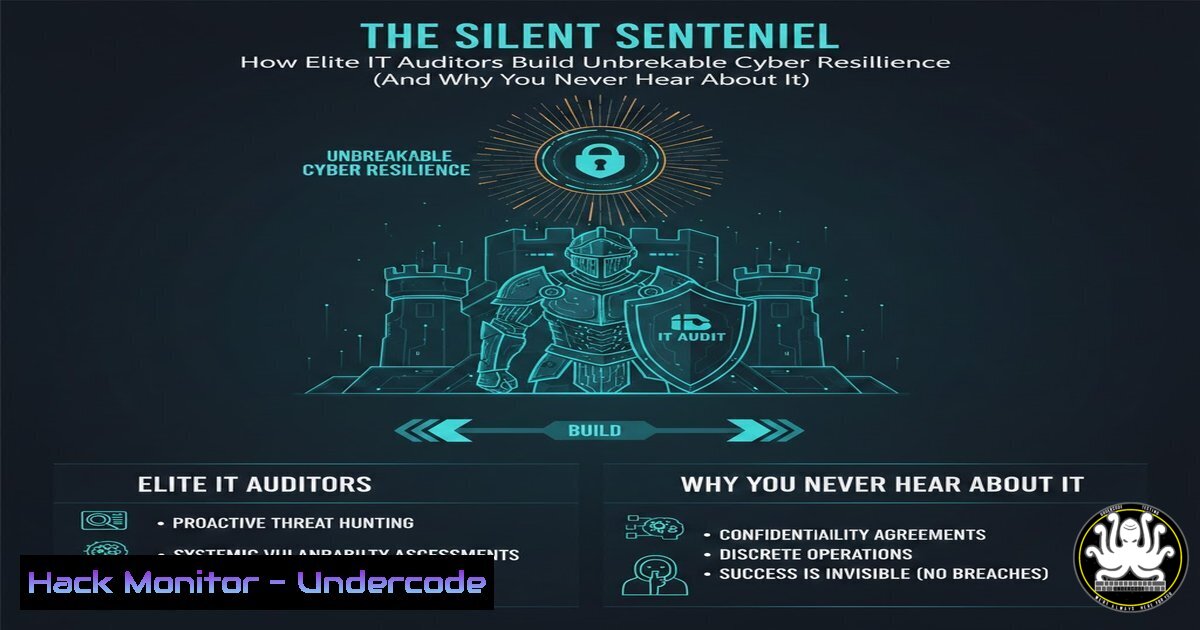
In the high-stakes world of cybersecurity, the most profound success is often marked by silence—no breaches, no headlines, and no operational chaos. This quiet continuity is the ultimate deliverable of a masterful IT audit function. Moving beyond mere compliance checklists, modern IT auditing embodies a deep, contextual understanding of risk, system intent, and organizational resilience. This article deconstructs the mindset and technical practices that transform IT auditors from passive reviewers into proactive architects of enterprise security.
Learning Objectives:
- Understand the shift from compliance-based auditing to risk-contextual and intent-based system analysis.
- Learn practical, technical methodologies for auditing critical security controls across infrastructure, cloud, and identity management.
- Develop a continuous learning framework to ask better security questions and identify hidden vulnerabilities before they are exploited.
You Should Know:
1. From Checklist to Context: Auditing System Intent
The foundational shift in modern IT auditing is analyzing why a system exists and how it operates, not just if it meets a static control requirement. This involves understanding data flows, privilege boundaries, and business logic to assess real-world risk.
Step-by-step guide:
- Map the Data Flow: Use tools like `traceroute` (Linux/macOS) or `tracert` (Windows) and diagramming software to visualize how data moves through an application or network.
`traceroute example.com`
`tracert example.com`
- Identify Trust Boundaries: Pinpoint where data crosses between trust zones (e.g., from public internet to DMZ, from DMZ to internal network). Review firewall (FW) and network access control (NAC) rules at these boundaries.
Linux: `sudo iptables -L -n -v` (ornft list ruleset)
Windows: `netsh advfirewall firewall show rule name=all`
- Analyze for Business Logic Flaws: Manually review application workflows. Ask: “Can this approved process be abused?” Example: Test if a “file upload” function accepts executable files, or if a “limit” on transactions can be bypassed by rapid API calls.
-
The Art of the Question: Technical Discovery Through Inquiry
Effective auditing is guided by incisive, open-ended questions that reveal architectural assumptions and hidden weaknesses.
Step-by-step guide:
1. For Cloud Infrastructure (e.g., AWS):
Question: “Is this S3 bucket truly private, and are access logs enabled?”
Verification Command: `aws s3api get-bucket-acl –bucket NAME` and `aws s3api get-bucket-logging –bucket NAME`
2. For Identity Management:
Question: “Do we have dormant accounts with elevated privileges?”
Verification (Azure AD via PowerShell): `Get-AzureADUser -All $true | Where-Object {$_.AccountEnabled -eq $false} | Get-AzureADUserMembership`
3. For System Hardening:
Question: “Are these servers configured to the organization’s security baseline?”
Verification: Use audit scripts or SCAP (Security Content Automation Protocol) tools like OpenSCAP to check against benchmarks like CIS (Center for Internet Security).
3. Hands-On Control Testing: Beyond Policy Review
Theoretical controls are meaningless without testing. This involves active validation of security mechanisms.
Step-by-step guide: Testing Endpoint Detection & Response (EDR) Rules:
1. Create a Safe Test Indicator: Generate a known-bad file hash (e.g., using `md5sum` / `Get-FileHash` on a dummy file) and add it to your EDR’s block list.
Linux: `md5sum testfile.txt`
Windows PowerShell: `Get-FileHash .\testfile.txt -Algorithm MD5`
- Stage the Test: Attempt to execute, copy, or download a file with that hash onto a monitored endpoint.
- Verify the Alert: Confirm the EDR console logs the detection and triggers the configured response (alert, quarantine, block). Document the time-to-detect and efficacy of response.
4. Auditing API Security: The Invisible Attack Surface
APIs are critical yet often overlooked. Auditors must examine authentication, authorization, rate limiting, and input validation.
Step-by-step guide:
- Enumerate Endpoints: Use tools like `curl` or Postman to discover API endpoints, noting those that handle sensitive actions (POST, PUT, DELETE).
`curl -X GET https://api.example.com/v1/users -H “Authorization: Bearer“`
2. Test for Broken Object Level Authorization (BOLA): If you have access to object ID (e.g.,/users/123), try accessing `/users/456` with the same token. - Check for Excessive Data Exposure: Call a general endpoint and see if it returns more data than the client needs (e.g., full user records, internal IDs).
- Assess Rate Limiting: Hammer a login or OTP endpoint with rapid requests using a script or tool like `siege` to test for denial-of-service risk.
5. Continuous Learning & Threat Intelligence Integration
An auditor’s knowledge must evolve with the threat landscape. This means integrating threat intel feeds into the audit plan.
Step-by-step guide:
- Subscribe to Feeds: Follow CISA’s Known Exploited Vulnerabilities (KEV) catalog, vendor advisories, and industry sources.
- Map Intel to Your Environment: Use a vulnerability scanner or asset inventory to check if newly disclosed critical vulnerabilities (e.g., a zero-day in an enterprise VPN) exist in your audited scope.
Example command for internal scanning (using a tool likenmap): `nmap -sV –script vuln`
3. Pressure-Test Compensating Controls: If a critical patch cannot be immediately applied, audit the compensating controls (e.g., network segmentation, WAF rules) to validate if they truly mitigate the exploit. -
Communicating Risk: From Technical Finding to Business Impact
The final, crucial skill is translating technical vulnerabilities into business risk for leadership.
Step-by-step guide:
- Quantify the Impact: Don’t just state “Missing patch.” Frame it: “This unpatched vulnerability (CVSS 9.8) in the public-facing web server allows remote code execution, posing a high risk of data breach and operational shutdown.”
- Recommend Actionable, Prioritized Remediation: Provide clear steps, owners, and timelines. Link findings directly to compliance requirements (GDPR, HIPAA, PCI DSS) or strategic business objectives.
- Follow the Evidence Chain: Maintain detailed workpapers—screenshots, command outputs, tool reports—to support every finding and demonstrate due professional care.
What Undercode Say:
- Silence is the Artifact of Mastery. The highest-value security work is prophylactic; it prevents incidents before they occur. A robust IT audit function is the silent sentinel that enables this peace, building trust through rigorous, unseen diligence.
- Context is the Killer Control. A control assessed without understanding the system’s intent and the adversary’s incentives is a checkbox, not a safeguard. Elite auditors think like both architects and attackers, evaluating how systems actually work versus how they were designed to work.
Analysis:
Victor Anene’s reflection captures the maturation of IT auditing from a necessary compliance evil to a core strategic discipline. The “silence” of no breaches is not luck; it’s the direct output of this evolved practice. This philosophy aligns with the “assume breach” and “zero trust” mindsets, where continuous validation is paramount. The modern auditor must be a polymath: part detective, part translator, and part ethical hacker. Their tools are no longer just spreadsheets and policies, but also command-line interfaces, API testing tools, and threat intelligence platforms. This technical depth, combined with the soft skill of asking profound questions, allows them to uncover the subtle misconfigurations and logical flaws that automated scanners miss. In an era of AI-powered threats, this human-centric, inquisitive, and technically-grounded approach to assurance is becoming the most critical line of defense.
Prediction:
The role of the IT auditor will increasingly converge with that of the security engineer and threat hunter. As AI automates routine scanning and compliance reporting, the human auditor’s value will pivot entirely to high-context analysis, adversarial simulation, and strategic risk counseling. We will see a surge in demand for auditors who can write scripts, interpret offensive security tool output, and audit AI systems themselves for fairness, bias, and security. The “silent” impact will grow louder in boardrooms, with audit findings directly shaping cybersecurity investment and cyber insurance terms, making the auditor a central figure in the C-suite’s strategic resilience planning.
▶️ Related Video (72% Match):
🎯Let’s Practice For Free:
IT/Security Reporter URL:
Reported By: Victor Anene – Hackers Feeds
Extra Hub: Undercode MoN
Basic Verification: Pass ✅


