
Listen to this Post
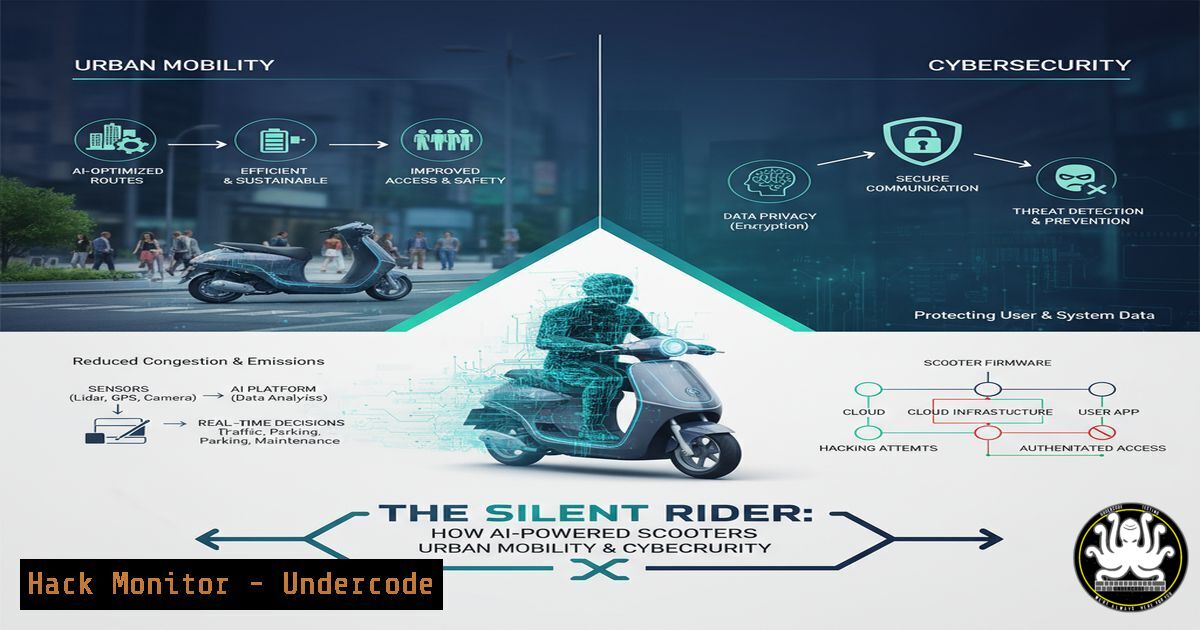
Introduction:
The advent of AI-powered self-driving scooters marks a significant leap in urban mobility, transitioning autonomous technology from the enclosed world of cars to the more vulnerable and dynamic realm of personal transporters. This evolution is not just a feat of engineering but a complex convergence of hardware, software, and network connectivity that introduces a new attack surface for cybersecurity professionals. Understanding the underlying technology is crucial to securing the future of our smart cities.
Learning Objectives:
- Decipher the core technological stack of autonomous mobility systems, including sensors, control units, and communication protocols.
- Identify critical vulnerabilities within IoT and AI-driven transportation and learn the commands to probe and protect them.
- Develop a security-first mindset for deploying and interacting with emerging smart city infrastructure.
You Should Know:
1. Interfacing with the CAN Bus
The Controller Area Network (CAN) bus is the nervous system of most modern vehicles, including autonomous scooters. It allows microcontrollers and devices to communicate without a host computer.
`candump -l can0`
Step-by-step guide: This Linux command, part of the `can-utils` package, is used to log all traffic on the `can0` interface to a file.
1. Install Prerequisites: Ensure `can-utils` and `socketcan` are installed on your system (sudo apt-get install can-utils).
2. Bring Interface Up: Configure the CAN interface: sudo ip link set can0 type can bitrate 500000; sudo ip link set up can0.
3. Start Logging: Execute `candump -l can0` to begin logging all CAN bus messages to a file. This captured data is essential for reverse-engineering the scooter’s communication protocols and identifying potentially malicious or spoofed commands, such as those that could override motor control signals.
2. Analyzing Sensor Data Streams with tcpdump
Autonomous scooters rely on a constant stream of data from LiDAR, cameras, and ultrasonic sensors. Intercepting this data can reveal system integrity and potential eavesdropping points.
`tcpdump -i any -n -A ‘host 192.168.90.100’`
Step-by-step guide: This command filters and captures all network traffic to and from a specific IP address, assumed to be the scooter’s control unit.
1. Identify Target: Use a network scanner like `nmap` (nmap -sn 192.168.90.0/24) to discover the IP address of the scooter on the local network.
2. Capture Traffic: Run the `tcpdump` command with the correct target IP. The `-A` flag prints the packet contents in ASCII, which can help in analyzing unencrypted data streams.
3. Analyze for Spoofing: Look for patterns in the data. An attacker could spoof sensor data (e.g., creating a fake obstacle) to cause the scooter to stop abruptly or swerve dangerously.
3. Hardening the Embedded Linux OS
Many of these systems run on a customized Linux kernel. Securing the OS is the first line of defense.
`sudo nmap -sS -O -sV 192.168.90.100`
Step-by-step guide: This Nmap command performs a SYN scan, OS detection, and service version detection on the target.
1. Discovery: Run the command against the scooter’s IP to identify open ports and running services.
2. Harden Services: For any unnecessary open ports (e.g., a forgotten SSH or Telnet port), use iptables to block access: `sudo iptables -A INPUT -p tcp –dport 22 -j DROP` (if SSH is not needed).
3. Patch Management: The `-sV` flag will reveal service versions. Cross-reference these with databases like the National Vulnerability Database (NVD) to identify and plan for patching critical vulnerabilities.
4. Fuzzing the AI Model’s Input Channels
The AI model that guides the scooter processes inputs from various sensors. Fuzzing involves injecting invalid or unexpected data to crash the system and find vulnerabilities.
`python3 -c “import socket; s = socket.socket(); s.connect((‘192.168.90.100′, 8080)); s.send(b’A’ 10000)”`
Step-by-step guide: This simple Python script acts as a basic fuzzer, sending a long string of ‘A’s to a service on port 8080.
1. Identify Input Port: Use the earlier Nmap scan to find a port that handles data input.
2. Execute Fuzz: Run the script. If the service crashes or behaves erratically, it indicates a buffer overflow or input validation flaw.
3. Advanced Fuzzing: Use professional fuzzing frameworks like AFL (American Fuzzy Lop) or Honggfuzz to systematically test the robustness of the AI’s decision-making pipeline against malformed inputs.
5. Securing OTA Update Mechanisms
Over-the-Air (OTA) updates are a critical vector; a compromised update server can deliver malicious firmware to an entire fleet of scooters.
`curl -H “User-Agent: Mozilla/5.0” http://ota-update-server.com/firmware/latest.bin -o firmware.bin && sha256sum firmware.bin`
Step-by-step guide: This command downloads a firmware file and then computes its SHA-256 hash.
1. Download & Verify: Always download firmware over HTTPS (if available) and verify the provided checksum against the one you compute. A mismatch indicates file tampering.
2. Static Analysis: Use tools like `binwalk` (binwalk firmware.bin) to analyze the firmware’s contents and extract the filesystem for further security analysis, looking for hardcoded credentials or backdoors.
3. Code Signing Enforcement: The scooter’s bootloader must be configured to only run firmware signed with a trusted private key. This prevents the installation of unauthorized firmware, even if it is downloaded.
6. Windows Power Shell for Threat Modeling
Security analysts often use Windows-based environments for documentation and threat modeling.
`Get-Process | Where-Object { $_.CPU -gt 50 } | Format-Table Name, CPU, Id -AutoSize`
Step-by-step guide: This PowerShell command helps monitor system resources on a Windows machine used for analysis.
1. Open PowerShell: Launch Windows PowerShell as Administrator.
- Run Command: Execute the command to list all processes using more than 50% of the CPU. A sudden, unexpected spike in CPU usage on a management station could indicate malware activity, potentially compromising the analysis of the scooter’s systems.
- Integrate with SIEM: These monitoring commands can be scripted and integrated into a Security Information and Event Management (SIEM) system for centralized logging and alerting.
7. Exploiting and Mitigating GPS Spoofing
Autonomous vehicles depend on GPS for navigation. Spoofing GPS signals can misroute the scooter.
`sudo gpsd -G -N -n -D 2 /dev/ttyUSB0`
Step-by-step guide: This command starts the GPS daemon with debugging, which is useful for testing.
1. Understand the Threat: An attacker can use a software-defined radio (SDR) to broadcast stronger, fake GPS signals, tricking the scooter into believing it is in a different location.
2. Detection via gpsd: By running `gpsd` and monitoring its output with `cgps` or gpsmon, you can observe the GPS data. Sudden, impossible jumps in location data are a sign of spoofing.
3. Mitigation: Implement sensor fusion, where GPS data is cross-referenced with inertial measurement units (IMUs) and visual odometry. If the GPS data contradicts these other sensors, it should be discounted.
What Undercode Say:
- The attack surface of an autonomous scooter is a microcosm of a smart city’s vulnerabilities, blending physical, network, and AI security into a single, high-risk package.
- Public trust will be the ultimate casualty of a successful cyber-physical attack, halting innovation in its tracks far more effectively than any technical failure.
The unveiling of an AI-powered scooter is not merely a transportation milestone but a stark cybersecurity warning. Unlike a car, a scooter offers little physical protection to its rider, making any digital compromise—a forced stop, a deliberate swerve—immediately physical and dangerous. The core challenge is that these devices must be lightweight and affordable, often at the expense of robust computational power for advanced encryption and intrusion detection systems. This creates a perfect storm where low-cost, high-impact attacks become feasible. The industry’s rush to market must be tempered with a “security-by-design” approach, where ethical hackers are involved from the earliest prototyping stages. Failure to do so doesn’t just risk a product recall; it risks human lives and the very viability of autonomous urban mobility.
Prediction:
The first major successful hack of a commercial autonomous scooter or similar micro-mobility device will occur within the next 18-24 months, likely through a compromised OTA update or a sensor spoofing attack. This event will trigger a regulatory firestorm, forcing mandatory cybersecurity certifications for all connected vehicles. It will simultaneously catalyze a new niche within the cybersecurity market focused exclusively on lightweight, real-time intrusion prevention for low-power IoT and edge devices, fundamentally shifting how we secure the embedded systems that are increasingly governing our physical world.
🎯Let’s Practice For Free:
IT/Security Reporter URL:
Reported By: Padamskafle When – Hackers Feeds
Extra Hub: Undercode MoN
Basic Verification: Pass ✅


