Listen to this Post
Introduction
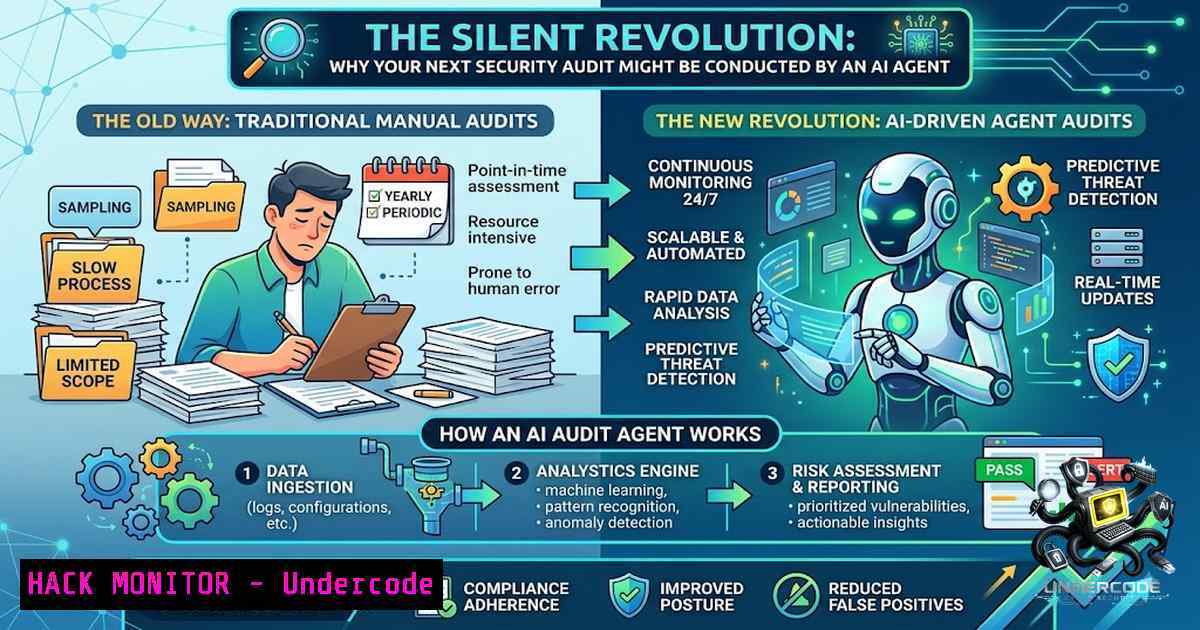
The convergence of Large Language Models (LLMs) with autonomous agentic frameworks is fundamentally altering the software development lifecycle (SDLC). While the post from Priyal Raj hints at “AI Agent Skills” for codebase testing, the underlying architecture represents a seismic shift in how we approach vulnerability discovery, code review, and security validation. This transition from static analysis tools (SAST) to dynamic, context-aware AI agents requires a rethinking of our cybersecurity posture.
Learning Objectives
- Understand the architecture and security implications of deploying AI agents in production codebases.
- Master the technical commands to audit agentic pipelines and isolate AI-generated code.
- Develop a hardening checklist for AI APIs and vector databases.
You Should Know
- Securing the Data Pipeline: Auditing the Training Data Repository
Before you allow an AI agent to analyze your code, it is crucial to secure the vector database and data ingestion mechanisms. These agents often rely on Retrieval-Augmented Generation (RAG), which means the data they retrieve must be sanitized to prevent prompt injection or data poisoning.
Step-by-step guide:
- Linux: Validate file permissions on the vector database directory (e.g., Pinecone/Weaviate).
Check ownership and permissions of the data directory
ls -la /var/lib/vector-db/
Restrict access to only the service account
sudo chown -R agent-user:agent-group /var/lib/vector-db
sudo chmod 750 /var/lib/vector-db
- Windows: Ensure the service account running the agent has the least privilege on the folder.
Set ACLs to deny write access to non-admin users
icacls "C:\AgentData" /grant "SYSTEM:(OI)(CI)F" /grant "Administrators:(OI)(CI)F" /inheritance:r
icacls "C:\AgentData" /remove "Users"
- Configuration: Sanitize JSON/XML inputs. Use a strict schema validator to prevent malformed data from triggering unexpected agent behavior.
Python validation example using Pydantic
from pydantic import BaseModel, ValidationError
class AgentInput(BaseModel):
repo_url: str
task: str
try:
data = AgentInput(repo_url="https://github.com/test", task="audit")
except ValidationError as e:
print(f"Blocked malicious input: {e}")
2. Zero-Trust Agentic Execution
Agents often generate and execute code dynamically. To prevent a “hack” (as Priyal jokingly mentioned), we must enforce a Zero-Trust execution environment. The agent must not have network access unless explicitly required.
Step-by-step guide:
1. Linux (Docker isolation):
 Run the agent in a container with no network privileges
docker run --rm --1etwork none -v /path/to/code:/code my-ai-agent
2. Windows (AppLocker & WDAC): Create a policy that restricts script execution (PowerShell/Python) to signed scripts only.
 Set PowerShell execution policy to restricted for the agent user
Set-ExecutionPolicy -ExecutionPolicy Restricted -Scope User
 Enable Windows Defender Application Control (WDAC) to block untrusted binaries
3. API Security: If the agent calls external APIs (like OpenAI), use API Key rotation and restrict the IP whitelist. Do not hardcode keys.
 Linux: Export API key as environment variable (temporary)
export OPENAI_API_KEY=$(cat /run/secrets/openai_key)
 Ensure it's not stored in .bash_history
set +o history
3. Monitoring Agentic Hallucinations and Logic Flaws
Unlike traditional exploits (e.g., SQL injection), AI agents introduce logic vulnerabilities. An agent might suggest a “fix” that introduces a backdoor unintentionally. Use logging to track the “chain of thought.”
Step-by-step guide:
- Enable verbose logging on the agent framework (e.g., LangChain debug).
import logging
logging.basicConfig(level=logging.DEBUG)
This prints the exact prompts and responses
- Linux Commands: Monitor real-time system calls made by the agent process.
Use strace to see what system calls the agent is making
sudo strace -p $(pgrep -f python-agent) -e trace=network,file
- Windows: Use Windows Performance Monitor to track network connections initiated by the agent.
Get-1etTCPConnection -OwningProcess (Get-Process -1ame python).Id
4. Hardening the CI/CD Integration
If this agent is integrated into Jenkins, GitHub Actions, or GitLab CI, it becomes a prime target. An attacker could compromise the agent to steal secrets via a malicious pull request.
Step-by-step guide:
- GitHub Actions: Use OIDC (OpenID Connect) instead of storing credentials in secrets.
permissions:
id-token: write
contents: read
This allows the agent to authenticate without hardcoded tokens
- Jenkins: Ensure the agent runs on a dedicated node with no access to other jobs.
node('agent-1ode') { withEnv(['PATH=/usr/local/agent-tools/bin']) { // Execute agent script } } - Cloud Hardening: If using AWS, apply a strict IAM policy to the agent’s execution role, allowing only `s3:GetObject` on a specific bucket.
{
"Version": "2012-10-17",
"Statement": [
{
"Effect": "Allow",
"Action": "s3:GetObject",
"Resource": "arn:aws:s3:::code-repo/"
}
]
}
What Undercode Say
- Security by Design: The prompt injection risk is often overlooked. Treat user input to the agent as untrusted, even if it’s just a “codebase URL.” The agent must sanitize its own prompts before sending them to the LLM.
- Mitigation Strategy: Implement “honeytokens” in the codebase. If the agent accidentally discloses these (thinking they are real), you know your logging or security posture has a leak.
- Compliance: Using an AI agent to review code might violate GDPR if it sends proprietary code to external servers. Always host the LLM locally (e.g., Llama 3) or use a private Azure/Google endpoint to ensure data residency.
- Positive Outlook (+1): This shift will dramatically reduce the time between vulnerability discovery and remediation.
- Warning (-1): The complexity of securing the agent itself (the orchestration layer) is higher than securing the application code, leading to a new class of vulnerabilities we are ill-prepared for.
Prediction
- +1: AI agents will become standard for “blue team” defense, automating the creation of YARA rules and Sigma detection logic within minutes based on new threat intel.
- -1: The democratization of hacking—attackers will utilize these same agents to scan the entire internet for misconfigurations faster than ever, leading to a “rapid response” security model that is always reactive.
- +1: We will see the rise of “Guardrails” as a Service (GaaS), where third-party auditors verify the agent’s output for policy violations.
- -1: Legacy systems, such as COBOL mainframes, will be misidentified by AI agents as “secure” due to lack of training data, leaving them exposed.
- +1: The industry will eventually standardize on a “Secure Agentic Framework” (SAF) similar to OWASP, leading to safer deployments by 2027.
▶️ Related Video (78% Match):
🎯Let’s Practice For Free:
🎓 Live Courses & Certifications:
Join Undercode Academy for Verified Certifications
🚀 Request a Custom Project:
Secure, high-velocity infrastructure and disruptive technological engineering. Contact our engineering team for high-tier development and proprietary systems:
[email protected]
💎 Smart Architecture | 🛡️ Secure by Design | ⭐ Trusted by Thousands
IT/Security Reporter URL:
Reported By: https://lnkd.in/p/emXBUKBY – Hackers Feeds
Extra Hub: Undercode MoN
Basic Verification: Pass ✅


