Listen to this Post
Introduction:
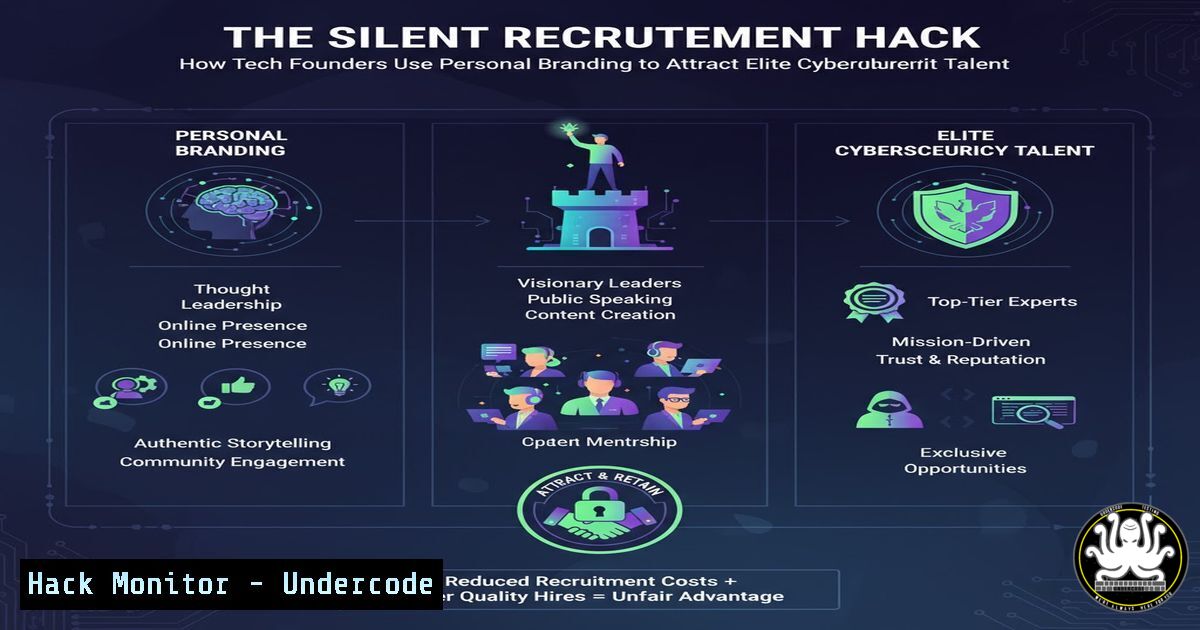
In the competitive landscape of cybersecurity and IT, the war for talent is a constant battle. While companies pour resources into traditional recruitment, a paradigm shift is occurring. Forward-thinking founders are discovering that strategic personal branding, not just corporate job posts, is the most effective method for attracting senior-level professionals who are aligned with their mission and culture.
Learning Objectives:
- Understand the core components of a founder’s personal brand that appeals to top-tier IT and cybersecurity experts.
- Learn to develop a content strategy that showcases technical leadership, company culture, and strategic vision.
- Implement practical steps to build authority and transform your LinkedIn presence into a passive talent acquisition engine.
You Should Know:
1. Foundational Content: The Bedrock of Technical Authority
The most effective personal branding for tech founders is not based on hype, but on substance. The founder highlighted in the case study built his reputation by consistently sharing authentic insights from his daily operations. For a cybersecurity or SaaS founder, this means creating content that demonstrates deep expertise. Instead of vague statements, share specific, valuable knowledge that only someone in your position would possess.
Step-by-Step Guide to Building Foundational Content:
Step 1: Audit Your Expertise. List your core technical and operational domains. For a cybersecurity founder, this could include: Cloud Security Hardening, Threat Intelligence Analysis, Incident Response Protocols, Secure SDLC implementation, or Compliance Frameworks (e.g., NIST, SOC 2).
Step 2: Document Your Process. As you work, take notes. Did you just mitigate a novel phishing campaign? Write about the indicators of compromise (IOCs) and the steps taken. For example, you could share a snippet of a Sigma rule you created for detection.
Example Sigma Rule Snippet:
title: Suspicious PowerShell Execution with Hidden Window
logsource:
category: process_creation
product: windows
detection:
selection:
Image|endswith: '\powershell.exe'
CommandLine|contains: '-WindowStyle Hidden'
filter:
CommandLine|contains: 'Get-Process'  Common benign use
condition: selection and not filter
description: Detects PowerShell execution with a hidden window, often used by attackers to avoid detection.
Step 3: Schedule and Publish. Commit to a consistent schedule, such as two posts per week. Use a content calendar to plan topics around your key domains, ensuring a balanced and comprehensive showcase of your leadership.
2. Showcasing Culture and Operational Security
Top cybersecurity talent is not just looking for a job; they are seeking a culture that prioritizes security and continuous learning. Your content must reflect this. Share how you invest in your team’s skills, handle security incidents with transparency, and foster a culture where best practices are celebrated.
Step-by-Step Guide to Showcasing Security Culture:
Step 1: Highlight Training and Development. Post about the certifications you sponsor (e.g., OSCP, GCIH, CCSK), internal capture-the-flag (CTF) events, or weekly security briefings. This signals a commitment to growth.
Step 2: Demonstrate Operational Rigor. Discuss your approach to patch management. You could share a simplified version of an Ansible playbook you use for automated patching across your Linux estate.
Example Ansible Playbook Snippet:
<ul>
<li>name: Security Patch Management for Ubuntu Servers
hosts: webservers
become: yes
tasks:</li>
<li>name: Update apt package cache
apt:
update_cache: yes
cache_valid_time: 3600</p></li>
<li><p>name: Upgrade all packages to the latest security version
apt:
upgrade: dist
autoremove: yes
autoclean: yes
Step 3: Discuss Client and Partner Vetting. Explain how you “choose the right clients” from a security perspective. This demonstrates that you value long-term security over short-term revenue, a critical factor for principled security professionals.
3. Leveraging LinkedIn for Technical Thought Leadership
LinkedIn is the primary platform for this strategy. The goal is to make your profile a destination for professionals who care about the same technical and strategic issues you do.
Step-by-Step Guide to Optimizing Your LinkedIn Presence:
Step 1: Optimize Your Headline and “About” Section. Your headline should go beyond “CEO.” Use a hybrid approach: “Cybersecurity Founder | Securing Cloud Infrastructures | Sharing our journey in building a human-centric security culture.”
Step 2: Engage with Technical Content. Don’t just post. Spend 15 minutes daily commenting intelligently on posts from other infosec leaders, industry bodies like CISA, or cloud providers (AWS Security, Microsoft Security). Add value to the conversation with technical insights.
Step 3: Use Rich Media. Share diagrams of security architectures (e.g., a zero-trust network model), short video explanations of a complex concept, or links to well-documented code on your company’s GitHub.
- From Branding to Inbound: Managing the Talent Pipeline
When your content resonates, the inbound messages will start. You need a process to manage these “warm leads” effectively without overwhelming your schedule.
Step-by-Step Guide to Managing Inbound Talent Interest:
Step 1: Acknowledge and Qualify. Respond promptly to every message. A simple, “Thank you for your message and your interest in my perspective. Could you tell me a bit more about your technical background and what area of our work most resonates with you?” can start the conversation.
Step 2: Create a Lightweight Tracking System. Use an Airtable base, a Notion page, or even a specific folder in your email to track these interactions. Note the person’s name, skills, and what prompted them to reach out.
Step 3: Facilitate a Low-Pressure Introduction. If there’s a potential fit, connect them with your HR lead or a senior technical manager for a casual, exploratory conversation. Frame it as a “meet-and-greet” to share perspectives, not a formal interview.
5. Advanced Tactics: Deep-Dive Technical Tutorials
To truly attract the “10x” engineers and architects, occasionally publish in-depth technical tutorials. This demonstrates not just knowledge, but a passion for the craft that elite talent finds irresistible.
Step-by-Step Guide to Creating a Technical Tutorial:
Step 1: Choose a Niche, Practical Topic. Example: “Hardening Your AWS S3 Buckets Against Ransomware.”
Step 2: Provide Verifiable Commands and Code. Walk through the process with exact commands.
Example AWS CLI and Bucket Policy:
 Enable S3 Block Public Access at the account level (use with caution)
aws s3control put-public-access-block \
--account-id `aws sts get-caller-identity --query "Account" --output text` \
--public-access-block-configuration BlockPublicAcls=true, IgnorePublicAcls=true, BlockPublicPolicy=true, RestrictPublicBuckets=true
{
"Version": "2012-10-17",
"Statement": [
{
"Sid": "EnforceEncryptionAndSecureTransport",
"Effect": "Deny",
"Principal": "",
"Action": "s3:PutObject",
"Resource": "arn:aws:s3:::your-critical-bucket/",
"Condition": {
"Null": {
"s3:x-amz-server-side-encryption": "true"
},
"Bool": {"aws:SecureTransport": "false"}
}
}
]
}
Step 3: Explain the ‘Why’. Don’t just list steps. Explain why each configuration is critical for mitigating specific threats, linking it back to real-world attack vectors.
What Undercode Say:
- Authenticity is the New Compensation Package. The most skilled professionals in cybersecurity are motivated by more than salary. They seek mission, growth, and leadership they can trust. A founder’s authentic voice is a direct signal of these intangible benefits.
- Personal Branding is a Strategic Security Asset. By publicly demonstrating a deep commitment to security practices and culture, a founder not only attracts talent but also signals to clients and partners that their organization is built on a foundation of security expertise. This builds trust across the entire business ecosystem.
Analysis: The traditional recruitment funnel is broken for high-demand roles. The model presented here flips the script, turning the founder into a beacon that attracts precisely the right talent. This is not about ego; it’s about strategic communication. In fields like cybersecurity, where trust and competence are paramount, a leader who openly shares their knowledge and principles acts as a powerful filter. They naturally repel those who wouldn’t be a good fit while magnetically attracting those who share their values and are inspired by their vision. This method builds a more resilient, engaged, and loyal team than any recruiting agency ever could.
Prediction:
The “Founder-as-Beacon” recruitment model will become a standard competitive differentiator for top-tier cybersecurity and SaaS startups within the next five years. As the talent gap persists, the ability to organically build a community of engaged professionals around a strong, public-facing leadership brand will be a key determinant in a company’s ability to scale securely and innovatively. We will see the emergence of dedicated “Executive Branding Coaches” for technical founders, focusing specifically on communicating complex security and AI concepts to attract both talent and enterprise clients. Companies that fail to leverage this human-centric approach will be left competing for the remaining talent pool with purely financial offers, a costly and unsustainable strategy.
🎯Let’s Practice For Free:
IT/Security Reporter URL:
Reported By: Rajeevmamidanna The – Hackers Feeds
Extra Hub: Undercode MoN
Basic Verification: Pass ✅


