Listen to this Post
Introduction:
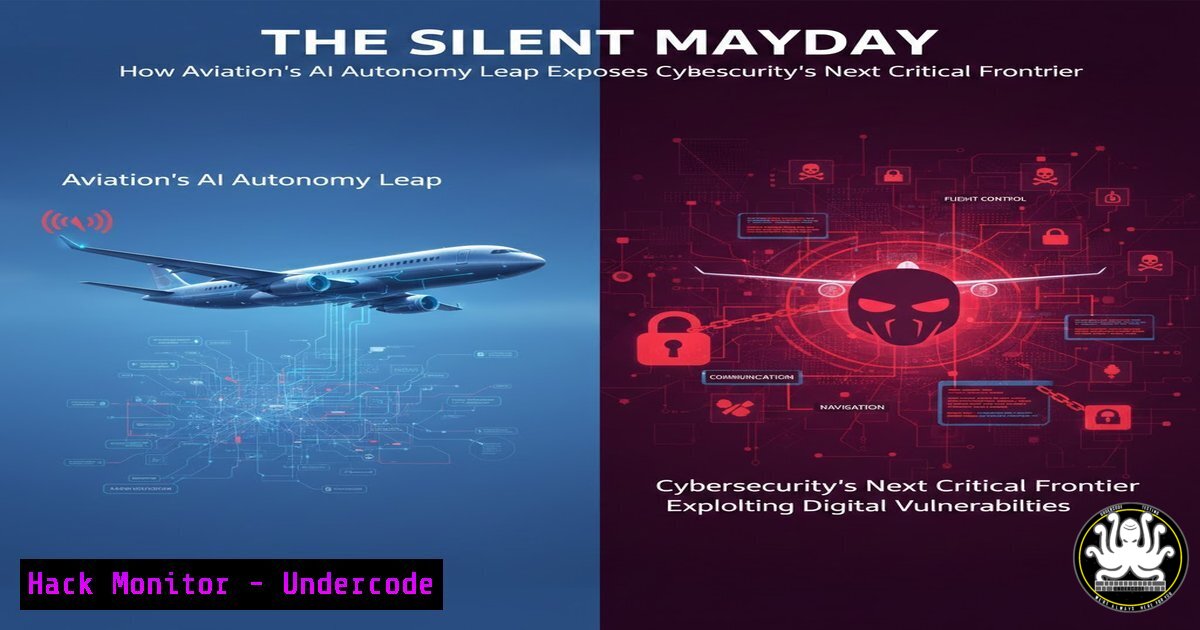
A recent real-world incident where a single-pilot aircraft autonomously declared MAYDAY and landed itself using Garmin’s certified Autoland system marks a paradigm shift in human-machine trust. This quiet revolution in aviation, the most safety-critical industry, forces a urgent re-evaluation of cybersecurity and IT infrastructure. As autonomous systems take life-critical command, the attack surface expands from digital data to physical safety, making the security of these embedded AI systems the paramount concern for security professionals, cloud architects, and network engineers.
Learning Objectives:
- Understand the cybersecurity implications of certified, life-saving autonomous systems and their convergence with IT/OT networks.
- Identify the unique attack vectors and threat models for safety-critical AI, including sensor spoofing, model poisoning, and secure communication channels.
- Learn actionable hardening techniques for systems interfacing with autonomous platforms, from API security to network segmentation.
You Should Know:
- The Architecture of Trust: Deconstructing the Autonomous Flight Stack
The Garmin Autoland system represents a complex integration of hardware and software stacks. Security must be assessed at every layer: from physical sensors (altimeters, GPS, IMUs) and the real-time operating system (RTOS) managing flight controls, to the AI/ML decision engine and its external communications (ADS-B, ATC radio links).
Step‑by‑step guide explaining what this does and how to use it:
Step 1: Asset Inventory & Data Flow Mapping. For any system interfacing with autonomous operations, document all components. Use tools like `nmap` for network discovery and Wireshark to analyze data flows. Command: `nmap -sV -O -p-
Step 2: Threat Modeling. Apply the STRIDE framework (Spoofing, Tampering, Repudiation, Information Disclosure, Denial of Service, Elevation of Privilege) to each component. For instance, spoofing GPS signals (a known aviation threat) could feed false location data to the autonomous system.
Step 3: Secure the Communication Channels. Ensure all data links use strong encryption and authentication. For simulating and testing secure links, use OpenSSL to verify certificates: openssl s_client -connect <avionics_gateway>:443 -servername <servername>.
- Hardening the AI Brain: Mitigating Adversarial Machine Learning
The AI model that decided to declare an emergency and execute a landing is a high-value target. Adversaries could attempt to poison the training data or craft inputs to cause malfunctions.
Step‑by‑step guide explaining what this does and how to use it:
Step 1: Implement Robust Model Validation. Use techniques like outlier detection on training data. In Python, libraries like `Scikit-learn` can help: from sklearn.ensemble import IsolationForest; clf = IsolationForest(); clf.fit(training_data).
Step 2: Deploy Adversarial Training. Fortify models by training them with adversarial examples. Use frameworks like `IBM’s Adversarial Robustness Toolbox (ART)` to generate attacks and harden your models.
Step 3: Enforce Strict Model Integrity. Digitally sign your deployed ML models and verify signatures before loading. Use checksums: `sha256sum /path/to/deployed_model.pb` and validate against a trusted manifest.
- API Security: The Critical Link Between Ground and Air
Autoland likely interfaces with ground systems for updates, telemetry, and possibly remote situational awareness. These APIs are prime targets.
Step‑by‑step guide explaining what this does and how to use it:
Step 1: Enforce Zero-Trust Principles. Assume the network is hostile. Every API request must be authenticated, authorized, and encrypted. Use mutual TLS (mTLS) for machine-to-machine communication.
Step 2: Rigorous Input Sanitization and Rate Limiting. Prevent injection attacks and DDoS. Configure rate limiting in your API gateway (e.g., NGINX): limit_req_zone $binary_remote_addr zone=api_per_ip:10m rate=10r/s;.
Step 3: Continuous Security Testing. Integrate dynamic and static API security testing (DAST/SAST) into your CI/CD pipeline. Use tools like OWASP ZAP to automate scans: zap-cli quick-scan --self-contained --start-options '-config api.disablekey=true' <target_api_url>.
4. Cloud Hardening for Avionics Data Pipelines
Telemetry and operational data from autonomous systems are processed and stored in hybrid cloud environments. This infrastructure must be fortress-like.
Step‑by‑step guide explaining what this does and how to use it:
Step 1: Principle of Least Privilege for Identities. In AWS IAM or Azure AD, use groups and roles. Never use root or service accounts with broad permissions. Command to create a limited policy: Use AWS CLI: aws iam create-policy --policy-name <name> --policy-document file://policy.json.
Step 2: Encrypt Data at Rest and in Transit. Enable default encryption for S3 buckets, EBS volumes, and database instances. Use KMS-managed keys. Command: aws s3api put-bucket-encryption --bucket <bucket_name> --server-side-encryption-configuration '{"Rules": [{"ApplyServerSideEncryptionByDefault": {"SSEAlgorithm": "AES256"}}]}'.
Step 3: Implement Immutable, Logged Infrastructure. Use Infrastructure-as-Code (Terraform, CloudFormation) to prevent drift. Ensure all actions are logged to a separate, secure CloudTrail/Azure Monitor Logs workspace for audit.
5. Vulnerability Management for Embedded & OT Systems
The avionics computer is an embedded system, often running a Real-Time OS (RTOS). Traditional vulnerability scanners are ineffective.
Step‑by‑step guide explaining what this does and how to use it:
Step 1: Software Bill of Materials (SBOM). Mandate an SBOM from vendors (using SPDX or CycloneDX format) to track all open-source and third-party components. Analyze it with tools like OWASP Dependency-Track.
Step 2: Fuzz Testing for Protocols. Fuzz-test the proprietary protocols used for intra-avionics communication. Use frameworks like `AFL` or `Boofuzz` to discover memory corruption flaws: python boofuzz.py --target-host <target_ip> --target-port <port> --protocol-info protocol_template.py.
Step 3: Air-Gapping & Segmentation. Where possible, critically secure subsystems should be on physically separate networks. Use industrial firewalls to create zones and conduits, enforcing strict rules between the flight control network and inflight entertainment.
6. Incident Response for a Compromised Autonomous System
What happens if the autonomy system itself is under attack during an emergency?
Step‑by‑step guide explaining what this does and how to use it:
Step 1: Pre-Defined Kill Switches & Safe Modes. Systems must have a secure, hardware-backed method to revert to a manual or degraded safe mode. This override must be protected from remote execution.
Step 2: Forensic Integrity for Black Boxes. Ensure flight data recorders and system logs are written to tamper-evident, encrypted storage. Use write-once media or cryptographic chaining (hash-linked logs).
Step 3: Cross-Disciplinary Drills. Run tabletop exercises involving cybersecurity teams, aeronautical engineers, and operations. Scenario: “During autonomous landing, primary nav sensors are being spoofed. What is the failover protocol?”
- Building a Security-Aware Culture for the Autonomy Era
The final layer of defense is human. Engineers, regulators, and maintainers must think like adversarial red teams.
Step‑by‑step guide explaining what this does and how to use it:
Step 1: Integrate Security into SDLC from Day 0. Adopt secure coding standards (like CERT C++ for avionics) and mandate security reviews for all architecture changes.
Step 2: Continuous Training. Move beyond basic compliance. Use platforms like `TryHackMe` or `RangeForce` for hands-on training in ICS/SCADA and embedded security. Encourage certifications like GIAC GICSP.
Step 3: Foster Responsible Disclosure. Create clear, safe channels for external security researchers to report vulnerabilities in these critical systems, avoiding the chaos of full public disclosure.
What Undercode Say:
The Threshold of Physical Consequence: Cybersecurity is no longer just about data breaches. This incident proves that critical AI systems have crossed into the realm of direct physical safety. A vulnerability can now equate to loss of life, raising the stakes exponentially and demanding a proportional shift in security rigor, budgets, and mindset.
Quiet Deployment is a Risk: The fact that such a capable autonomous system was certified and deployed without widespread public debate means critical infrastructure evolution may be outpacing societal and cybersecurity scrutiny. Security teams must proactively hunt for these deployed systems within their organization’s ecosystem.
+ analysis:
The Garmin Autoland event is a clarion call for the cybersecurity industry. It demonstrates that high-stakes autonomy is not a futuristic concept but a present-day operational reality. The convergence of IT, OT, and AI in these systems creates a novel and immensely attractive attack surface. Defending them requires a fusion of traditional IT security, embedded systems expertise, adversarial ML knowledge, and classical safety engineering. The “trust transfer” to machines is irreversible; our security frameworks must now be engineered to be as reliable as the autonomous systems they protect. Failing to adapt is not an option when the cost of a breach is measured in human lives.
Prediction:
Within the next 3-5 years, we will see the first major regulatory frameworks (extending from existing ones like DO-326A/ED-202A for aviation) mandating specific cybersecurity controls for all certified safety-critical AI systems across transportation, healthcare robotics, and industrial automation. This will spawn a dedicated subsector of cybersecurity focused on “AI Safety Assurance,” blending red-team penetration testing with formal verification methods. Simultaneously, we will witness the emergence of sophisticated cyber-physical attack toolkits targeting sensor suites (LIDAR, radar, GPS), making the security of the sensor-to-AI data pipeline the most intense battleground. The incident foretells a future where CISOs bear direct responsibility for physical safety, fundamentally reshaping corporate risk and liability landscapes.
▶️ Related Video (82% Match):
🎯Let’s Practice For Free:
IT/Security Reporter URL:
Reported By: Evankirstel A – Hackers Feeds
Extra Hub: Undercode MoN
Basic Verification: Pass ✅


