Listen to this Post
Introduction:
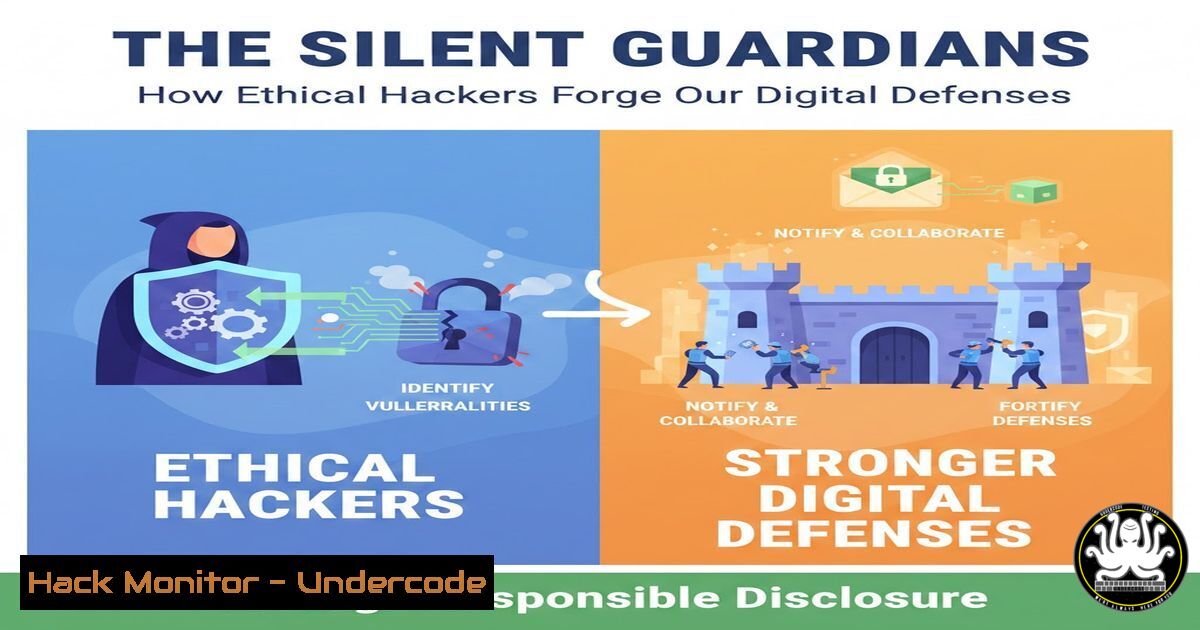
In an era where digital infrastructure underpins everything from home security to global finance, the discovery of vulnerabilities is inevitable. The critical factor that separates catastrophic breaches from reinforced systems is the process of responsible disclosure. This structured, ethical practice, exemplified by security researchers like Gaurang M., creates a vital collaboration between hackers and organizations, transforming potential attack vectors into opportunities for strengthening our collective cyber defenses. It’s a professional framework that turns adversarial discovery into constructive fortification.
Learning Objectives:
- Understand the formal process and critical phases of responsible vulnerability disclosure.
- Learn the technical methodologies for identifying, validating, and documenting security flaws.
- Master the communication protocols and legal safeguards essential for ethical security research.
You Should Know:
1. The Pre-Engagement: Scoping and Legal Foundations
Before a single line of code is tested, ethical reconnaissance sets the stage. This phase involves defining the scope of authorized testing, understanding the rules of engagement (ROE), and ensuring all activities are legally protected.
Step‑by‑step guide:
Step 1: Scrutinize the target organization’s public bug bounty policy (e.g., on HackerOne, Bugcrowd). If no policy exists, proceed with extreme caution under a “no policy” framework.
Step 2: Clearly document the target in-scope assets (e.g., .example.com, specific mobile apps) and out-of-scope assets (e.g., production customer data, third-party services).
Step 3: Use passive reconnaissance tools to map the attack surface without interacting with the target. This establishes a baseline.
Linux Command (Amass): `amass enum -passive -d example.com -o initial_scope.txt`
Tool (OWASP ZAP): Use the “Passive Scan” mode while browsing to catalog endpoints and technologies.
2. Methodical Discovery: From Recon to Proof-of-Concept
This is the technical core, moving from surface mapping to identifying a specific, exploitable vulnerability.
Step‑by‑step guide:
Step 1: Active Enumeration. Use targeted scanning to identify services, open ports, and potential weaknesses.
Linux Command (Nmap): `nmap -sV -sC –top-ports 1000 -oA detailed_scan
Step 2: Vulnerability Identification. Manually test common web flaws (SQLi, XSS, IDOR) or use automated scanners as a starting point, not an endpoint.
Tool (Burp Suite): Configure your browser proxy, spider the application, and use the Intruder or Repeater modules to test parameters for injection flaws.
Step 3: Proof-of-Concept (PoC) Creation. Develop a reliable, non-destructive method to demonstrate the vulnerability’s impact.
Example (Basic IDOR): If a request to `GET /api/user/12345/profile` returns your data, change the ID to `12346` in Burp Repeater. A successful call demonstrates broken access control. Document the exact HTTP request/response.
- The Art of the Report: Crafting an Actionable Disclosure
A well-structured report is what turns a finding into a fix. It must be clear, concise, and actionable for developers who may not have security expertise.
Step‑by‑step guide:
Step 1: Use a clear, severity-based title (e.g., “Critical: Unauthenticated RCE via File Upload on admin.example.com“).
Step 2: Executive Summary: Briefly describe the vulnerability, affected component, and potential impact in 2-3 sentences.
Step 3: Technical Details: Include:
Vulnerability Type: (CWE) e.g., CWE-89: SQL Injection.
Affected URL/Endpoint: Full path.
Steps to Reproduce: A numbered, foolproof list. (1. Navigate to X. 2. Intercept request with Burp. 3. Send this payload…).
Request/Response Logs: Sanitized, but complete.
Impact Assessment: How could this be leveraged? (Data theft, system compromise).
Step 4: Remediation Advice: Suggest a specific fix (e.g., “Use parameterized queries via PDO in PHP: $stmt = $pdo->prepare('SELECT FROM users WHERE id = :id');“).
4. Secure Communication and Submission Protocols
Transmitting vulnerability details requires secure channels to prevent interception or mishandling of sensitive data.
Step‑by‑step guide:
Step 1: Locate the official security contact. Look for a `/security.txt` file (`https://example.com/.well-known/security.txt`) or a `[email protected]` email.
Step 2: Encrypt all communications. Use the organization’s provided PGP key.
Linux Command (GPG): `gpg –encrypt –recipient [email protected] –armor vulnerability_report.pdf`
Step 3: Submit the initial report, clearly stating your intent for responsible disclosure and providing a secure method for the security team to contact you (e.g., your own PGP-encrypted email).
5. Post-Submission: Coordination and The Grace Period
The work isn’t done after hitting “send.” This phase involves coordinated vulnerability management.
Step‑by‑step guide:
Step 1: Acknowledgement: Wait for a formal acknowledgement from the vendor. This may include a tracking ID.
Step 2: Grace Period: Agree on a realistic timeframe for the vendor to develop and deploy a patch (typically 90 days, as per Google Project Zero’s policy). Maintain discreet, periodic check-ins.
Step 3: Patch Verification: Once notified of a fix, ethically retest to confirm the vulnerability is remediated. Report back your findings.
Step 4: Public Disclosure: Only after the patch is publicly deployed should you consider publishing your findings (e.g., a blog post). Always coordinate the publication date with the vendor.
6. Mitigating the Flaw: From Patch to Hardening
For defenders and the reporting researcher, understanding mitigation is key.
Step‑by‑step guide (Defensive – Example: Input Validation):
Problem: The reported flaw was a Command Injection in a web application.
Mitigation 1 (Input Validation):
Linux/Code (Python): Use an allowlist. Instead of blacklisting `;` or &, explicitly define allowed characters.
import re
def validate_input(user_input):
if not re.match("^[a-zA-Z0-9.-]+$", user_input):
raise ValueError("Invalid characters in input")
return user_input
Mitigation 2 (Least Privilege): Ensure the application service account running the command has minimal OS privileges.
Linux Command: `sudo adduser –system –shell /bin/false apprunner`
7. Building a Career on Ethics: From Report to Recognition
The final stage leverages the successful disclosure to build professional credibility and contribute to the ecosystem.
Step‑by‑step guide:
Step 1: After public disclosure, create a detailed technical write-up. Focus on the methodology, not just the bug.
Step 2: Showcase the experience on professional platforms (like LinkedIn) as Gaurang M. did, highlighting the collaborative outcome and the organization’s positive response.
Step 3: Contribute to public vulnerability databases (e.g., CVE via CNA) to help improve global threat intelligence. This transforms a single report into a learning resource for the entire community.
What Undercode Say:
- Trust is the Ultimate Currency: The tangible reward in responsible disclosure is not just a bounty or a thank-you gift; it’s the establishment of trust between the security research community and corporations. This trust is what accelerates patching and makes the digital world safer for everyone.
- Process Over Exploit: The true professionalism of a security researcher is demonstrated not by the severity of the flaw found, but by the rigor, clarity, and empathy demonstrated throughout the disclosure process. A perfectly executed disclosure for a medium-severity bug does more good than a poorly handled critical flaw.
The ZKTeco case is a textbook example of this principle in action. The researcher’s public acknowledgment reinforces the vendor’s security-positive brand, encouraging further research and creating a virtuous cycle. It signals to other organizations that engaging ethically with hackers is a strength, not a liability. This collaborative model is steadily becoming the industry standard, moving away from the outdated, adversarial “full disclosure” or silence-based approaches.
Prediction:
The future of vulnerability disclosure will be increasingly formalized and integrated into the Software Development Life Cycle (SDLC). We will see the rise of more automated “bug bounty-as-a-service” platforms integrated directly into CI/CD pipelines, allowing for continuous, sanctioned testing. AI will play a dual role: both in autonomously discovering certain classes of vulnerabilities (e.g., pattern-based logic flaws) and in triaging incoming reports to speed up vendor response. Furthermore, legal protections for “good-faith” security research, such as those outlined in proposed amendments to laws like the CFAA, will become more widespread, reducing legal risks for ethical hackers and further incentivizing the responsible disclosure model that protects our global digital infrastructure.
▶️ Related Video (82% Match):
🎯Let’s Practice For Free:
IT/Security Reporter URL:
Reported By: Gaurang8833 Responsibledisclosure – Hackers Feeds
Extra Hub: Undercode MoN
Basic Verification: Pass ✅


