
Listen to this Post
Introduction:
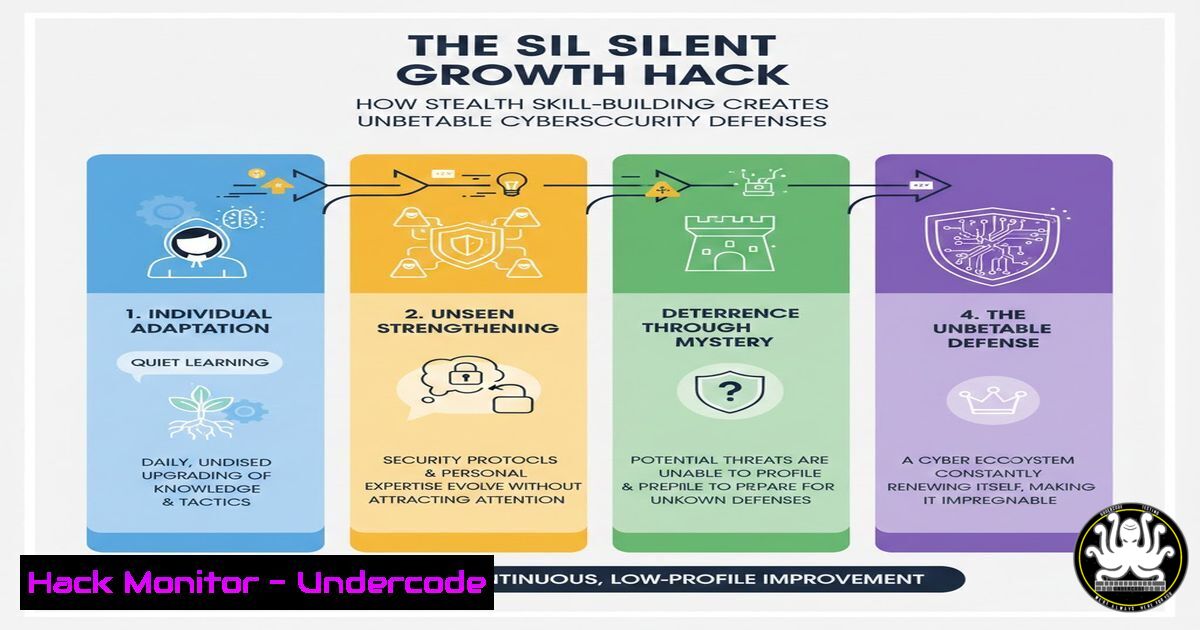
In the fast-paced world of cybersecurity, the most significant transformations often occur away from the spotlight. This silent growth, built on long hours in hands-on labs and the meticulous study of core domains like Risk Management, Network Security, and Cryptography, forges the most resilient and capable professionals. This article deconstructs this journey into actionable, technical steps to transform quiet learning into loud, real-world impact.
Learning Objectives:
- Implement foundational Risk Management Frameworks and quantitative risk analysis.
- Harden network perimeters and master cryptographic integrity checks.
- Build a personalized, project-based learning lab for continuous, silent growth.
You Should Know:
1. Implementing a Quantitative Risk Management Framework
Risk Management is the cornerstone of any security program. Moving beyond theory requires implementing a framework to quantify and prioritize risks systematically.
Step‑by‑step guide explaining what this does and how to use it.
1. Asset Identification & Valuation: First, catalog your critical assets. For a server, this includes data, applications, and configuration files.
Linux Command: `find / -type f -name “.db” -o -name “.key” -o -name “.conf” 2>/dev/null` (Searches for database files, private keys, and configuration files).
Explanation: This command helps identify sensitive files that constitute high-value assets. The `2>/dev/null` suppresses permission-denied errors.
- Threat Modeling & Likelihood: Use a structured approach like STRIDE (Spoofing, Tampering, Repudiation, Information Disclosure, Denial of Service, Elevation of Privilege) to model threats. Assign a likelihood (e.g., 1-5) based on historical data or threat intelligence feeds.
-
Vulnerability Analysis & Impact Scoring: Actively scan for vulnerabilities.
Tool Configuration: Run a Nessus or OpenVAS scan against your target network. Analyze the CVSS (Common Vulnerability Scoring System) scores for discovered vulnerabilities. The impact score is often derived from the CVSS Base Score. -
Risk Calculation: Use the simple formula: Risk = Asset Value x Likelihood x Impact. This generates a quantitative risk score, allowing you to objectively prioritize the remediation of a critical SQL Injection vulnerability (high score) over a low-severity information disclosure issue.
-
Hardening Network Security with Firewall Rules and ACLs
Network Security is about controlling traffic flow. A default-deny posture, enforced by firewalls and Access Control Lists (ACLs), is a fundamental principle.
Step‑by‑step guide explaining what this does and how to use it.
1. Windows: Advanced Firewall Rule: Block outbound traffic on a non-standard port used by malware (e.g., TCP 6667).
Command (PowerShell as Admin):
New-NetFirewallRule -DisplayName "Block Outbound TCP 6667" -Direction Outbound -LocalPort 6667 -Protocol TCP -Action Block
Explanation: This creates a new Windows Firewall rule that explicitly blocks any outbound connection attempts on port 6667, potentially containing a compromised system’s callback.
- Linux: iptables Fundamental Rules: Implement a basic stateful firewall.
Commands:
 Set default policies to DROP
iptables -P INPUT DROP
iptables -P FORWARD DROP
iptables -P OUTPUT ACCEPT

Allow established and related incoming traffic (responses)
iptables -A INPUT -m state --state ESTABLISHED,RELATED -j ACCEPT

Allow incoming SSH (Port 22)
iptables -A INPUT -p tcp --dport 22 -j ACCEPT

Allow incoming HTTP/HTTPS (Port 80, 443)
iptables -A INPUT -p tcp --dport 80 -j ACCEPT
iptables -A INPUT -p tcp --dport 443 -j ACCEPT
Explanation: This configuration drops all incoming traffic by default, only allowing responses to outbound requests and specific services (SSH, Web). This drastically reduces the attack surface.
3. Applying Cryptographic Hashes for File Integrity Monitoring
Cryptography provides tools for verifying that data has not been altered. Using hashes for File Integrity Monitoring (FIM) is a critical defense against tampering.
Step‑by‑step guide explaining what this does and how to use it.
1. Generate a Baseline Hash: After deploying a clean system or critical application, generate a cryptographic hash of all its binaries and configuration files.
Linux Command (SHA-256):
find /usr/bin -type f -exec sha256sum {} \; > /secure/baseline_hashes.txt
Explanation: This recursively hashes every file in `/usr/bin` and saves the results to a baseline file stored in a secure location.
- Schedule Regular Integrity Checks: Use a cron job to periodically re-calculate the hashes and compare them to the baseline.
Linux Command:
 Script: integrity_check.sh
sha256sum -c /secure/baseline_hashes.txt 2>/dev/null | grep FAILED
Cron Job: `0 2 /root/integrity_check.sh` (Runs the check daily at 2 AM).
Explanation: Any “FAILED” output indicates a file hash mismatch, signaling potential unauthorized modification that requires immediate investigation.
- Building Your Own Vulnerable Lab for Safe Exploitation
True understanding comes from doing. Building a personal lab allows for safe experimentation with vulnerabilities and their mitigations.
Step‑by‑step guide explaining what this does and how to use it.
1. Environment Setup: Install virtualization software like VirtualBox or VMware Workstation on your local machine.
- Target Deployment: Download and import a pre-configured vulnerable machine, such as Metasploitable 2 or 3, from a trusted source. This will be your “victim” machine.
-
Attacker Machine Setup: Boot a Kali Linux virtual machine on the same host-only network as the target. This provides a toolkit for ethical penetration testing.
-
Practice Exploitation & Mitigation: Use the lab to practice attacks.
Exploitation: Use `nmap` to scan the target (nmap -sV -sC</code>), identify an open service with a known vulnerability (e.g., vsFTPd 2.3.4 backdoor), and exploit it using a Metasploit module. Mitigation: Harden the target by applying patches, changing the default configuration, or implementing the firewall rules from Section 2 to block the attack vector.</p></li> </ol> <h2 style="color: yellow;">5. Automating Security Configurations with Scripts</h2> <p>Consistency and scalability in security are achieved through automation. Scripting repetitive hardening tasks ensures they are applied uniformly. Step‑by‑step guide explaining what this does and how to use it. 1. Windows Hardening Script (PowerShell): A script to disable insecure legacy protocols. [bash] Disable SMBv1 (a vulnerable protocol) Set-SmbServerConfiguration -EnableSMB1Protocol $false -Force Disable-WindowsOptionalFeature -Online -FeatureName SMB1Protocol -NoRestart Disable LLMNR (Link-Local Multicast Name Resolution) to prevent spoofing Set-ItemProperty -Path "HKLM:\SOFTWARE\Policies\Microsoft\Windows NT\DNSClient" -Name "EnableMulticast" -Value 0 -Type DWord
Explanation: This script automates the disabling of SMBv1 and LLMNR, common attack vectors in internal networks, across multiple systems if deployed via Group Policy.
What Undercode Say:
- Depth Trumps Visibility: The most valuable security expertise is built in the quiet, hands-on process of breaking and fixing things in a lab, not just from collecting certifications.
- Consistency is a Force Multiplier: Daily, disciplined practice in core technical domains compounds over time, creating an intuitive understanding of how systems are breached and defended that cannot be faked.
The journey of "silent growth" is not a passive one; it is an active, technical engagement with the fundamental pillars of information security. By systematically applying risk formulas, writing firewall rules, scripting configurations, and ethically exploiting vulnerabilities in a controlled lab, a professional builds a deep, resilient knowledge base. This methodical approach transforms theoretical concepts into muscle memory, creating a defender who is prepared not just for today's threats, but for the unknown challenges of tomorrow.
Prediction:
The "silent growth" model of continuous, hands-on upskilling will become the primary differentiator between effective cybersecurity teams and those that are merely reactive. As AI-powered attacks evolve at an unprecedented pace, the human ability to understand core principles, think creatively, and apply deep technical knowledge—honed in isolation—will be the critical layer of defense that automated systems cannot replicate. Organizations that foster and value this culture of quiet, consistent skill-building will develop a significant strategic advantage.
🎯Let’s Practice For Free:
IT/Security Reporter URL:
Reported By: Joyanunwa Cybersecurityjourney - Hackers Feeds
Extra Hub: Undercode MoN
Basic Verification: Pass ✅🔐JOIN OUR CYBER WORLD [ CVE News • HackMonitor • UndercodeNews ]
📢 Follow UndercodeTesting & Stay Tuned:


