Listen to this Post
Introduction:
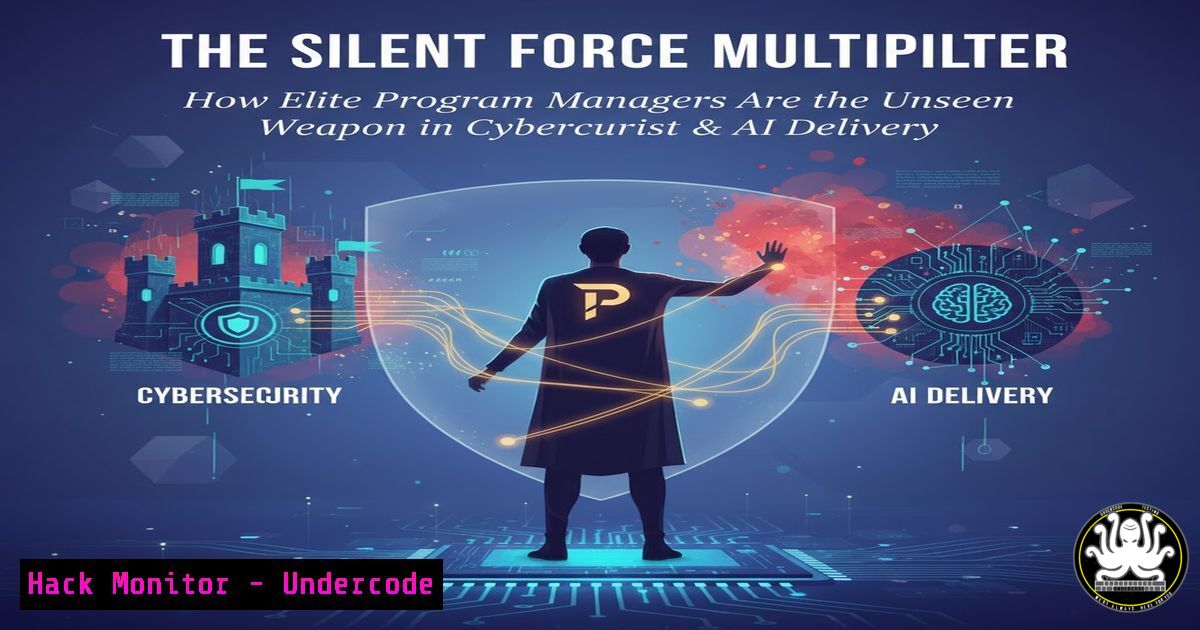
In the high-stakes realms of cybersecurity, AI, and SaaS, flawless execution is not a luxury—it’s a survival imperative. While technical expertise is often the focus, the unsung hero is the Technical Program Manager (TPM) who orchestrates chaos into predictable, secure delivery. This article deconstructs the core competencies that make a TPM an organization’s most potent asset in securing and scaling complex technological initiatives.
Learning Objectives:
- Understand how a TPM acts as a force multiplier for R&D, QA, and Operations, directly impacting security posture and product resilience.
- Learn to identify and eliminate critical path dependencies before they become security vulnerabilities or operational failures.
- Master the implementation of predictive KPIs that provide real-time visibility into project health and security compliance.
You Should Know:
- Orchestrating R&D, Product, QA, and Operations for Secure Delivery
A fragmented technology organization is a vulnerable one. When development, security, and operations teams work in silos, security becomes a bottleneck, vulnerabilities slip into production, and deployment cycles become unpredictable. An elite TPM bridges these divides, enforcing a culture of shared responsibility.
Step-by-Step Guide to Implementing a Secure Delivery Pipeline:
Step 1: Establish a Cross-Functional Security Charter. Form a “Secure Delivery Pod” with leads from R&D, QA, Security, and Operations. The TPM chairs this pod, ensuring security requirements are defined as user stories alongside functional requirements in the product backlog.
Step 2: Integrate Security Tooling into the CI/CD Pipeline. The TPM drives the integration of automated security scans. This is not a technical suggestion but a procedural mandate.
Linux Command Example (SAST): Integrate a tool like `semgrep` into your Jenkins or GitLab CI pipeline.
 Example stage in a Jenkinsfile (Declarative Pipeline)
stage('Static Application Security Testing (SAST)') {
agent any
steps {
sh 'semgrep --config=auto . --json > semgrep_results.json'
// Add a step to fail the build on high-severity findings
sh 'jq \'.results | map(select(.extra.severity == "ERROR")) | length\' semgrep_results.json | grep -q 0'
}
}
Explanation: This command automatically scans the codebase for known vulnerability patterns during every build. If critical errors are found, the build fails, preventing vulnerable code from progressing.
2. Preemptively Eliminating Single Points of Failure (SPoFs)
Dependencies, whether on a specific person, a third-party service, or an internal team, are latent risks. In cybersecurity, a SPoF can be the weakest link exploited in a supply chain attack. A TPM’s role is to systematically identify and mitigate these risks before they are exploited.
Step-by-Step Guide to Dependency Risk Mitigation:
Step 1: Create a Dependency Risk Register. The TPM facilitates sessions to map all critical dependencies for a project. This includes libraries, APIs, cloud services, and human expertise.
Step 2: Quantify and Plan for Risk. For each dependency, assess the impact and likelihood of failure. For high-risk items, the TPM mandates the creation of mitigation plans.
Technical Implementation: For a critical dependency on an external API, enforce circuit breaker patterns and fallback mechanisms in the code.
Example Code Snippet (Python with Tenacity):
from tenacity import retry, stop_after_attempt, wait_exponential, retry_if_exception_type
import requests

@retry(
stop=stop_after_attempt(3),
wait=wait_exponential(multiplier=1, min=4, max=10),
retry=retry_if_exception_type(requests.RequestException)
)
def call_critical_external_api(payload):
response = requests.post('https://critical-service.com/api', json=payload, timeout=5)
response.raise_for_status()
return response.json()

Fallback function
def get_fallback_data():
 Return cached or default data
return {"status": "using_fallback_data"}

Main service function
def get_secure_data(payload):
try:
return call_critical_external_api(payload)
except requests.RequestException:
 Log the failure for security auditing
print("ALERT: Primary API failed, using fallback.")
return get_fallback_data()
Explanation: This code ensures that a failure in the external service does not cascade to bring down your entire application. It retries the call a limited number of times and gracefully degrades to a fallback, maintaining system resilience.
3. Implementing Predictive KPIs for Security and Stability
Vanity metrics are useless. A TPM focuses on Key Performance Indicators (KPIs) that provide early warnings for technical debt, security drift, and operational instability. These are leading indicators of future failure.
Step-by-Step Guide to Deploying a Predictive KPI Dashboard:
Step 1: Define Technically Relevant KPIs. Move beyond “story points delivered.” Focus on:
Mean Time To Recovery (MTTR): How quickly can you recover from a production failure or security incident?
Change Failure Rate: What percentage of deployments cause a degraded service?
Dependency Update Lag: How many days behind the latest secure version are your critical libraries?
Step 2: Automate KPI Collection and Visualization. The TPM works with DevOps to instrument the pipeline and infrastructure.
Linux Command Example (MTTR): Use `prometheus` and `grafana` to track deployment failures and recovery times. Query Prometheus for time between a deployment and the next successful health check.
Windows Command Example (Security Compliance): Use PowerShell to audit system configurations against a security baseline.
 Example: Check for Windows systems with SMBv1 enabled (a known vulnerability)
Get-WindowsOptionalFeature -Online -FeatureName SMB1Protocol | Select-Object FeatureName, State
Output Interpretation: A state of “Enabled” indicates a critical security finding that must be remediated. The TPM would track the percentage of systems compliant with the “SMBv1 Disabled” policy.
4. Injecting Predictability into “Uncontrollable” Projects
Projects are deemed uncontrollable due to a lack of process, visibility, and accountability. A TPM injects rigor through scalable frameworks (e.g., Agile, Waterfall, Hybrid) tailored to the project’s risk profile, especially critical in security-centric projects like penetration tests or compliance audits.
Step-by-Step Guide to Structuring a Security Penetration Test:
Step 1: Pre-Engagement Scope Lock. The TPM works with security and product teams to define a rigid scope, rules of engagement, and communication plan. This prevents “scope creep” which dilutes the test’s effectiveness.
Step 2: Phased Execution with Daily Syncs. The test is broken into phases: Reconnaissance, Vulnerability Scanning, Exploitation, and Post-Exploitation. The TPM leads daily syncs to review findings, adjust tactics, and unblock the security team.
Step 3: Triage and Remediation Tracking. The TPM owns the process from finding to fix. They ensure every vulnerability is logged, assigned a severity, and assigned to an owner for remediation, tracking it to 100% closure.
5. The Human Firewall: Fostering a Security-First Culture
The most advanced technical controls can be defeated by human error. A TPM champions processes that build a “human firewall,” ensuring security is everyone’s responsibility, not just the security team’s.
Step-by-Step Guide to Mandatory Security Training Integration:
Step 1: Leverage Phishing Simulation Platforms. The TPM partners with IT Security to deploy controlled phishing campaigns (e.g., using KnowBe4 or Microsoft’s attack simulation training).
Step 2: Enforce Secure Development Training. Mandate interactive labs for developers on platforms like SecureFlag or Kontra, which focus on writing secure code by exploiting vulnerabilities in a safe environment.
Step 3: Gamify and Report. The TPM creates visibility by reporting on training completion rates and phishing test failure rates at the department level, fostering healthy competition and accountability.
What Undercode Say:
- A top-tier Technical Program Manager is not an administrator but a strategic operator who hardens your development lifecycle against operational and security failures.
- The true ROI of a TPM is measured in avoided outages, thwarted attacks, and accelerated time-to-market for secure, stable products.
The post by Gershon Avital, while a personal endorsement, perfectly encapsulates the non-negotiable competencies for modern tech leadership. In an era defined by AI-driven threats and cloud-native complexity, the ability to “close dependencies before anyone realizes there’s a problem” is a direct cyber-defense tactic. This individual’s profile suggests a practitioner who understands that predictability is born from process, and that robust process is the foundation of security. Organizations that fail to recognize the TPM role as a critical, force-multiplying function will continue to struggle with “uncontrollable” projects and reactive security postures, leaving them perpetually vulnerable.
Prediction:
The demand for technically-grounded Program Managers who can navigate the intersection of AI development, cybersecurity, and rapid SaaS delivery will explode. As AI integration becomes standard, the complexity and attack surface of applications will grow exponentially. The TPMs who can impose order on this chaos, ensuring AI systems are developed securely and dependably, will become as critical as Chief Information Security Officers (CISOs). Companies that leverage this skillset will achieve a significant competitive advantage, shipping complex, secure AI features faster and more reliably, while their competitors remain mired in technical debt and security vulnerabilities.
🎯Let’s Practice For Free:
IT/Security Reporter URL:
Reported By: Gershon Avital – Hackers Feeds
Extra Hub: Undercode MoN
Basic Verification: Pass ✅


