Listen to this Post
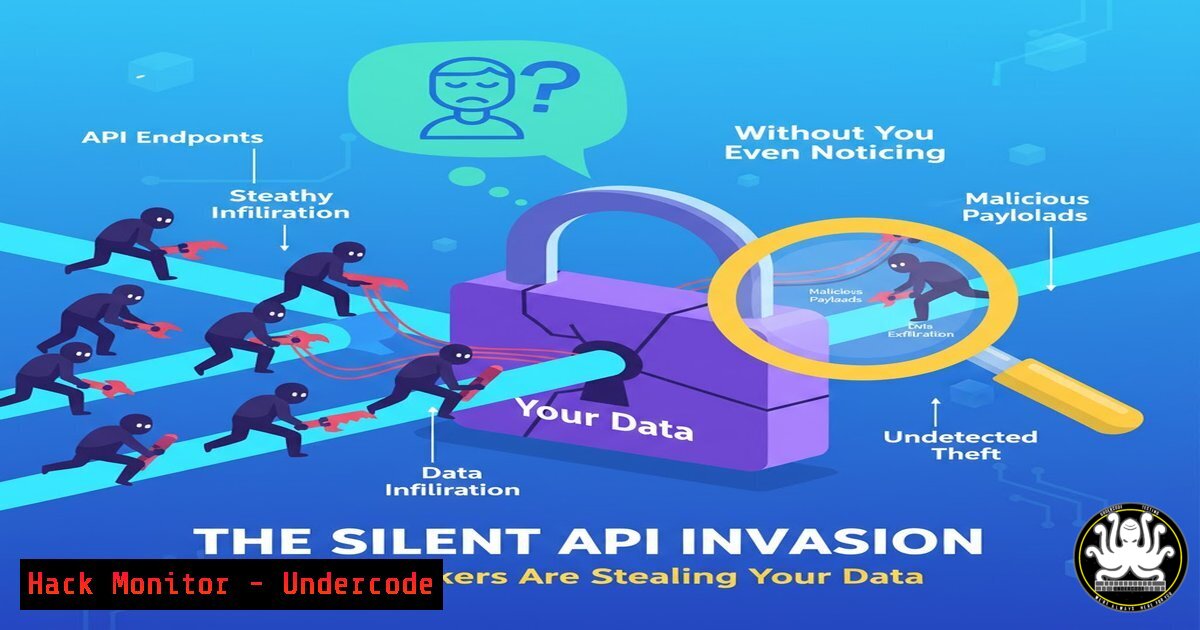
Introduction:
In the evolving landscape of cybersecurity, Application Programming Interfaces (APIs) have become the silent backbone of modern digital services, from mobile apps to cloud infrastructure. However, this proliferation has opened a new, vast attack surface that many organizations are ill-prepared to defend. This article delves into the techniques attackers use to exploit API vulnerabilities, providing a technical deep dive into reconnaissance, exploitation, and hardening strategies.
Learning Objectives:
- Understand the methodology for discovering and fingerprinting exposed APIs.
- Learn to exploit common API authentication and authorization flaws like Broken Object Level Authorization (BOLA).
- Implement robust security controls and monitoring specifically designed for API endpoints.
You Should Know:
1. The Art of API Discovery and Reconnaissance
Before an attacker can exploit an API, they must first find it. Many API endpoints are not intended for public consumption but are exposed nonetheless. The first step involves passive and active reconnaissance to map an organization’s API footprint.
Step‑by‑step guide explaining what this does and how to use it.
Step 1: Passive Subdomain Enumeration. Use tools like `amass` or `subfinder` to discover subdomains, which often host API endpoints.
Command: `amass enum -passive -d target.com`
This command performs a passive enumeration of subdomains for target.com, minimizing the risk of detection.
Step 2: Active Endpoint Discovery. Use a tool like `ffuf` (Fuzz Faster U Fool) to brute-force common API paths.
Command: `ffuf -w /usr/share/wordlists/api-endpoints.txt -u https://api.target.com/FUZZ -mc 200`
This fuzzes the target URL with a wordlist of common endpoint names (e.g., /api/v1/users, /graphql) and filters for successful HTTP 200 responses.
Step 3: Analyze JavaScript Files. Client-side JS files often contain hardcoded API endpoints. Use a browser’s Developer Tools (Sources tab) or a tool like `LinkFinder` to scan and extract endpoints from all JS files.
2. Exploiting Broken Object Level Authorization (BOLA)
BOLA is the number one API security risk according to OWASP. It occurs when an API endpoint does not properly verify that the user performing a request has the right to access the object. For example, an attacker can access another user’s data simply by changing an object ID in a request.
Step‑by‑step guide explaining what this does and how to use it.
Step 1: Authenticate to the API. Obtain a valid session token or API key for a low-privilege user account. This can often be done by creating a free account on the target application.
Step 2: Identify an Object-Referencing Endpoint. Find an endpoint that returns user-specific data, such as GET /api/v1/accounts/{account_id}.
Step 3: Manipulate the Object ID. Using a tool like Burp Suite or Postman, change the `account_id` parameter to that of another user. If the API returns the other user’s sensitive information without an authorization error, the vulnerability is confirmed.
Original Request: `GET /api/v1/accounts/12345`
Manipulated Request: `GET /api/v1/accounts/67890`
Mitigation: Implement access control checks on every API endpoint that accepts an object ID, ensuring the logged-in user has permission for the specific object being requested.
3. Fuzzing for Injection Flaws in API Inputs
APIs process vast amounts of data, making them prime targets for SQLi, Command Injection, and NoSQL injection attacks. Automated fuzzing can help uncover these flaws.
Step‑by‑step guide explaining what this does and how to use it.
Step 1: Identify All Input Vectors. Map every parameter, header, and body field that the API accepts.
Step 2: Use a Targeted Fuzzing Tool. Employ a tool like `ffuf` with a specialized payload wordlist.
Command for Path Fuzzing: `ffuf -w /usr/share/wordlists/SecLists/Injections/SQL.txt -u “https://api.target.com/users?id=FUZZ” -mc 200,500`
This command tests the `id` parameter for SQL injection vulnerabilities. A 500 error code might indicate a potential vulnerability.
Step 3: Analyze Responses. Look for differences in response time, length, or content that indicate successful injection. For example, a response that includes database version information confirms SQLi.
- Hardening API Infrastructure with a Web Application Firewall (WAF)
A properly configured WAF is critical for blocking automated attacks and providing virtual patches for newly discovered vulnerabilities before developers can fix the code.
Step‑by‑step guide explaining what this does and how to use it.
Step 1: Deploy a WAF. Use cloud-native solutions like AWS WAF or open-source options like ModSecurity.
Step 2: Create Custom Rules for API Traffic. Generic WAF rules are often insufficient. Create rules that understand your API’s structure.
Example ModSecurity Rule to block common API attack patterns:
SecRule REQUEST_URI "@rx /api/v[0-9]+/(users|admin)" \
"phase:1,deny,id:1001,msg:'Blocked unauthorized API access attempt'"
Step 3: Monitor and Tune. Analyze WAF logs to fine-tune rules and reduce false positives, ensuring legitimate traffic is not blocked.
5. Implementing Robust API Monitoring and Logging
Without specialized logging, malicious API activity can blend in with normal traffic. You need to log the right context to detect anomalies.
Step‑by‑step guide explaining what this does and how to use it.
Step 1: Enrich API Logs. Ensure every log entry includes critical context: API key/Token ID, User Agent, HTTP Method, Full Request Path, Timestamp, and User ID.
Step 2: Centralize Logs. Use a SIEM (Security Information and Event Management) system like Elastic Stack (ELK) or Splunk to aggregate logs from all API gateways and backend services.
Step 3: Create Detection Rules. Build alerts for suspicious patterns.
Example: Alert on the same API key being used from two geographically distant locations within an impossible time frame.
Example: Alert on a high rate of 4xx (client error) responses from a single IP, which could indicate automated scanning or fuzzing.
What Undercode Say:
- The shift from traditional web applications to API-driven architectures has fundamentally changed the attack surface, moving the battle from the web server to the logic of the API endpoints themselves.
- Defense is no longer just about patching known CVEs; it’s about understanding business logic flows and implementing strict, context-aware authorization at every step.
The traditional perimeter has dissolved. APIs are the new perimeter, and their stateless, data-centric nature makes them incredibly difficult to defend with legacy security tools. The most significant breaches in the coming years will not be from sophisticated zero-days, but from misconfigured endpoints and flawed business logic that allow attackers to perform mass data exfiltration one authorized-looking request at a time. Organizations must adopt a “zero-trust” mindset towards their own APIs, verifying every single request as if it came from an untrusted network.
Prediction:
The automation of API vulnerability discovery and exploitation will become a standard feature in penetration testing tools and criminal malware-as-a-service platforms. We will see a rise in “shadow API” attacks, where threat actors discover and exploit undocumented endpoints that lack any security controls. Furthermore, as AI integration via APIs becomes ubiquitous, we will witness the first major AI-model poisoning or data integrity attack conducted entirely through a compromised API, leading to cascading failures in dependent systems and eroding trust in AI-driven decision-making.
🎯Let’s Practice For Free:
IT/Security Reporter URL:
Reported By: Hetmehtaa Are – Hackers Feeds
Extra Hub: Undercode MoN
Basic Verification: Pass ✅


