Listen to this Post
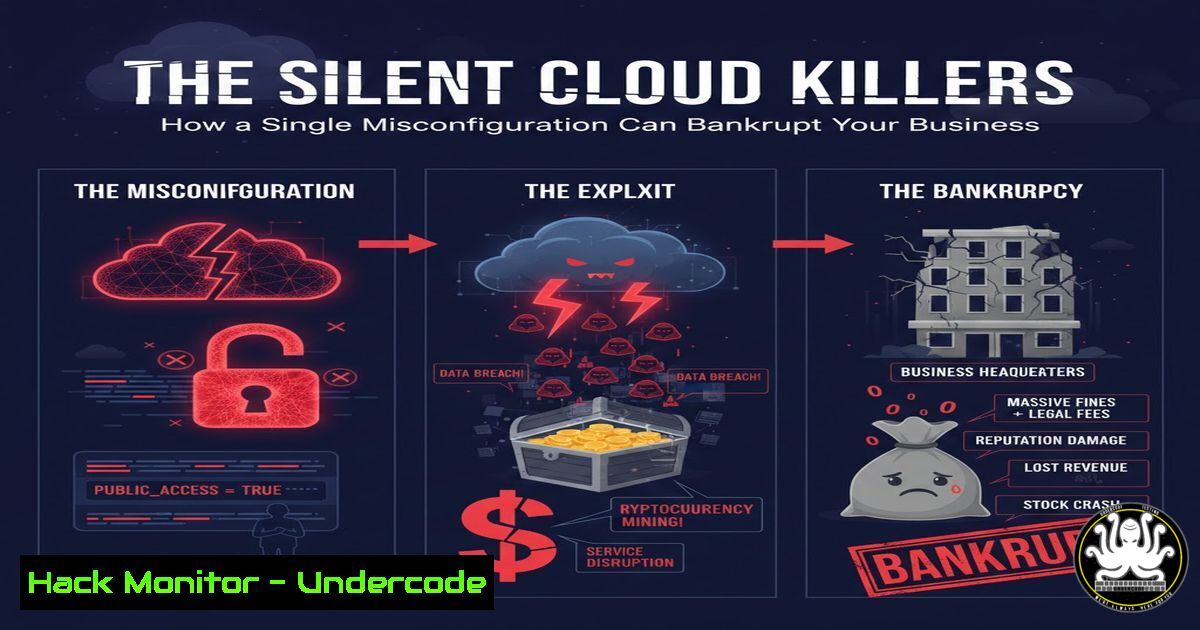
Introduction:
In the dynamic landscape of cloud security, the most devastating threats are often not the sophisticated zero-day exploits or advanced malware, but the silent, self-inflicted wounds of misconfiguration. As organizations accelerate their digital transformation, human oversight in fundamental cloud services—from Identity and Access Management (IAM) to simple storage settings—creates attack surfaces far more consequential than any external threat actor. This article deconstructs the primary misconfiguration pitfalls and provides a tactical guide to fortifying your cloud environment against these pervasive risks.
Learning Objectives:
- Identify and remediate critical IAM and resource-based policy misconfigurations.
- Implement automated guardrails for continuous compliance and configuration hardening.
- Establish forensic readiness and incident response procedures for cloud-native environments.
You Should Know:
1. The IAM Policy Time Bomb
The principle of least privilege is often sacrificed for operational speed, creating IAM policies with excessive permissions. A single over-permissive identity can be leveraged to traverse your entire cloud environment.
Step-by-step guide:
- Audit Existing Policies: Use AWS IAM Access Analyzer or Azure Policy to generate a report of all IAM roles, users, and their effective permissions.
Generate an IAM credential report in AWS
aws iam generate-credential-report

Analyze the report for users with long-unused credentials or admin policies
aws iam get-credential-report --query 'Content' --output text | base64 -d | column -s, -t
- Policy Refinement: Replace wildcard actions (
"Action": "") with specific, task-oriented actions. For example, an S3 management role should only have `s3:` on specific buckets, not all resources. - Enforce with Code: Use infrastructure as code (Terraform, CloudFormation) to ensure no IAM resources are created manually, bypassing policy reviews.
2. The S3 Bucket Data Leak
Public S3 buckets remain a leading cause of data breaches. A “temporary” public read setting can be forgotten, exposing sensitive data to internet-wide scanning.
Step-by-step guide:
- Discover and Classify: Use automated tools like AWS Macie or open-source scanners to discover all S3 buckets and classify data sensitivity.
- Enforce Bucket Policies: Implement a bucket policy that explicitly denies public read access, overriding any object-level ACLs.
{ "Version": "2012-10-17", "Statement": [ { "Sid": "DenyPublicRead", "Effect": "Deny", "Principal": "", "Action": "s3:GetObject", "Resource": "arn:aws:s3:::your-bucket-name/", "Condition": { "Bool": { "aws:SecureTransport": false } } } ] } - Enable Logging: Turn on S3 server access logging and AWS CloudTrail data events to monitor all bucket access attempts.
3. The Trust Policy Chain Reaction
A misconfigured resource-based policy (e.g., an S3 bucket policy or a KMS key policy) can grant unintended cross-account access. A trust policy allowing a development account to assume a production role can create a bridge for attackers.
Step-by-step guide:
- Map Trust Relationships: Use IAM Access Analyzer to review all resource-based policies for external access.
List all KMS keys and their key policies in an AWS account aws kms list-keys --query 'Keys[].KeyId' --output text | xargs -n 1 -I {} aws kms get-key-policy --key-id {} --policy-name default --output text - Apply the Principle of Least Privilege: In trust policies, specify precise source ARNs for `aws:SourceArn` or `aws:SourceAccount` conditions to prevent privilege escalation.
- Regularly Review Cross-Account Access: Schedule quarterly reviews of all cross-account IAM roles and resource policies, removing any that are no longer necessary.
4. The Unmonitored API Gateway
An unsecured API endpoint can serve as an unmonitored entry point into your backend services, exposing databases or internal systems.
Step-by-step guide:
- Enable Comprehensive Logging: Ensure AWS CloudTrail is enabled globally and that API Gateway execution logging is turned on, logging to CloudWatch with full request/response data.
- Implement Rate Limiting and Throttling: Configure usage plans and API keys for public endpoints. Use AWS WAF (Web Application Firewall) in front of API Gateway to block common web exploits like SQL injection.
- Conduct Security Reviews: Use automated API security scanners as part of your CI/CD pipeline to test for misconfigurations and vulnerabilities like broken object-level authorization (BOLA).
5. The Forgotten “Temporary” Resource
Cloud resources created for short-term testing, like EC2 instances with open security groups or public EBS snapshots, are often abandoned but not deleted, persisting as vulnerable assets.
Step-by-step guide:
- Implement Resource Tagging: Enforce a mandatory tagging policy (e.g.,
Owner,ExpiryDate) for all resources. Use AWS Config or Azure Policy to identify non-compliant resources. - Automate Decommissioning: Use AWS Lambda functions or Azure Automation runbooks triggered by CloudWatch Events to automatically identify and terminate resources past their expiration date.
Use AWS CLI to find all EC2 instances without a 'Owner' tag
aws ec2 describe-instances --filters "Name=tag:Owner,Values=NULL" --query 'Reservations[].Instances[].InstanceId' --output text
- Conduct Regular Hygiene Audits: Schedule bi-weekly reports of all running resources, focusing on untagged or aging assets for review and potential removal.
6. The Cloud Trail That Went Cold
A disabled or misconfigured CloudTrail (or Azure Activity Log) means you are operating blind, with no audit trail for security investigations or compliance requirements.
Step-by-step guide:
- Enable a Multi-Region Trail: Create a single multi-region CloudTrail trail that logs global API activity, configured to log to an S3 bucket with MFA delete enabled.
- Protect Log Integrity: Enable log file validation to ensure logs have not been tampered with. Use S3 Object Lock or a similar immutable storage mechanism for the trail logs.
- Set Up Alerts: Configure CloudWatch Alarms or Amazon GuardDuty to trigger on specific, high-severity API calls, such as
StopLogging,DeleteTrail, or `ConsoleLogin` failures.
What Undercode Say:
- Vigilance Over Velocity: The pressure for rapid cloud deployment directly conflicts with security diligence. Organizations must institutionalize security checkpoints—automated where possible, mandatory always—to prevent shortcuts from becoming breaches.
- The Shared Responsibility Clarification: The cloud provider is responsible for the security of the cloud, but you are irrevocably responsible for security in the cloud. This demarcation is where most failures occur, in the configuration of provisioned services.
The core analysis indicates a systemic issue: cloud security is less about building fortresses and more about meticulous hygiene. The tools to prevent these misconfigurations—IAM Access Analyzer, AWS Config, Security Hub—are readily available and often included in service subscriptions. The gap is not a capability gap but a cultural and process one. Building a culture where every temporary fix is documented with a mandatory expiration date and every IAM policy undergoes peer review before deployment is more critical than any single security tool. The future of cloud security lies in shifting left with automated policy-as-code and creating frictionless security defaults that make the safe path the easiest path for developers.
Prediction:
The escalation of cloud misconfigurations will catalyze the mainstream adoption of AI-driven security posture management. We will see the rise of autonomous remediation agents that not only identify drift from a secure baseline but also automatically propose and, with approval, execute precise fixes. Furthermore, the shared responsibility model will evolve, with cloud providers offering more “secure-by-default” configurations that cannot be easily overridden, reducing the attack surface created by human error. Insurance providers will also play a larger role, mandating specific configuration benchmarks and continuous monitoring as a prerequisite for cyber insurance coverage, making robust cloud security hygiene a non-negotiable business imperative.
🎯Let’s Practice For Free:
IT/Security Reporter URL:
Reported By: Taimurijlal A – Hackers Feeds
Extra Hub: Undercode MoN
Basic Verification: Pass ✅


