
Listen to this Post
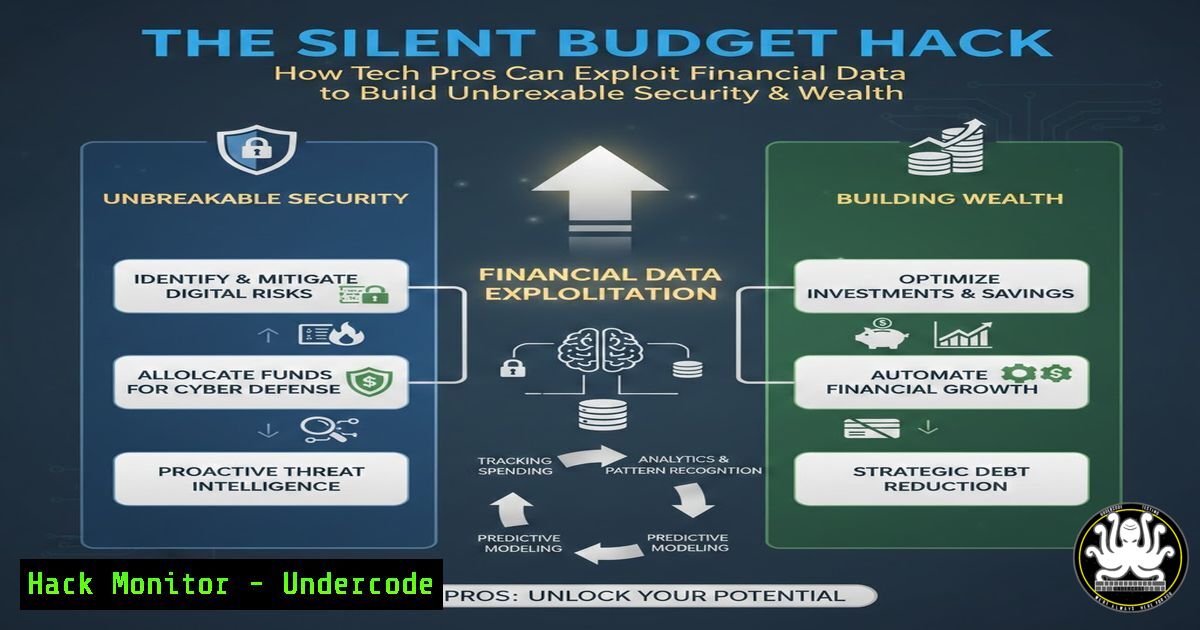
Introduction:
In an era where digital and financial footprints are inextricably linked, the projected cost of living for India in 2026 isn’t just a personal finance chart—it’s a threat surface map. For cybersecurity and IT professionals, this data reveals critical vulnerabilities in personal resource allocation, mirroring the misconfigurations and unchecked spending seen in compromised cloud environments. Mastering this data is the ultimate penetration test for your financial resilience.
Learning Objectives:
- Learn to apply infrastructure monitoring principles to personal finance for detecting “budget drift” and malicious spending patterns.
- Master scripting and automation techniques to enforce financial policies, mirroring Infrastructure-as-Code (IaC) security.
- Develop a threat model for lifestyle inflation and deploy investment strategies as proactive security controls.
You Should Know:
- From SIEM for Logs to SIEM for Expenses: Monitoring Your Financial Data Streams
Just as a Security Information and Event Management (SIEM) tool aggregates logs, you must aggregate your financial data. The listed expenses (Petrol: ₹100/litre, Rent: ₹35,000/month) are your baseline logs. Any deviation is an event.
Step‑by‑step guide:
Data Aggregation: Use open-source tools to create a centralized view. Export bank statements (CSV) and use a Python script to categorize them.
 Example Python snippet to categorize expenses (simplified)
import pandas as pd
df = pd.read_csv('bank_statement.csv')
 Define categories based on the post's list
expense_categories = {
'fuel': ['petrol', 'diesel'],
'rent': ['rent', 'housing'],
'utilities': ['electricity', 'broadband', 'gas'],
 ... add more
}
def categorize(description):
for category, keywords in expense_categories.items():
if any(keyword in description.lower() for keyword in keywords):
return category
return 'other'
df['category'] = df['description'].apply(categorize)
print(df.groupby('category')['amount'].sum())
Alerting: Set thresholds. If “Coffee at Café” spending exceeds ₹3000/month, trigger an alert. This is identical to setting a CloudWatch alarm for unexpected AWS S3 spending.
Visualization: Use Grafana with a PostgreSQL backend to dashboard your cash flow, treating savings rate as your “system uptime.”
- Hardening Your Fixed Costs: The “Immutable Infrastructure” of Your Budget
The comment by Vishal Jalan highlights the danger of locked-in fixed costs (Rent, EMIs, School Fees). In IT, these are your legacy systems and reserved instances—hard to change but critical to secure.
Step‑by‑step guide:
Audit: List all fixed, recurring commitments. Treat each as a running service.
 Analogy: List all running services (Linux)
systemctl list-units --type=service --state=running
 For Windows, analogous command:
Get-Service | Where-Object {$_.Status -eq 'Running'}
Negotiation & Optimization: Can you “right-size”? Renegotiate rent, refinance a loan (lower EMI), or review insurance premiums. This is the equivalent of reviewing reserved instance commitments in AWS every quarter.
Automate Payments with Security: Use bank autopay but with transaction limits and approvals for amounts over a threshold, mimicking Privileged Access Management (PAM) controls.
- Containing Variable Cost Sprawl: Applying Containerization to Discretionary Spending
Variable costs (Groceries, Clothes, Lifestyle) are like unmanaged container sprawl. They can consume all resources if not isolated and limited.
Step‑by‑step guide:
Create Namespaces: Allocate strict monthly “namespaces” for each variable category (e.g., ₹5000 for “Clothes & Lifestyle”).
Enforce Limits: Use pre-paid wallets or dedicated debit cards for each category. This is akin to setting Kubernetes resource limits (limits.memory, limits.cpu).
Scan for Anomalies: Use weekly reviews to find processes (spending habits) that are exceeding their limits and terminate them.
- Automating Savings: The CI/CD Pipeline for Financial Security
Manual savings fail, just as manual deployments fail. You need a Continuous Integration/Continuous Deployment (CI/CD) pipeline for your capital.
Step‑by‑step guide:
CI – The Commit: The moment salary hits your account (the code commit), a rule is triggered.
CD – The Deployment: Automatically deploy funds to different “environments.”
 Example using a bank's CLI tool or a cron-triggered script
 On salary credit day, initiate transfers (pseudo-code)
transfer --amount 20000 --to account_investment --immediate
transfer --amount 15000 --to account_emergency_fund --immediate
 Remainder is for operational expenses (the "production" environment)
Tools: Set up standing instructions, or use APIs from platforms like Zerodha or Groww to automate SIPs, treating them as automated security patches for your wealth.
- Investing in Skills: The Ultimate Vulnerability Management Program
The post’s conclusion underscores planning. In tech, planning is continuous learning. The ₹80,000 iPhone is a depreciating asset; the same amount in an AWS certification or cybersecurity course is an appreciating one.
Step‑by‑step guide:
Vulnerability Assessment: Audit your skillset. Use platforms like TryHackMe, HackTheBox, or Coursera to identify gaps.
Patch Deployment: Allocate a fixed monthly budget (e.g., ₹2,000 from “Clothes & Lifestyle”) for courses.
Exploit Development: Turn new skills into side income (bug bounties, freelance consulting) or a higher salary, creating a direct return-on-security-investment (ROSI).
What Undercode Say:
- Your Budget is Your Source Code: An unreviewed, unmanaged budget is as dangerous as unreviewed application code. Every line item is a potential vulnerability.
- Financial Threat Modeling is Non-Negotiable: You must identify your high-value assets (savings, investments), model threats (lifestyle inflation, impulsive debt), and deploy controls (automation, limits) with the same rigor as you would for a web application.
- The dialogue in the comments reveals the core issue: it’s a system design problem. A ₹1L/month income is a finite pool of computational resources. Without QoS (Quality of Service) policies to prioritize critical processes (savings, investments) and limit bandwidth for non-essential ones (luxury spends), the system (your finances) will experience latency (debt) and eventual failure. The tech mindset of monitoring, automation, and iterative hardening is the precise toolset needed to solve it.
Prediction:
The convergence of FinTech and AI will make personalized financial penetration testing a reality by 2026. AI agents will continuously scan your spending patterns, simulate stress tests (e.g., “what if petrol hits ₹150/litre?”), and automatically deploy mitigating controls by reallocating funds or pausing discretionary subscriptions. The professional who masters the manual, principle-based approach today will seamlessly command these AI tools tomorrow, achieving not just financial security but financial sovereignty—an unbreachable system in an inflationary world.
▶️ Related Video (74% Match):
🎯Let’s Practice For Free:
IT/Security Reporter URL:
Reported By: Siddhantgarg19 Finance – Hackers Feeds
Extra Hub: Undercode MoN
Basic Verification: Pass ✅


