Listen to this Post
Introduction:
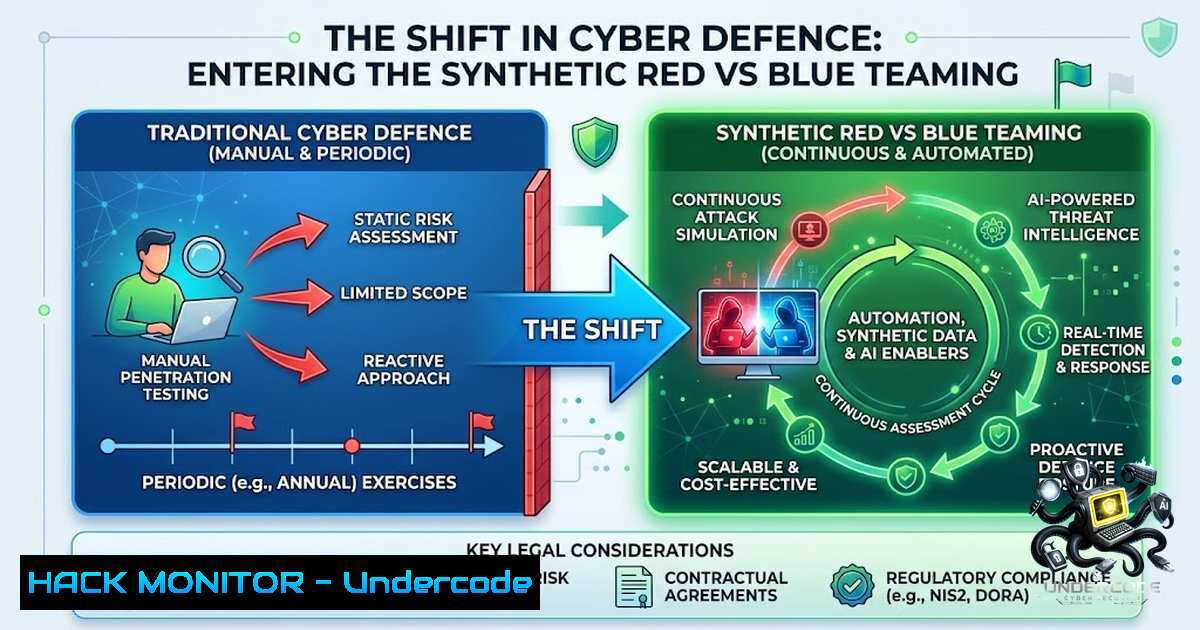
The cybersecurity paradigm has officially shifted from periodic patching to continuous, AI-driven warfare. As next-generation models scan systems 24/7 for vulnerabilities and autonomous scanners are wired directly into CI/CD pipelines, the traditional annual penetration test has become obsolete. This evolution forces organizations to rethink their entire security strategy, moving from reactive fixes to proactive, machine-speed defence where architectural policy, compliance, and access governance become the new battlegrounds.
Learning Objectives:
- Understand the fundamental shift from annual penetration testing to continuous automated red-teaming.
- Learn how to integrate autonomous security scanners into CI/CD pipelines for real-time vulnerability detection and remediation.
- Develop strategies to address the emerging “zero-exploit” headache and prepare for regulatory demands regarding built-in access.
You Should Know:
1. The Death of the Annual Pen Test
The era of the yearly penetration test is over. Attack models now run every microsecond, rendering annual updates obsolete. Organizations still relying on “we’ll patch it next sprint” are already being outsmarted by AI that never sleeps. The new standard is continuous automated red-teaming, a baseline hygiene practice for any modern board.
Step-by-Step Guide: Implementing Continuous Automated Red-Teaming
This guide outlines how to set up a basic continuous red-teaming pipeline using open-source and commercial tools.
- Tool Selection: Choose an automated red-teaming framework. Options include open-source tools like `strix-agent` for CI/CD integration or commercial platforms like Novee’s AI Red Teaming for LLM applications. For cloud infrastructure, consider ProjectDiscovery’s Neo.
- CI/CD Integration: Integrate your chosen tool into your CI/CD pipeline. For GitHub Actions, this might involve adding a step to your `.github/workflows/main.yml` file:
</li>
</ol>

- name: Run Automated Red Team Scan
uses: orchestrator-dev/morpheus@v1  Example action
with:
target: ${{ github.workspace }}
output: sarif
3. Configuration: Configure the tool to scan your codebase, dependencies, and infrastructure. For
strix-agent, you can run it locally:strix-agent scan ./ --severity high --output report.sarif
This command scans the current directory for high-severity vulnerabilities and outputs a SARIF report.
4. Automated Remediation: Set up the pipeline to automatically generate pull requests for identified vulnerabilities. Tools like Google’s CodeMender can scan for flaws, confirm exploitability, and generate fixes.
5. Continuous Monitoring: Run these scans on every pull request and commit to block insecure code before it reaches production. Use a scheduler (e.g., `cron` on Linux or Task Scheduler on Windows) to run full scans periodically.
Linux (Cron): `0 2 /usr/local/bin/strix-agent scan /var/www/html –output /var/reports/daily_scan.sarif`
Windows (Task Scheduler): Create a scheduled task to run `strix-agent scan C:\inetpub\wwwroot –output C:\reports\daily_scan.sarif`2. The “Zero-Exploit” Headache and Regulatory Compliance
As AI-hardened code becomes the norm, regulators and intelligence agencies will increasingly demand built-in access. This creates a compliance headache: how do you balance security with legal requirements for backdoor access? Organizations must prepare their legal and compliance teams now.
Step-by-Step Guide: Preparing for the “Zero-Exploit” Compliance Landscape
- Inventory AI Assets: Create a comprehensive inventory of all AI models and systems in use, including shadow AI.
- Conduct a Compliance Gap Analysis: Review existing regulations (e.g., GDPR, CCPA, emerging AI acts) and identify gaps related to AI security and access.
- Implement Governance Policies: Translate governance policies into technical controls. For example, if a policy states “AI models shall not exfiltrate sensitive data,” implement an Infrastructure-as-Code (IaC) egress block rule.
- Deploy Data Loss Prevention (DLP): Block unauthorized AI tools and establish DLP rules to prevent data exfiltration.
- Engage Legal Counsel: Proactively work with legal teams to understand and prepare for potential government requests for backdoor access.
3. Building the Synthetic Red vs. Blue Team
The future of cyber defence lies in synthetic red and blue teams. AI agents simulate attackers (Red Team) and defenders (Blue Team) in a continuous, automated loop. This approach, sometimes extended with a “Green Team” for remediation, provides full lifecycle coverage from attack simulation to incident response.
Step-by-Step Guide: Setting Up a Synthetic Red vs. Blue Team Environment
- Deploy a Simulation Platform: Use platforms like Microsoft’s Project Perception, which deploys AI agents as red, blue, and green team members. Alternatively, explore open-source projects like
multiagent-soc. - Define Scenarios: Define attack scenarios for the Red Team to simulate. This could include phishing, zero-day exploits, or supply chain attacks.
- Configure Defensive Rules: Allow the Blue Team to develop detection rules based on the Red Team’s activity.
- Automate Remediation: Enable the Green Team to automatically deploy fixes for detected vulnerabilities.
- Continuous Improvement: Use a digital twin of your IT environment to safely simulate attacks and refine your defences without disrupting production.
4. Hardening CI/CD Pipelines Against AI-Driven Attacks
As AI tools become integral to development, attackers are beginning to hide malicious activity inside trusted CI pipelines. Securing the pipeline itself is now paramount.
Step-by-Step Guide: Securing Your CI/CD Pipeline
- Scan Dependencies: Use tools like Dependabot to automatically fix vulnerable dependencies.
- Static Application Security Testing (SAST): Integrate a SAST tool into your pipeline. For example, using the `sast` Python package:
pip install sast
sast ./src --sarif report.sarif
This scans your source code and generates a SARIF report.
- Secrets Scanning: Use a tool like `velonus` to scan for hardcoded secrets:
velonus scan ./ --severity high
This runs a security scanner pipeline that includes secrets detection.
- Container Scanning: Scan container images for vulnerabilities before deployment:
armis-cli scan image nginx:latest
This scans the specified container image for known vulnerabilities.
- Pipeline Analysis: Analyze your pipeline configuration for security issues:
sci pipeline analyze .github/workflows/
This analyzes your GitHub Actions workflows for potential misconfigurations.
-
Cloud Hardening and API Security in the AI Era
With the battle shifting to architecture and policy, cloud hardening and API security become critical. AI agents can now autonomously run tools like Metasploit, nmap, and sqlmap against your infrastructure.
Step-by-Step Guide: Hardening Cloud and API Security
- Implement Zero Trust: Adopt a zero-trust architecture. Segment access to LLM environments to prevent tampering and poisoned data inputs.
- API Security Scanning: Integrate API security scanning into your CI/CD pipeline. Tools like `Novee` can test for API vulnerabilities.
- Continuous Exposure Validation: Use services like Rapid7’s Vector Command Advanced for continuous red teaming and exposure validation.
- Infrastructure as Code (IaC) Scanning: Scan your IaC templates (e.g., Terraform, CloudFormation) for misconfigurations.
- Regular Audits: Conduct regular audits of your cloud and API configurations, using automated tools to ensure compliance with security policies.
What Undercode Say:
- Key Takeaway 1: Annual penetration tests are a relic of the past. Continuous, automated red-teaming is now baseline hygiene.
- Key Takeaway 2: The “zero-exploit” era will bring increased regulatory scrutiny and demands for built-in access. Legal teams must prepare now.
Analysis: The shift to synthetic red vs. blue teaming represents a fundamental change in cybersecurity strategy. It moves the focus from reactive patching to proactive, continuous defence. However, this shift also introduces new challenges, particularly around compliance and the potential for increased government surveillance. Organizations that fail to adapt will find themselves outpaced by AI-driven attacks. The key to success lies in embracing automation, hardening CI/CD pipelines, and preparing for the regulatory battles ahead.
Prediction:
- +1 The widespread adoption of AI-driven red teaming will significantly reduce the number of successful zero-day attacks, as vulnerabilities are discovered and patched before they can be exploited.
- -1 The demand for built-in access by regulators will create a new battleground between privacy advocates and security agencies, potentially leading to a fragmentation of global security standards.
- +1 Organizations that successfully implement continuous automated red-teaming will gain a significant competitive advantage by demonstrating superior security posture to customers and partners.
- -1 The reliance on AI for security will create new attack vectors, as attackers target the AI systems themselves, leading to a new class of AI-specific vulnerabilities.
- +1 The development of autonomous patching tools will dramatically reduce the window of exposure for critical vulnerabilities, making it harder for attackers to find and exploit weaknesses.
▶️ Related Video (84% Match):
🎯Let’s Practice For Free:
🎓 Live Courses & Certifications:
Join Undercode Academy for Verified Certifications
🚀 Request a Custom Project:
Secure, high-velocity infrastructure and disruptive technological engineering. Contact our engineering team for high-tier development and proprietary systems:
[email protected]
💎 Smart Architecture | 🛡️ Secure by Design | ⭐ Trusted by ThousandsIT/Security Reporter URL:
Reported By: https://lnkd.in/p/eJxBtteC – Hackers Feeds
Extra Hub: Undercode MoN
Basic Verification: Pass ✅🔐JOIN OUR CYBER WORLD [ CVE News • HackMonitor • UndercodeNews ]
📢 Follow UndercodeTesting & Stay Tuned:


