
Listen to this Post
Introduction:
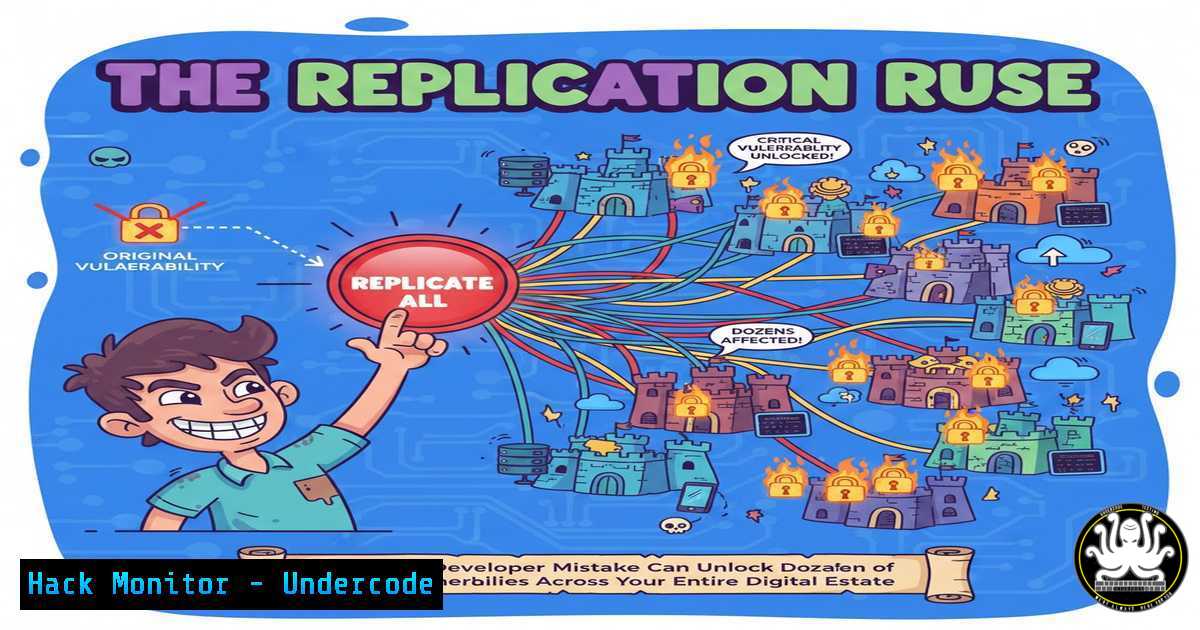
In a revealing LinkedIn post, bug hunter Ziad Ahmed highlighted a fundamental truth in application security: a single developer error is rarely an isolated incident. By discovering the same critical vulnerability across two separate domains within the same organization, Ahmed demonstrated how flawed code, insecure patterns, and shared libraries can turn a single bug into a systemic compromise. This incident underscores a pervasive risk in modern DevOps and microservices architectures, where efficiency can inadvertently breed widespread vulnerability.
Learning Objectives:
- Understand the methodologies for identifying and exploiting replicated vulnerabilities across multiple assets.
- Learn systematic reconnaissance and testing techniques to uncover shared codebase flaws.
- Implement automation strategies for scalable vulnerability hunting and validation.
You Should Know:
1. Systematic Reconnaissance: Mapping the Attack Surface
The first step in replicating a found bug is to map every asset where the vulnerable code or pattern might exist. This involves subdomain enumeration, technology fingerprinting, and identifying shared development frameworks.
Step‑by‑step guide:
Subdomain Discovery: Use tools like subfinder, amass, and `findomain` to build a comprehensive list.
subfinder -d target-company.com -o subdomains.txt
amass enum -d target-company.com -o amass_subs.txt
cat subdomains.txt amass_subs.txt | sort -u > all_subs.txt
Web Server Probing: Use `httpx` or `httprobe` to find live web servers from your list.
cat all_subs.txt | httpx -threads 50 -o live_targets.txt
Technology Stack Identification: Use `Wappalyzer` (browser extension) or `whatweb` to fingerprint technologies.
whatweb -i live_targets.txt --color=never --log-verbose=tech_stack.log
Analysis: Correlate results. If your original bug was on `app1.target.com` running Node.js/Express, prioritize all other live subdomains with the same stack.
2. Pattern Analysis and Vulnerability Replication
Once similar endpoints are identified, you must replicate the attack vector. This often involves testing identical API endpoints, parameters, and input fields.
Step‑by‑step guide:
Endpoint Mapping: Use tools like `gau` (GetAllURLs) and `waybackurls` to gather historical URLs for each new target, looking for patterns.
cat new_targets.txt | gau | grep "api/v1/user" | sort -u > potential_endpoints.txt
Automated Parameter Fuzzing: Use `ffuf` to fuzz common parameters. If the original bug was an IDOR on parameter user_id, test it everywhere.
ffuf -w potential_endpoints.txt:FUZZ -w common_params.txt:PARAM -u "https://target/FUZZ?PARAM=test_value" -mr "error" -t 50
Manual Verification: Automate the initial hunt, but manually verify each potential finding to understand context and impact, avoiding false positives.
3. Exploiting Shared Authentication & Authorization Flaws
A common source of replicated bugs is a broken authentication module or misconfigured authorization policy shared across services.
Step‑by‑step guide:
Test JWT/Token Validity Across Domains: Extract a session token from the original vulnerable application and test it against other subdomains.
 Using curl to test token reuse
curl -H "Authorization: Bearer <JWT_TOKEN>" https://other-service.target.com/api/auth/me
A successful response indicates a shared, and potentially flawed, authentication realm.
Test for Insecure Direct Object References (IDOR): If you found an IDOR (e.g., `/api/user/123` → /api/user/124), immediately test the same numeric increment pattern on all other discovered API endpoints.
4. Automating the Hunt with Scripts and Proxies
Scale your testing by automating the replication of successful payloads.
Step‑by‑step guide:
Burp Suite Intruder/Repeater: Use the “Send to Intruder” feature to systematically swap target hosts while keeping the malicious request intact.
Custom Python Script: Write a simple script to iterate through your target list.
import requests
targets = ["https://serviceA.target.com", "https://serviceB.target.com"]
vulnerable_endpoint = "/api/v1/profile"
malicious_params = {"user_id": "1000"}
for target in targets:
r = requests.get(target + vulnerable_endpoint, params=malicious_params)
if "other_user_data" in r.text:
print(f"[!] Potential IDOR on: {target}")
Integrate with Nuclei: Create or use existing Nuclei templates for the specific vulnerability class you discovered.
nuclei -l live_targets.txt -t /path/to/custom-idor-template.yaml
5. Mitigation and Secure Development Lifecycle (SDLC) Integration
Preventing replicated bugs requires shifts in both developer practice and security architecture.
Step‑by‑step guide:
Implement Centralized Security Libraries: Move authentication, authorization, and input validation logic into vetted, internal shared libraries.
Mandate Code Reviews with Security Checklists: Ensure reviews specifically look for past vulnerability patterns.
Integrate Dynamic Testing in CI/CD: Use DAST tools like OWASP ZAP or commercial solutions in pipelines, scanning every deployment, not just the main application.
 Example GitLab CI job
zap_scan:
image: owasp/zap2docker-stable
script:
- zap-baseline.py -t https://${NEW_DEPLOYMENT_URL} -g gen.conf -r report.html
Adopt a Zero-Trust Network Architecture: Segment microservices. A breach in one service shouldn’t guarantee access to another, even with a shared flaw.
What Undercode Say:
- Pattern Recognition is the Hacker’s Greatest Tool: Successful penetration testers and bug hunters think like developers. They identify the root pattern of a flaw—a misconfigured CORS policy, an unsanitized database call, a weak RNG—and hunt for its echo across the entire digital footprint.
- Automation is Non-Negotiable for Defense: The same automation that allows an attacker to find 10 instances of a bug in an hour must be mirrored by defenders. Automated security regression testing in CI/CD is the only scalable defense against replicated vulnerabilities.
Analysis: Ahmed’s experience is a microcosm of a massive industry-wide challenge. The drive for development velocity through code reuse, shared components, and copy-pasted solutions inherently breeds vulnerability replication. This moves the attacker’s advantage from finding a single needle in a haystack to finding the mold that creates all needles. Defensive strategies must evolve accordingly, focusing less on point-fix vulnerability management and more on “pattern remediation” within the SDLC. Security teams need to shift left not just to find bugs earlier, but to identify and correct the flawed development patterns that cause those bugs to spawn across repositories.
Prediction:
The trend towards highly distributed microservices and serverless architectures will amplify the impact of replicated vulnerabilities. A single flawed AWS Lambda layer or Docker container image could instantiate the same critical vulnerability across hundreds of functions overnight. Conversely, the integration of AI-powered code assistants (like GitHub Copilot) will become a double-edged sword. While they can suggest secure code, they also risk automating and proliferating insecure patterns at an unprecedented scale. The future battleground will be in the AI training data and prompts themselves, with security teams needing to “secure the pattern generator” rather than just the generated code.
▶️ Related Video (72% Match):
🎯Let’s Practice For Free:
IT/Security Reporter URL:
Reported By: Ziad Ahmed – Hackers Feeds
Extra Hub: Undercode MoN
Basic Verification: Pass ✅


