Listen to this Post
Introduction:
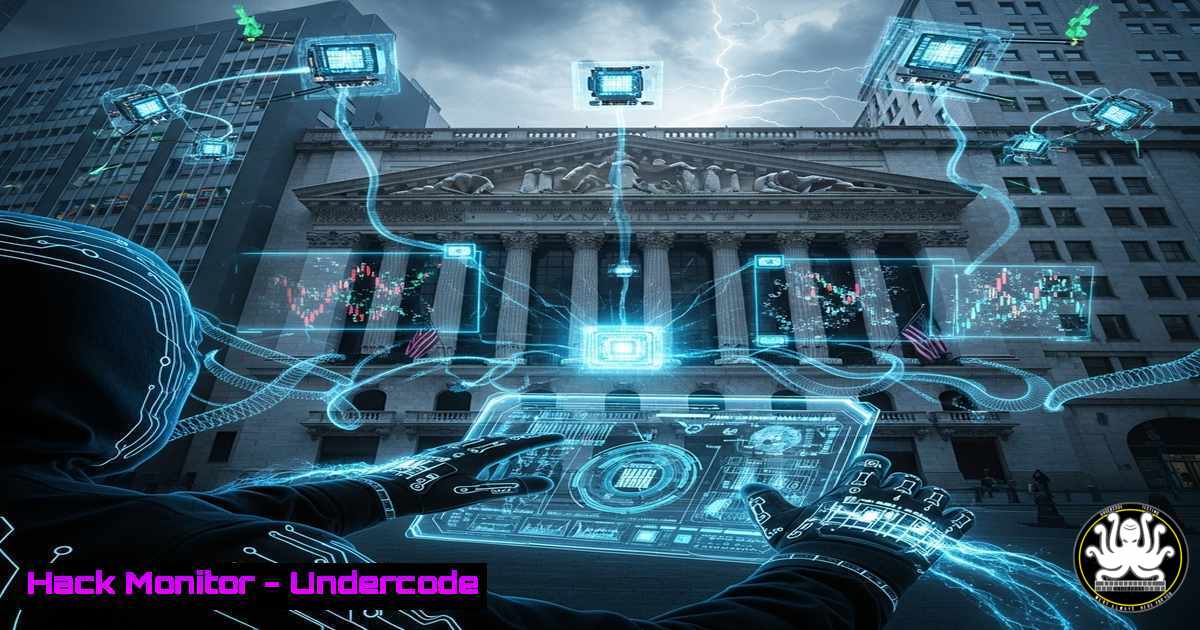
Wall Street’s pivot towards quantum computing and AI-driven trading algorithms isn’t just a financial evolution; it’s a seismic shift in the cybersecurity threat landscape. The immense computational power being harnessed for profit also presents an unprecedented arsenal for malicious actors, potentially rendering current encryption and security protocols obsolete overnight.
Learning Objectives:
- Understand the convergence of quantum computing, AI, and high-frequency trading (HFT) and its inherent cyber risks.
- Identify critical vulnerabilities in algorithmic trading systems and the underlying blockchain infrastructure.
- Learn immediate mitigation strategies and commands to harden systems against these emerging threats.
You Should Know:
1. Quantum Vulnerabilities in Cryptographic Keys
The advent of quantum computing poses an existential threat to current asymmetric cryptography, which secures everything from SSL/TLS to cryptocurrency wallets.
`openssl genpkey -algorithm RSA -out private.key -pkeyopt rsa_keygen_bits:4096`
This OpenSSL command generates a 4096-bit RSA private key. While currently secure, quantum algorithms like Shor’s can eventually break these. The step-by-step is: 1. Install OpenSSL on your system. 2. Run the command in your terminal. 3. Securely store the generated `private.key` file. This highlights the immediate need to start planning for quantum-resistant cryptography.
2. AI-Powered Trading Bot Exploitation
AI-driven trading bots can be manipulated through data poisoning or adversarial attacks, leading to market manipulation or massive financial loss.
`tcpdump -i eth0 -w algo_traffic.pcap port 9050`
This command captures all network traffic on port 9050 (common for trading APIs) to a file named algo_traffic.pcap. Analyzing this traffic can help identify unusual patterns or data injections aimed at corrupting the AI’s learning model. Steps: 1. Execute on a server hosting the trading algorithm. 2. Use Wireshark to later analyze the `.pcap` file for anomalies.
3. Hardening API Endpoints for Trading Platforms
The Solana ETF infrastructure relies heavily on APIs, which are prime targets for injection and DDoS attacks.
`sudo iptables -A INPUT -p tcp –dport 443 -m connlimit –connlimit-above 100 -j REJECT`
This Linux iptables rule mitigates DDoS attacks by rejecting new connections on port 443 (HTTPS) if a single IP address exceeds 100 simultaneous connections. Steps: 1. Access your Linux server’s terminal. 2. Add the rule to your active iptables chain. 3. Persist the rules across reboots using iptables-save.
4. Auditing Smart Contract Code for Reentrancy
The underlying smart contracts for any financial instrument are critical attack vectors. Reentrancy attacks, like the infamous DAO hack, are a primary concern.
`slither ./path/to/smart-contract –detect reentrancy-eth,reentrancy-no-eth`
This command uses the Slither static analysis framework to audit a Solidity smart contract for reentrancy vulnerabilities. Steps: 1. Install Slither via pip: pip install slither-analyzer. 2. Navigate to your project directory. 3. Run the command to generate a vulnerability report.
5. Detecting Memory-Scraping Malware in HFT Environments
High-frequency trading systems are lucrative targets for memory-scraping malware designed to steal proprietary algorithms and trading data.
`sudo Volatility -f memory_dump.raw memdump -D output/`
This Volatility Framework command extracts all process memory from a acquired RAM dump (memory_dump.raw) into the `output/` directory. This is a critical step in forensic analysis to find malicious code or exfiltrated data residing in memory. Steps: 1. Acquire a physical memory dump using a tool like AVML or LiME. 2. Use this Volatility command to parse and dump process memory for strings analysis.
6. Securing Containerized Trading Applications
Modern trading platforms are deployed using containers (Docker, Kubernetes), which introduce new attack surfaces if misconfigured.
`docker bench-security`
This command runs the CIS Docker Benchmark, a script that checks a Docker host for dozens of common security best practices. Steps: 1. Download the script from GitHub. 2. Make it executable: chmod +x docker-bench-security.sh. 3. Run it: sudo ./docker-bench-security.sh. Review the output and remediate any failures, such as unneeded capabilities or insecure mount points.
7. Implementing Zero-Trust for Internal Networks
The traditional network perimeter is dead. A zero-trust model assumes no user or system is trusted by default, even if they are inside the corporate network.
`nmap -sS -O 192.168.1.0/24`
This Nmap command performs a stealth SYN scan and OS fingerprinting on the entire `192.168.1.0/24` subnet. In a zero-trust architecture, this type of continuous discovery and verification is essential to map assets and ensure nothing unauthorized is communicating on the network. Steps: 1. Install Nmap. 2. Run the command from a trusted security workstation to audit your network. 3. Investigate any unknown or unexpected devices.
What Undercode Say:
- The integration of quantum and AI tech in finance is not a future problem; vulnerabilities are being baked into systems today that will be exploited tomorrow.
- The attack surface is expanding exponentially, moving beyond simple code bugs to fundamental flaws in mathematical assumptions and AI logic.
The convergence reported by Wall Street signals the single largest concentration of value and computational power in history. This isn’t just a target; it’s the ultimate prize for state-sponsored actors and cybercriminals. The analysis suggests that the industry is building a supercar without first inventing the seatbelt. The focus on speed and profit is overwhelmingly outpacing the focus on security. The next major financial catastrophe may not be caused by a market crash, but by a sophisticated cyber attack that exploits these very technological advancements, leading to a crisis of confidence in the entire digital financial system.
Prediction:
Within the next 3-5 years, we will witness the first successful “Quantum Heist”—a multi-billion dollar cyber attack facilitated by a hybrid approach combining AI-driven social engineering, quantum computing-powered decryption, and the exploitation of zero-day vulnerabilities in algorithmic trading platforms. This event will not just target a single bank or exchange but will aim to manipulate the market itself, causing widespread panic and forcing a global, regulatory-led scramble to implement and standardize post-quantum cryptography and AI security protocols. The financial sector’s technological arms race is simultaneously creating its greatest existential threat.
🎯Let’s Practice For Free:
IT/Security Reporter URL:
Reported By: Arammughalyan Forget – Hackers Feeds
Extra Hub: Undercode MoN
Basic Verification: Pass ✅


