Listen to this Post
Introduction:
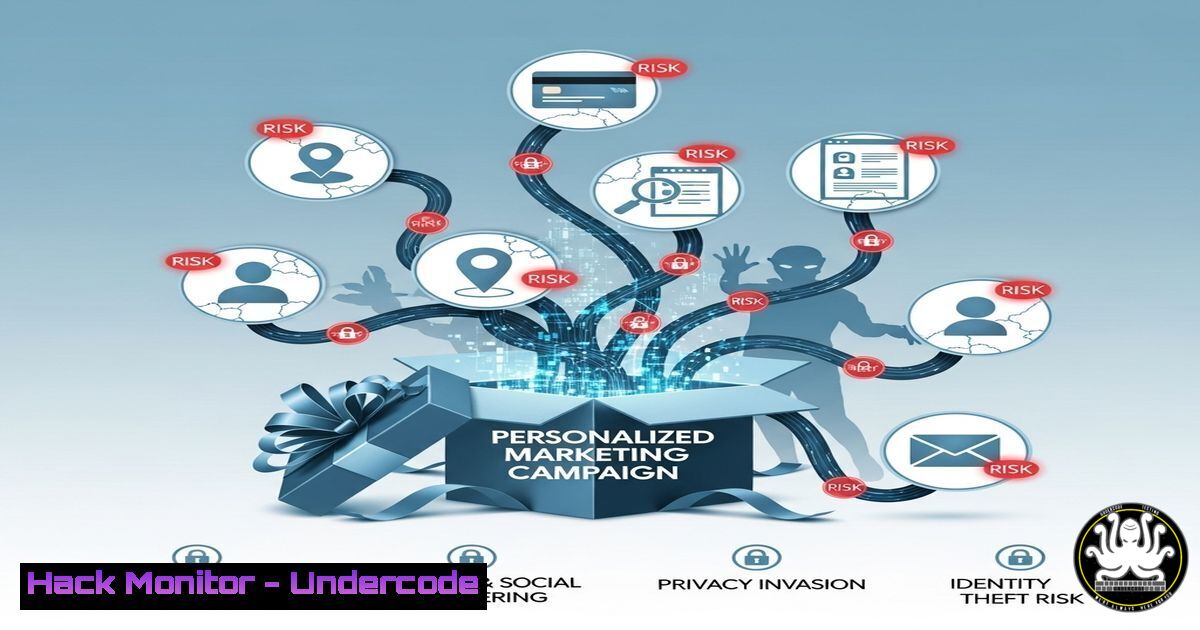
Personalized year-in-review campaigns, like the one promoted by Blings, leverage vast amounts of user data to create targeted video content. While powerful for marketing, this practice introduces significant attack surfaces for data harvesting, credential phishing, and social engineering. This article dissects the technical vulnerabilities inherent in such platforms and provides actionable hardening techniques.
Learning Objectives:
- Identify common data exposure vectors in marketing automation platforms.
- Implement command-line tools to audit third-party tracking and data collection.
- Apply hardening techniques to protect user data in personalized campaign architectures.
You Should Know:
1. Intercepting and Analyzing Marketing Campaign Traffic
Marketing platforms often load extensive third-party tracking scripts. Use these commands to intercept and analyze network traffic from a campaign link.
`tcpdump -i eth0 -w campaign_traffic.pcap host blings.io`
`tshark -r campaign_traffic.pcap -Y “http” -T fields -e http.host -e http.request.uri | sort | uniq -c | sort -nr`
Step-by-step guide: First, execute the `tcpdump` command on a Linux monitoring host to capture all packets to and from the marketing platform’s domain. This creates a PCAP file. Use `tshark` (Wireshark’s CLI tool) to read the file, filter for HTTP traffic, and extract a sorted list of all unique hosts and URIs contacted. This reveals all third-party trackers and endpoints receiving data.
2. Auditing Data Sent to Third-Party APIs
Personalized videos are built using user data. Verify exactly what data is being exfiltrated to external APIs using browser developer tools and curl.
`curl -v “https://api.blings.io/user/data” -H “Authorization: Bearer
`jq . response.json | grep -i ’email\|name\|id’`
Step-by-step guide: Use the browser’s Network tab to capture the API call made when a personalized video loads. Replicate this call with curl, including any authentication headers. Pipe the JSON response into a file and use `jq` to parse it, searching for sensitive key names. This audits the scope of data returned by the API.
3. Hardening Cloud Storage for User-Generated Content
Videos and user data are stored in cloud buckets. Misconfigurations are a primary source of data leaks. Use the AWS CLI to audit your S3 buckets.
`aws s3api get-bucket-policy –bucket my-marketing-bucket –output text`
`aws s3api get-public-access-block –bucket my-marketing-bucket`
Step-by-step guide: These commands check the bucket policy and public access block settings for an S3 bucket storing campaign assets. The first command outputs the bucket policy; ensure it does not contain a `”Effect”: “Allow”` statement with "Principal": "". The second command verifies that all four public access settings are set to True.
4. Detecting Client-Side Data Leakage
Marketing scripts can be hijacked to steal data. Use Content Security Policies (CSP) to mitigate this risk. Audit your CSP headers.
`curl -I https://www.yourbrand.com/campaign | grep -i content-security-policy`
`nmap –script http-security-headers -p 443 www.yourbrand.com`
Step-by-step guide: The first `curl` command checks for the existence of a CSP header on your campaign landing page. The `nmap` command runs a script for a more thorough analysis of all security headers, including CSP, to identify missing directives that could allow unauthorized script execution.
5. Preventing SQL Injection in User Data Retrieval
The backend fetching user data for personalization is vulnerable to injection. Test your endpoints with automated tools.
`sqlmap -u “https://api.blings.io/user?id=12345” –batch –dbs`
Step-by-step guide: This `sqlmap` command tests the API endpoint for SQL injection vulnerabilities. The `-u` flag specifies the URL, `–batch` runs it in non-interactive mode, and `–dbs` attempts to enumerate available databases if a vulnerability is found. This is a critical test for any endpoint that uses a parameter (like id) to fetch user data.
6. Securing the Video Rendering Pipeline
The automated video generation often runs on containerized infrastructure. Scan your Docker images for vulnerabilities.
`docker scan my-video-render-image`
`trivy image my-video-render-image`
Step-by-step guide: After building a Docker image for your video rendering service, use `docker scan` (or the open-source trivy) to scan the image for known CVEs in its operating system and software dependencies. Integrate this scan into your CI/CD pipeline to prevent vulnerable images from being deployed.
7. Monitoring for Credential Phishing Clones
Successful campaigns are often mimicked by threat actors. Set up automated monitoring for phishing domains.
`whois blings.io | grep -i “creation date\|registrar”`
`python3 dnstwist.py -m -r blings.io`
Step-by-step guide: The `whois` command provides the domain’s registration details, establishing a baseline. `dnstwist` generates a list of potential phishing domains (typosquats). The `-m` and `-r` flags enable a domain permutation and resolve the generated names to identify active malicious clones.
What Undercode Say:
- Data is the New Attack Surface: Marketing’s insatiable appetite for personalization creates massive, complex data pipelines that are notoriously difficult to secure end-to-end, representing a prime target for attackers.
- Human Element is the Weakest Link: Even a perfectly secure platform can be undone by a phishing campaign that mimics its highly personalized, trusted communications.
The push for hyper-personalization, as seen with Blings, represents a fundamental shift in risk. The marketing department is now a core part of the IT security perimeter. The technical stack—cloud APIs, rendering engines, and third-party trackers—is sprawling. Each integration point is a potential data leakage vector. Security teams must be involved in the campaign design phase, not brought in post-production, to implement data minimization and strict access controls. The goal isn’t to stop personalization but to build it securely by default.
Prediction:
The convergence of AI-driven personalization and marketing automation will lead to a new class of attacks in 2026-2027. We predict the rise of “Deepfake Phishing,” where AI-generated video and audio, personalized with stolen data, will be used to create highly convincing CEO fraud and business email compromise (BEC) campaigns. The very technology that powers platforms like Blings will be weaponized, making traditional email filtering obsolete and forcing a rapid adoption of AI-powered behavioral analysis and cryptographic verification for all corporate communications.
🎯Let’s Practice For Free:
IT/Security Reporter URL:
Reported By: Yosef Peterseil – Hackers Feeds
Extra Hub: Undercode MoN
Basic Verification: Pass ✅


