
Listen to this Post
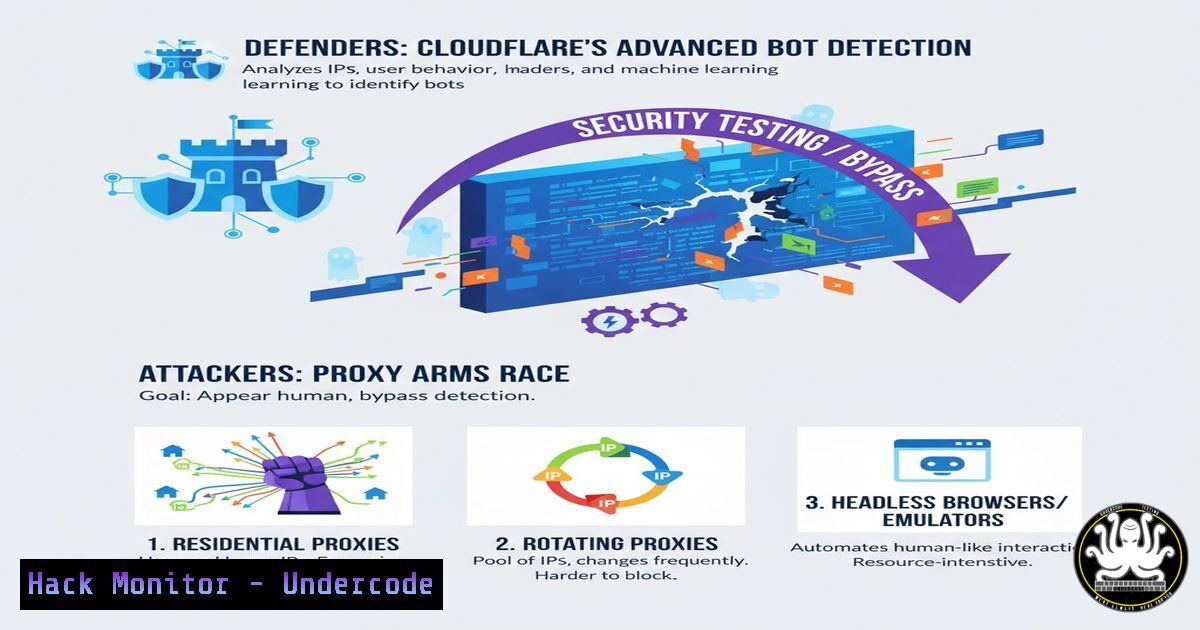
Introduction:
Cloudflare has escalated its bot mitigation capabilities by deploying advanced TLS fingerprinting techniques to block security testing tools like Burp Suite. This development represents a significant challenge for security researchers and bug bounty hunters who rely on these tools for web application assessments. Understanding how to bypass these detection mechanisms has become an essential skill in modern penetration testing.
Learning Objectives:
- Understand TLS fingerprinting and how Cloudflare identifies proxy tools
- Learn to install and configure the Bypass Bot Detection Burp Extension
- Master manual JA3 fingerprint modification techniques
- Implement additional obfuscation methods to evade detection
- Develop strategies for maintaining access during security assessments
You Should Know:
1. Understanding TLS Fingerprinting and JA3 Hashing
TLS fingerprinting is a technique that analyzes the unique characteristics of a client’s TLS handshake to identify the application or tool being used. JA3 is a specific method that creates a fingerprint by hashing specific fields from the TLS Client Hello packet, including TLS version, cipher suites, extensions, and elliptic curves.
Cloudflare maintains a database of known tool fingerprints and can instantly block connections from security tools like Burp Suite, Zap, and others. The JA3 fingerprint is calculated using this formula:
JA3 = TLSVersion, Ciphers, Extensions, EllipticCurves, EllipticCurvePointFormats
To check your current JA3 fingerprint, you can use this Python script:
import hashlib
import ssl
import socket

def get_ja3_fingerprint(hostname):
context = ssl.create_default_context()
conn = context.wrap_socket(socket.socket(socket.AF_INET), server_hostname=hostname)
conn.connect((hostname, 443))
return hashlib.md5(conn.version().encode() + conn.shared_ciphers()[bash].encode()).hexdigest()
- Installing and Configuring the Bypass Bot Detection Extension
The Bypass Bot Detection extension available in Burp Suite’s BApp Store modifies Burp’s TLS fingerprint to mimic popular browsers like Chrome, Firefox, or Safari. Here’s the step-by-step installation process:
Step 1: Open Burp Suite and navigate to the “Extensions” tab
Step 2: Click on the “BApp Store” tab
Step 3: Search for “Bypass Bot Detection” in the search bar
Step 4: Select the extension and click “Install”
Step 5: Once installed, navigate to the extension’s “Options” tab
Step 6: Select your target browser fingerprint (Chrome 120+ recommended)
Step 7: Enable “Automatic Fingerprint Rotation” for persistent bypass
Step 8: Restart Burp Suite to apply the changes
The extension works by intercepting and modifying Burp’s outbound TLS connections to match the selected browser’s fingerprint while maintaining the proxy functionality for incoming traffic.
3. Manual JA3 Fingerprint Spoofing with Custom Code
For situations where the extension might be detected, security professionals can implement manual JA3 spoofing using Python with custom SSL contexts:
import requests
import ssl
import socket
from requests.adapters import HTTPAdapter
from urllib3.util.ssl_ import create_urllib3_context

class ChromeJA3Adapter(HTTPAdapter):
def init_poolmanager(self, args, kwargs):
ctx = create_urllib3_context()
ctx.set_ciphers('ECDHE-ECDSA-AES128-GCM-SHA256:ECDHE-RSA-AES128-GCM-SHA256')
ctx.options |= ssl.OP_NO_SSLv2
ctx.options |= ssl.OP_NO_SSLv3
kwargs['ssl_context'] = ctx
return super().init_poolmanager(args, kwargs)

session = requests.Session()
session.mount('https://', ChromeJA3Adapter())
response = session.get('https://target-website.com')
This approach gives you finer control over the TLS parameters and allows for dynamic fingerprint rotation during testing.
4. Advanced Request Header Manipulation and Behavioral Obfuscation
Beyond TLS fingerprinting, Cloudflare analyzes HTTP headers and request patterns. Security testers must modify Burp’s default request signatures:
Step 1: Configure Burp’s User-Agent Switcher:
- Navigate to Burp Suite → Proxy → Options → Match and Replace
- Add rule: Replace “User-Agent” with current Chrome version
- Example: “Mozilla/5.0 (Windows NT 10.0; Win64; x64) AppleWebKit/537.36”
Step 2: Modify header order and casing:
- Use Burp’s “Header Order Normalizer” extension
- Ensure header capitalization matches target browser patterns
Step 3: Implement request timing randomization:
- Use Burp’s “Request Timing” extension to add random delays
- Configure between 1000-5000ms delays between requests
Step 4: Enable “Simulate Human Browsing Patterns” in the Bypass Bot Detection extension settings to mimic mouse movements and scroll behavior.
5. Cloudflare-Specific Bypass Techniques for Security Researchers
Cloudflare employs multiple detection layers beyond TLS fingerprinting. Advanced bypass techniques include:
Step 1: IP Rotation Strategy:
- Configure Burp to use rotating proxy servers
- Use tools like ProxyMesh or Luminati for IP diversity
- Implement custom Python script for dynamic proxy rotation:
import random

proxies_list = [
{'http': 'http://proxy1:port', 'https': 'https://proxy1:port'},
{'http': 'http://proxy2:port', 'https': 'https://proxy2:port'}
]

def get_random_proxy():
return random.choice(proxies_list)
Step 2: Session Management:
- Implement cookie rotation and session renewal every 50-100 requests
- Use Burp’s “Session Handling Rules” to automate reauthentication
- Configure rule to refresh tokens when receiving 403 responses
Step 3: Challenge Bypass:
- For CAPTCHA challenges, integrate 2Captcha or Anti-Captcha services
- Configure automatic challenge response in Burp Macros
6. Detection Evasion Through Traffic Segmentation
Sophisticated security testing requires segmenting different types of traffic to avoid pattern detection:
Step 1: Categorize your testing traffic:
- Reconnaissance traffic (low risk)
- Vulnerability scanning (medium risk)
- Exploitation attempts (high risk)
Step 2: Use different fingerprint profiles for each category:
– Chrome fingerprint for reconnaissance
– Firefox for scanning
– Safari for exploitation attempts
Step 3: Implement geographic consistency:
- Match your proxy exit nodes to your claimed browser language
- Ensure TLS certificates and HTTP headers reflect consistent geolocation
Step 4: Use Burp’s “Scope” feature to limit out-of-scope requests that might trigger additional detection mechanisms.
7. Verification and Continuous Monitoring of Bypass Effectiveness
Maintaining bypass capability requires continuous verification and adaptation:
Step 1: Implement JA3 fingerprint monitoring:
 Use ja3.py to verify your current fingerprint
python ja3.py --port 443 target-website.com
Step 2: Set up automated detection testing:
- Create script to test access every 5 minutes
- Log response codes and detection triggers
- Implement automatic countermeasure activation
Step 3: Use Burp’s “Logger” extension to monitor for subtle detection signs:
– Unusual response delays
– Changed challenge mechanisms
– Modified response headers indicating detection
Step 4: Maintain multiple bypass methodologies and rotate them systematically to avoid pattern-based detection of your detection evasion patterns.
What Undercode Say:
- The cat-and-mouse game between security tools and protection services is escalating, requiring security professionals to maintain diverse evasion techniques
- Relying solely on automated extensions creates single points of failure; manual techniques provide crucial redundancy
The evolution of Cloudflare’s detection capabilities represents a fundamental shift in web application security dynamics. While these bypass techniques are essential for legitimate security testing, they also highlight the increasing sophistication of both defensive and offensive security measures. Organizations must recognize that determined attackers will eventually bypass even advanced detection systems, emphasizing the need for defense-in-depth strategies rather than relying solely on perimeter protection. For security researchers, maintaining ethical boundaries while developing these capabilities is paramount to ensuring these techniques serve their intended purpose of improving security rather than circumventing it.
Prediction:
The ongoing arms race between security testing tools and advanced bot detection systems will drive innovation in machine learning-based behavioral analysis, moving beyond static fingerprinting toward dynamic interaction pattern recognition. Within 12-18 months, we’ll see the emergence of AI-driven testing tools that can dynamically mimic human behavior patterns while maintaining precise control over security testing operations. This evolution will necessitate the development of more sophisticated testing frameworks that can adapt in real-time to defensive measures, ultimately leading to more resilient web applications but also requiring security professionals to continuously update their technical evasion capabilities.
🎯Let’s Practice For Free:
IT/Security Reporter URL:
Reported By: Khaled Maarouf – Hackers Feeds
Extra Hub: Undercode MoN
Basic Verification: Pass ✅


