Listen to this Post
Introduction:
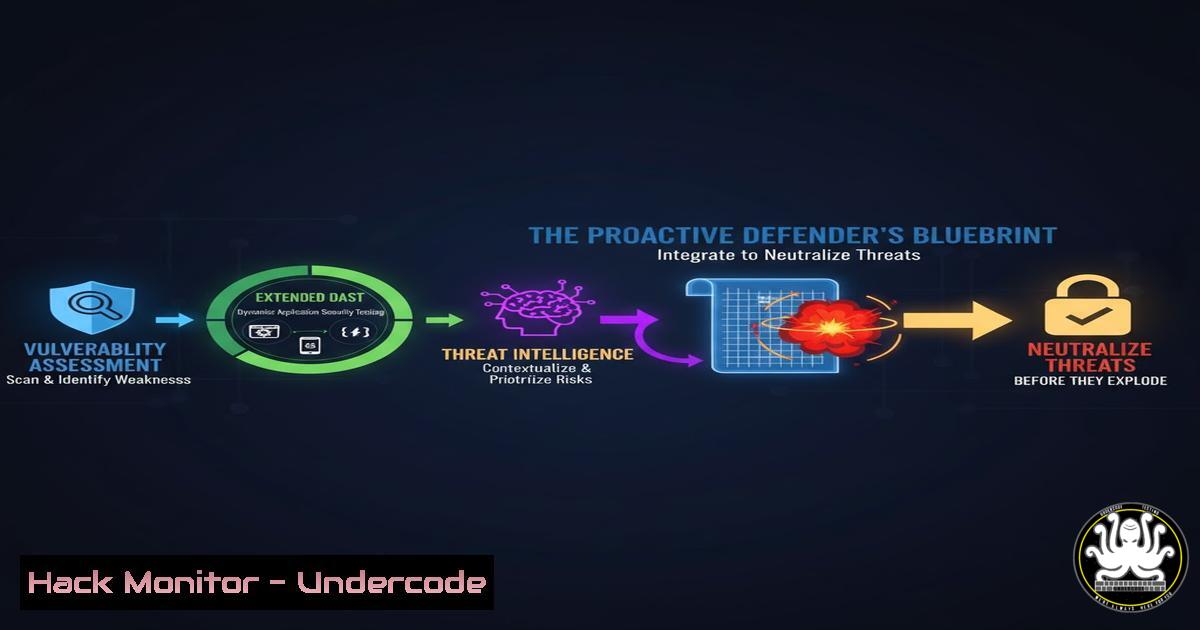
In today’s rapidly evolving digital landscape, reactive security measures are no longer sufficient. Organizations must adopt a proactive, intelligence-driven security posture to identify and remediate vulnerabilities before they can be weaponized by adversaries. This article delves into the strategic integration of Vulnerability Assessment, Extended Dynamic Application Security Testing (DAST), and Threat Intelligence, providing a comprehensive framework for modern cybersecurity defense.
Learning Objectives:
- Understand the distinct roles and synergistic power of Vulnerability Assessment, Extended DAST, and Threat Intelligence.
- Learn to implement practical scanning and intelligence-gathering techniques using common command-line tools and platforms.
- Develop a strategy for operationalizing security data to prioritize and remediate the most critical risks facing your organization.
You Should Know:
1. Mastering Modern Vulnerability Assessment
Vulnerability Assessment (VA) is the foundational process of systematically identifying, classifying, and prioritizing weaknesses in an organization’s systems. Modern VA goes beyond simple network scanning to encompass cloud assets, containers, and web applications, providing a complete inventory of your attack surface.
Step‑by‑step guide explaining what this does and how to use it.
Step 1: Scoping and Discovery. Define the boundaries of your assessment. Use network discovery tools to find all assets, including unknown or shadow IT resources.
Linux Command (Nmap): `nmap -sV -O 192.168.1.0/24`
What this does: This Nmap command performs a service version (-sV) and OS detection (-O) scan on the entire 192.168.1.0/24 subnet, creating a detailed inventory of active hosts and their running services.
Step 2: Authenticated vs. Unauthenticated Scanning. Unauthenticated scans simulate an external attacker, while authenticated scans (using credentials) provide a deeper, more accurate view of system misconfigurations and missing patches.
Tool Suggestion: Configure a tool like OpenVAS or Nessus to perform both types of scans. Authenticated scans will report on specific missing Windows patches or insecure Linux kernel parameters.
Step 3: Prioritization with CVSS. Use the Common Vulnerability Scoring System (CVSS) to assign a quantitative score to each finding. Focus immediately on critical and high-severity vulnerabilities (typically scores 9.0-10.0 and 7.0-8.9 respectively).
2. Extending DAST Beyond the Basics
Traditional DAST scans a web application from the outside in, but Extended DAST incorporates advanced techniques to uncover complex business logic flaws, API-specific vulnerabilities, and issues in modern JavaScript-heavy applications.
Step‑by‑step guide explaining what this does and how to use it.
Step 1: Crawling and Authentication. Configure your DAST tool (e.g., OWASP ZAP) to authenticate with the web application, allowing it to access protected areas like user dashboards and administrative panels.
OWASP ZAP CLI Command: `zap-cli quick-scan –self-contained –start-options ‘-config api.disablekey=true’ –spider “http://localhost:8080″`
What this does: This initiates a quick scan of a target URL, first spidering to discover links and then performing active scanning for vulnerabilities.
Step 2: API Security Testing. Modern applications are built on APIs. Import your OpenAPI (Swagger) or GraphQL schema into your DAST tool to ensure comprehensive testing of all API endpoints.
Step 3: Configuring Active Scan Policies. Tune the scanner’s payloads and rules to reduce false positives and focus on the technologies your application uses (e.g., specific SQL dialects, OS commands).
3. Operationalizing Threat Intelligence
Threat Intelligence (TI) is the process of collecting and analyzing information about existing and emerging threats. Operational TI involves feeding this data directly into your security controls (like SIEMs and firewalls) to proactively block known malicious actors.
Step‑by‑step guide explaining what this does and how to use it.
Step 1: Source Collection. Gather intelligence from a mix of sources: Commercial Feeds, Open Source Intelligence (OSINT), and Information Sharing and Analysis Centers (ISACs). Platforms like Vulners (mentioned in the source post) aggregate this data.
Step 2: IOC Integration. Import Indicators of Compromise (IOCs) such as malicious IP addresses, domains, and file hashes into your security systems.
SIEM Query (Splunk SPL Example): `index=firewall dest_ip IN (“192.0.2.100”, “203.0.113.50”) | stats count by src_ip, dest_ip`
What this does: This Splunk query searches firewall logs for connections to known malicious IP addresses, identifying any internal hosts that may have communicated with them.
Step 3: Tactic Analysis. Use frameworks like MITRE ATT&CK to understand the tactics, techniques, and procedures (TTPs) of adversary groups targeting your industry. Hunt for these TTPs within your environment.
- The Power of Integration: Creating a Cohesive Security Posture
The true value of these tools is realized when they are integrated. Vulnerability data should be enriched with threat intelligence to understand which vulnerabilities are being actively exploited in the wild. DAST findings should be correlated with VA results to get a full-stack view of application risk.
Step‑by‑step guide explaining what this does and how to use it.
Step 1: Enrichment Scripting. Write a simple Python script to cross-reference your vulnerability scan results (e.g., from a Nessus .nessus file) with a threat intelligence feed API that provides exploitability information.
Python Snippet (Conceptual):
import requests
 For each CVE from your VA report...
cve_id = "CVE-2023-12345"
response = requests.get(f"https://api.threatfeed.com/v1/cve/{cve_id}")
if response.json().get('is_exploited'):
print(f"PRIORITY: {cve_id} is under active exploitation!")
Step 2: Centralized Reporting. Use a Vulnerability Management platform or a SIEM to create a single pane of glass for all security findings, tagged with business context (e.g., asset owner, sensitivity of data).
5. Leveraging Security as a Service (SECaaS)
For organizations lacking in-house expertise or resources, Security as a Service (SECaaS) models, like Vulnersight mentioned in the post, offer a way to access expert-level security oversight. SECaaS providers manage the tools and intelligence, delivering curated findings and actionable recommendations.
Step‑by‑step guide explaining what this does and how to use it.
Step 1: Provider Evaluation. When selecting a SECaaS provider, assess their capability coverage across VA, DAST, and TI. Ensure they can integrate with your existing cloud environments (AWS, Azure, GCP) and development pipelines (CI/CD).
Step 2: Onboarding and Scoping. Work with the provider to correctly scope your environment, granting the necessary permissions for authenticated scanning and access to relevant log sources for threat monitoring.
Step 3: Actioning the Output. The primary role of your team shifts from operating tools to managing the provider and acting on their prioritized recommendations. Integrate their findings directly into your ticketing system (e.g., Jira) for streamlined remediation.
What Undercode Say:
- The convergence of automated scanning and human-curated threat intelligence is non-negotiable for effective defense. Relying on one without the other leaves critical blind spots.
- The shift towards SECaaS reflects a broader industry trend of prioritizing outcomes over tool ownership, allowing internal teams to focus on strategic risk mitigation rather than operational tool management.
The post from Alpha Prima Galatheo Qallbu highlights a crucial evolution in cybersecurity: moving from a siloed, tool-centric approach to an integrated, service-driven model. By bundling Vulnerability Assessment, Extended DAST, and Threat Intelligence, solutions like Vulnersight address the core challenge of alert fatigue and context deficiency. The positive engagement on the post, with comments like “ajarin pake nya mas” (teach me how to use it, bro), underscores a high demand for practical, accessible security solutions that provide clear value without overwhelming internal teams. This model democratizes advanced security capabilities, making them available to organizations that may not have the budget for an entire Security Operations Center (SOC).
Prediction:
The integration of AI and machine learning will further revolutionize this space, leading to predictive security postures. We will see SECaaS platforms that can not only identify current vulnerabilities and threats but also predict the most likely attack vectors against an organization based on its industry, tech stack, and aggregated global threat data. This will enable truly pre-emptive defense, automatically hardening systems against attacks before they are even launched, fundamentally changing the cybersecurity battle from a reactionary fight to a strategic, intelligence-driven game of chess.
🎯Let’s Practice For Free:
IT/Security Reporter URL:
Reported By: 1337rokudenashi Vulnerability – Hackers Feeds
Extra Hub: Undercode MoN
Basic Verification: Pass ✅


