Listen to this Post
Introduction:
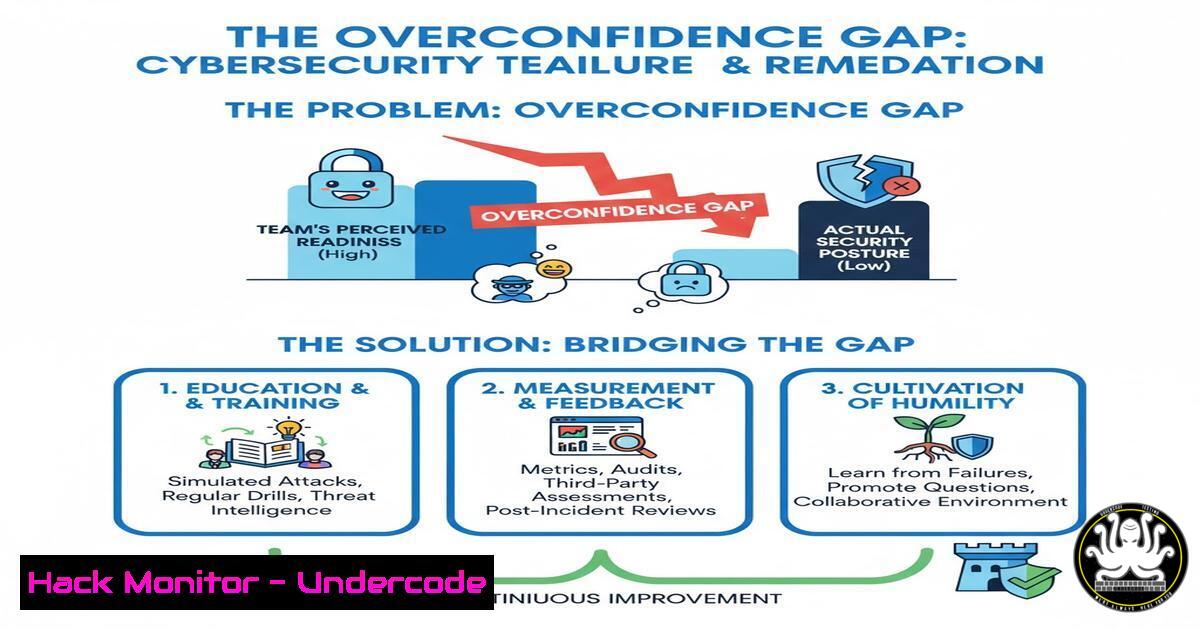
A startling new report reveals a critical vulnerability that no patch can fix: overconfidence. Cybersecurity teams, when placed under pressure in simulation drills, are achieving a mere 22% accuracy rate despite high confidence levels, taking an average of 29 hours to contain simulated infections. This exposes a fundamental flaw in modern security postures—a catastrophic disconnect between perceived readiness and actual coordinated response capabilities.
Learning Objectives:
- Identify the core reasons for team failure under pressure, moving beyond individual knowledge to collective coordination.
- Implement practical tabletop exercises and incident response (IR) drills that build muscle memory for crisis scenarios.
- Develop metrics and tools to continuously measure and improve team response time, accuracy, and communication efficacy.
You Should Know:
1. The Anatomy of a Simulation Failure
The data from 187 professionals across 11 global exercises paints a clear picture: teams didn’t fail for a lack of technical knowledge but for a lack of practiced coordination. The “overconfidence” stems from individuals understanding their own roles in a vacuum but failing to integrate their actions seamlessly with the rest of the team during a high-stress event. The 60% confidence score coupled with a 22% accuracy score is the smoking gun of this coordination breakdown.
Step‑by‑step guide explaining what this does and how to use it.
Step 1: Diagnose the Communication Silos. Use tools like Slack or Microsoft Teams to create dedicated IR channels. Analyze post-drill logs to identify communication bottlenecks—who was silent? Who was overloaded with requests?
Step 2: Map the Decision Flow. Whiteboard your official IR plan. Then, during a drill, use a different color to mark the actual path decisions took. The discrepancies reveal your process gaps.
Step 3: Introduce “Injection” Chaos. Assign a team member to role-play as a frantic executive or a new “breaking news” alert mid-simulation. This tests the team’s ability to adapt communication and priorities under changing conditions.
2. Building Muscle Memory with Realistic Drills
Theoretical knowledge decays without practice. The 29-hour containment time suggests teams are “figuring it out” during the incident rather than executing a pre-practiced plan. Muscle memory, built through repetitive, realistic drills, is what shortens this timeline from days to hours.
Step‑by‑step guide explaining what this does and how to use it.
Step 1: Start with Tabletop Exercises. Begin with low-fidelity discussions. Present a scenario (e.g., “Ransomware detected on the finance server”) and walk through the first 60 minutes. Who do you call? What is the first command you run?
Step 2: Progress to Partial Simulations. Use a segmented lab environment. For a phishing incident, provide a real sample email and have a junior analyst practice the initial triage using command-line tools.
Linux Command (Check Processes): `ps aux | grep -i “suspicious_process_name”`
Windows Command (Network Connections): `netstat -ano | findstr :443`
Step 3: Execute Full-Blown Red vs. Blue Exercises. Partner with a red team to simulate a realistic attack. The blue team’s goal is not just to detect but to contain and eradicate using a predefined playbook.
3. From Abstract to Actionable: The IR Playbook
A playbook that sits in a SharePoint site, unread, is worthless. The report’s findings indicate that playbooks are likely not actionable or are ignored under pressure. An effective playbook is a living document that provides crystal-clear, step-by-step instructions.
Step‑by‑step guide explaining what this does and how to use it.
Step 1: Script the First 15 Minutes. The initial response is critical. Your playbook should have a “Golden 15” section with exact commands and actions.
Example: Isolate a compromised host.
Network Isolation (Cisco): `conf t; interface gigabitethernet1/0/1; shutdown`
Host Isolation (Windows via CMD): `netsh advfirewall set allprofiles state on` (Then create blocking rules)
Step 2: Integrate Checklists. Use a simple checklist format to ensure critical steps aren’t missed in the fog of war (e.g., [ ] Preserve memory dump, [ ] Notify legal counsel, [ ] Change service account passwords).
Step 3: Implement a Playbook Drill. In your next simulation, mandate that the first action is to open the digital playbook. Grade teams on how effectively they used it to guide their response.
4. Quantifying Performance: Beyond “Pass/Fail”
The metrics from the report—22% accuracy, 29-hour containment—are powerful because they are measurable. Moving from a subjective “we did okay” to objective data is essential for improvement.
Step‑by‑step guide explaining what this does and how to use it.
Step 1: Define Key Metrics. Establish baselines for your team.
MTTD (Mean Time to Detect): Time from attack start to detection.
MTTR (Mean Time to Respond): Time from detection to full containment.
Communication Latency: Time between key decision points.
Step 2: Use Logging and SIEM. Configure your Security Information and Event Management (SIEM) system to timestamp key actions during a drill. This automatically generates data for MTTD and MTTR.
Step 3: Conduct After-Action Reviews (AARs). After every drill, gather the team and review the metrics. Ask three questions: What was supposed to happen? What actually happened? What will we do differently next time?
- Hardening the Human Firewall with API and Cloud Drills
Modern attacks often target cloud infrastructure and APIs, areas where traditional network-centric IR skills may be weak. Simulations must evolve to include these vectors.
Step‑by‑step guide explaining what this does and how to use it.
Step 1: Simulate an API Breach. Use a tool like Postman to simulate malicious API traffic triggering excessive errors (indicative of an attack). The team’s goal is to identify the abusive source and implement a block via the WAF or API gateway.
AWS WAFv2 Command (Sample): `aws wafv2 update-ip-set –name MyIPSet –scope REGIONAL –addresses 192.0.2.0/24 –lock-token
Step 2: Run a Cloud Resource Hijacking Drill. Have a red team member use compromised credentials to spin up a costly cryptocurrency mining instance in your AWS environment. The blue team must use CloudTrail logs to detect the unauthorized activity and terminate the instance.
AWS CLI to terminate instance: `aws ec2 terminate-instances –instance-ids i-1234567890abcdef0`
What Undercode Say:
- The greatest cyber threat is no longer an unpatched server, but an unpracticed team. Technology can be bought; coordination must be built.
- Confidence without competence is a liability. Measurable performance in simulations is the only true indicator of readiness.
The data is a wake-up call for the entire industry. For years, investment has poured into advanced technological defenses—EDR, SIEM, firewalls—while the human element has been neglected. This report proves that the most sophisticated tool is rendered useless if the team operating it cannot coordinate under pressure. The “overconfidence gap” is a direct result of this neglect. It creates a fragile security posture that will shatter under a real, determined attack. The solution is not another software license, but a committed, ongoing investment in realistic training and drilling that forges individuals into a cohesive, responsive unit.
Prediction:
The widening overconfidence gap will become the primary attack vector for sophisticated threat actors over the next 18-24 months. Adversaries will increasingly shift from purely technical exploits to “coordination attacks”—multi-vector, high-velocity campaigns designed specifically to overwhelm and paralyze unprepared response teams. Organizations that fail to bridge this gap with rigorous, metrics-driven simulation training will face disproportionately severe business impacts from breaches, including extended downtime and greater data loss, as their teams will be unable to mount an effective defense.
🎯Let’s Practice For Free:
IT/Security Reporter URL:
Reported By: Michael Tchuindjang – Hackers Feeds
Extra Hub: Undercode MoN
Basic Verification: Pass ✅


