
Listen to this Post
Introduction:
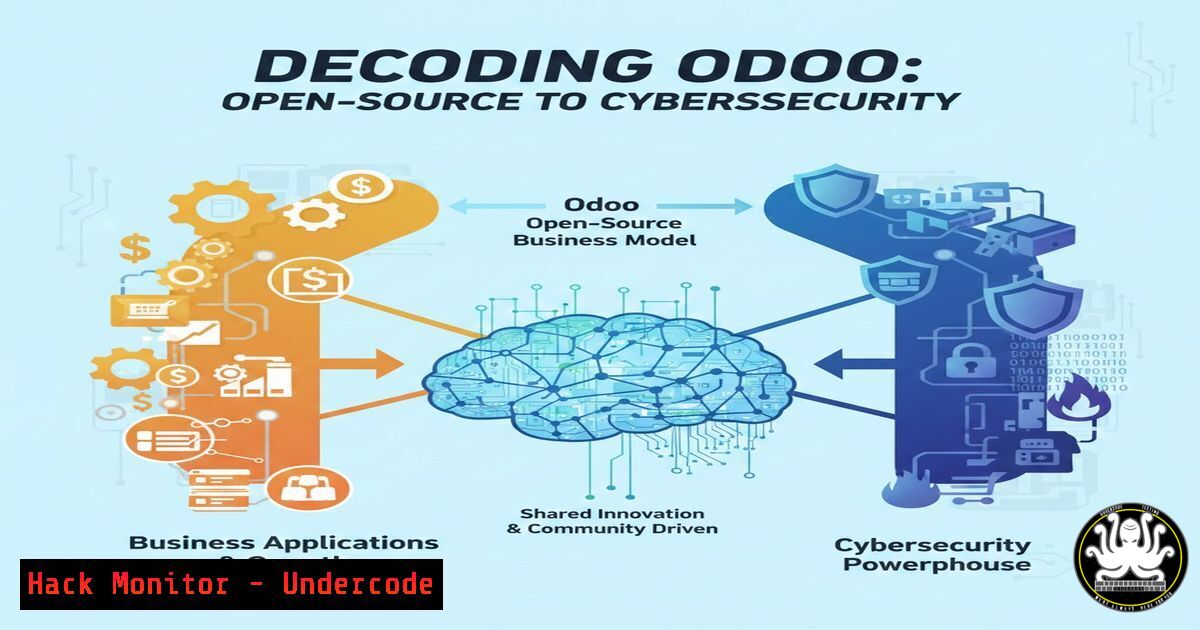
The remarkable ascent of Odoo from an open-source project to a dominant enterprise resource planning (ERP) platform offers critical lessons beyond business strategy, directly impacting IT infrastructure and cybersecurity postures. By analyzing its hybrid open-core model and insourced management philosophy, we can extract a framework for building secure, scalable, and resilient software ecosystems that defy the conventional trade-offs between accessibility, profitability, and security.
Learning Objectives:
- Deconstruct the security implications of Odoo’s open-core software model versus pure open-source or proprietary solutions.
- Implement hardening and monitoring steps for an Odoo deployment in a cloud or on-premise environment.
- Analyze how an “insourced” operations culture minimizes third-party risk and strengthens security accountability.
You Should Know:
- The Security Architecture of Open-Core: Balancing Community Audits with Enterprise Control
The Odoo model demonstrates that a hybrid open-core approach can enhance security. The community edition benefits from public code scrutiny (many eyes auditing), while the proprietary enterprise edition allows for controlled, secure development of advanced features and integrations. This contrasts with a purely open-source model, where funding for dedicated security teams can be scarce, and fully proprietary models that operate as a “black box.”
Step‑by‑step guide to assessing and securing your Odoo instance:
Step 1: Version and Component Inventory. First, identify your deployment details. On the Odoo server, run:
`cd /usr/lib/python3/dist-packages/odoo`
`./odoo-bin –version`
Also, list installed modules: `./odoo-bin shell -d your_database_name –db_host localhost -r db_user -w db_password –no-http –command=”print(self.env[‘ir.module.module’].search([]).mapped(‘name’))”`
Step 2: Configuration Hardening. Edit your Odoo configuration file (e.g., /etc/odoo/odoo.conf). Enforce key security settings:
admin_passwd = [STRONG_HASH_GENERATED_VIA_<code>python3 -c "import uuid; print(uuid.uuid4().hex)"</code>]  Never use plain text
list_db = False  Prevents database listing
proxy_mode = True  If behind a reverse proxy like Nginx
dbfilter = ^yourdbname$  Restricts accessible databases
For the front-end web server (Nginx), ensure SSL is enforced and add security headers.
Step 3: Principle of Least Privilege for Database. Never run Odoo as the PostgreSQL superuser (postgres). Create a dedicated user with restricted privileges:
`sudo -u postgres psql`
`CREATE USER odoo_user WITH PASSWORD ‘strong_password’;`
`GRANT CREATE, CONNECT, TEMPORARY ON DATABASE yourdb TO odoo_user;`
`\c yourdb`
`GRANT USAGE, SELECT ON ALL SEQUENCES IN SCHEMA public TO odoo_user;`
`GRANT SELECT, INSERT, UPDATE, DELETE ON ALL TABLES IN SCHEMA public TO odoo_user;`
2. Insourcing Operational Security: Eradicating Third-Party Management Bloat
Odoo’s mandate of promoting only proven technical experts to management creates a native, deep-seated security culture. Teams inherently understand the system’s architecture, leading to more secure code, realistic threat modeling, and faster, more effective incident response. This eliminates the “security theater” and misconfigured controls often introduced by outsourced or non-technical managers.
Step‑by‑step guide to building an insider-threat aware operations protocol:
Step 1: Implement Role-Based Access Control (RBAC) with Audit Logging. Use Odoo’s internal user groups (Settings > Users & Companies > Groups) meticulously. Go beyond basic groups; create custom groups for specific data access (e.g., finance_view_only, hr_recruit_edit). Enable audit logging on sensitive models. In a custom module or via the CLI, you can track changes:
`./odoo-bin shell -d your_db -r odoo_user -w odoo_password –no-http –command=”env[‘ir.model’].search([(‘model’, ‘=’, ‘account.move’)]).write({‘log_access’: True})”`
Step 2: Mandate SSH Key-Based Authentication for SysAdmins. Disable password-based SSH logins for all administrative access to servers hosting Odoo. On your Linux deployment server:
`sudo nano /etc/ssh/sshd_config`
Ensure: `PasswordAuthentication no`, `PubkeyAuthentication yes`, `PermitRootLogin no`.
Reload SSH: `sudo systemctl reload sshd`.
Step 3: Centralized Log Aggregation and Monitoring. Use the ELK Stack (Elasticsearch, Logstash, Kibana) or a commercial SIEM. Configure Odoo and PostgreSQL logs to be shipped. For PostgreSQL, set in postgresql.conf: `log_statement = ‘ddl’` (logs data definition changes) and log_connections = on. Monitor logs for brute-force attempts on the Odoo login page and anomalous database queries.
- The Product-Led Security Shift: From Human-Dependent Patches to Automated Hardening
Odoo’s transition from a service company to a product company mirrors the evolution from manual, consultant-driven security fixes to a “secure-by-default” product architecture. This is achieved through automated CI/CD pipelines that include static application security testing (SAST), software composition analysis (SCA) for dependencies, and standardized security baselines.
Step‑by‑step guide to integrating security into your Odoo development lifecycle:
Step 1: Integrate SAST/SCA into Your Git Repository. For a custom Odoo module, use tools like `bandit` (SAST for Python) and `trivy` or `owasp-dep-check` (SCA). Create a `.gitlab-ci.yml` or GitHub Actions workflow that runs on every commit:
 Example GitHub Actions snippet
- name: Run Bandit SAST
run: |
pip install bandit
bandit -r ./my_custom_module -f json -o bandit-report.json
- name: Run Trivy SCA
uses: aquasecurity/trivy-action@master
with:
scan-type: 'fs'
path: './my_custom_module'
format: 'sarif'
output: 'trivy-results.sarif'
Step 2: Containerize with a Secure Base Image. Dockerize Odoo deployments using official images or build your own from a minimal base like Alpine Linux. Use multi-stage builds to reduce attack surface. Scan the final image with `trivy image your-odoo-image:latest` before deployment.
Step 3: Enforce Environment-Specific Configurations. Use 12-factor app methodology. Never hard-code secrets (database passwords, API keys) in config files. Use environment variables or a secrets manager (HashiCorp Vault, AWS Secrets Manager). Your `odoo.conf` should reference them: db_password = ${DB_PASSWORD}.
- Utility-Driven Motivation: The Hacker’s Mindset for Proactive Defense
Founder Fabien Pinckaers’ drive for “utility” over vague mission statements aligns perfectly with the pragmatic, problem-solving mindset of ethical hackers and security engineers. This translates to building security features that genuinely solve user pain points (e.g., easy 2FA setup, clear access logs) rather than checkbox compliance, fostering greater adoption and thus a stronger overall security posture.
Step‑by‑step guide to implementing utility-driven security features:
Step 1: Deploy and Enforce Two-Factor Authentication (2FA). In Odoo Enterprise, activate 2FA from Settings > General Settings. For Community, install the `auth_top` module. Use a script to enforce it for all users via the Odoo shell:
env['res.users'].search([]).write({'totp_secret': env['res.users']._generate_secret()}) Caution: This will force 2FA reset for all users.
A better approach is to mandate it via a policy and guide users through enrollment.
Step 2: Implement Automated Backup Encryption. A useful security product feature is encrypted, off-site backups. Extend Odoo’s built-in backup with `gpg` encryption:
`!/bin/bash`
`pg_dump -Fc your_db_name | gpg –symmetric –cipher-algo AES256 –output /backups/odoo_$(date +%Y%m%d).dump.gpg`
Schedule this script via `cron` and securely manage the GPG passphrase using a secrets manager.
5. Partner Ecosystem Security: Extending Your Trust Boundary
Odoo’s reliance on a partner network for implementation mirrors how enterprises integrate third-party tools and APIs. Each partner (integration) represents a potential attack vector. The security model must extend to vetting and monitoring these external connections, ensuring they adhere to the same security principles as the core product.
Step‑by‑step guide to hardening API and third-party integrations:
Step 1: Secure the Odoo XML-RPC/JSON-RPC API. If using Odoo’s external API, restrict access by IP and use HTTPS exclusively. In the Odoo configuration, you can use the `–xmlrpc-interface` and `–limit-request` arguments. Consider placing the RPC endpoint behind an API Gateway (e.g., Kong, AWS API Gateway) for rate-limiting, authentication, and deeper inspection.
Step 2: Implement Robust API Authentication. Move beyond basic username/password in API calls. Use API keys with limited scope or OAuth2.0 where possible. When a partner’s system connects to your Odoo, create a dedicated user with a strong, random password and restrict its access to only the necessary models and operations via granular group permissions.
Step 3: Monitor for Anomalous Integration Behavior. Use your SIEM to baseline normal API traffic patterns from partner IPs. Set alerts for:
– Unusual volume of database read operations (data exfiltration).
– Access attempts to unauthorized models or endpoints.
– API calls outside of expected business hours for that partner.
What Undercode Say:
- Security is a Structural Byproduct, Not a Feature. Odoo’s success underscores that true security emerges from foundational architectural choices (open-core model, insourced expertise) and a product-oriented culture, not from bolted-on tools or compliance mandates. The model incentivizes building security in, not adding it on.
- The Highest-Risk Outsourcing is Management. The most significant security takeaway is the profound risk reduction achieved by insourcing technical leadership. Security decisions made by those who have “proven it in the trenches” are inherently more grounded in technical reality and operational resilience, drastically reducing the attack surface introduced by misaligned priorities or uninformed risk acceptance.
The Odoo case study provides a template for building modern software companies where security, scalability, and business success are not in conflict but are mutually reinforcing. By prioritizing a solid core product, technical leadership, and a utility-driven mindset, an organization inherently creates a environment where effective security practices are the natural path of least resistance.
Prediction:
The “Odoo model” will be increasingly adopted by next-generation B2B SaaS platforms, particularly in critical infrastructure like fintech and healthtech. This will lead to a rise in “secure-by-architecture” offerings that leverage transparent community editions for trust and auditability, coupled with hardened enterprise versions. Concurrently, we will see a sharp decline in the viability of fully outsourced, service-heavy IT management models, as businesses recognize the unacceptable cybersecurity risk they pose. The future belongs to product-centric platforms with deeply embedded, culturally inherent security practices.
▶️ Related Video (82% Match):
🎯Let’s Practice For Free:
IT/Security Reporter URL:
Reported By: Adrien Bock – Hackers Feeds
Extra Hub: Undercode MoN
Basic Verification: Pass ✅


