Listen to this Post
Introduction:
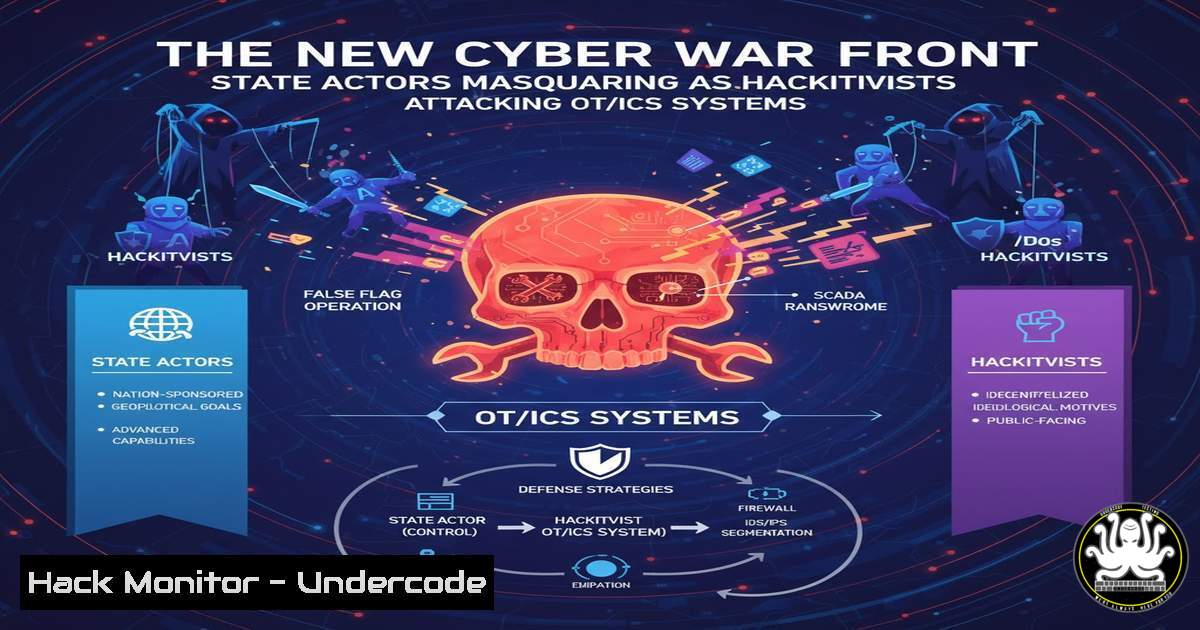
The line between state-sponsored cyber operations and hacktivist campaigns is blurring at an alarming rate. Nation-state adversaries are increasingly adopting the tactics, techniques, and procedures of hacktivist groups to achieve geopolitical goals while maintaining plausible deniability. This strategic shift poses a unique and severe threat to Operational Technology and Industrial Control Systems, where attacks can cause physical damage and disrupt critical infrastructure.
Learning Objectives:
- Understand the convergence of state-level objectives with hacktivist methodologies.
- Identify the key tools and techniques used in these hybrid attacks against OT/ICS environments.
- Implement defensive measures to harden critical infrastructure against this emerging threat.
You Should Know:
1. Network Reconnaissance and Discovery
`nmap -sS -sU -A -O -T4 -p- 192.168.1.0/24`
Step-by-step guide: This Nmap command performs a comprehensive network scan. The `-sS` flag initiates a TCP SYN stealth scan, `-sU` performs UDP scanning, `-A` enables OS and version detection, `-O` enables OS fingerprinting, and `-T4` sets the timing template for faster execution. In an OT environment, adversaries use this to map network topology and identify vulnerable ICS components like PLCs and HMIs.
2. Industrial Protocol Interrogation
`python -c “from pymodbus.client.sync import ModbusTcpClient; client=ModbusTcpClient(‘192.168.1.100’); print(client.read_coils(0,10).bits)”`
Step-by-step guide: This Python script uses the pymodbus library to query a Modbus TCP device. It attempts to read coils (discrete outputs) from address 0 to 10. Attackers use such scripts to interrogate PLCs and understand process logic, which can later be manipulated to cause physical disruptions.
3. ICS-Specific Vulnerability Scanning
`nmap –script modbus-discover.nse -p 502 192.168.1.100`
Step-by-step guide: This Nmap NSE script specifically targets Modbus devices on port 502. It identifies device information, supported functions, and potential misconfigurations. State actors use these specialized scripts to fingerprint ICS equipment and identify known vulnerabilities for exploitation.
4. Windows Domain Enumeration for OT Networks
`Get-ADComputer -Filter -Properties OperatingSystem | Where-Object {$_.OperatingSystem -like “Windows”} | Select-Object Name, OperatingSystem`
Step-by-step guide: This PowerShell command queries Active Directory for all Windows computers. In hybrid IT-OT environments, compromised domain credentials can provide access to engineering workstations and historians, creating a pivot point into the control system network.
5. PLC Program Extraction and Analysis
`python -c “from pycomm3 import LogixDriver; with LogixDriver(‘192.168.1.50’) as plc: print(plc.get_tag_list())”`
Step-by-step guide: This script connects to an Allen-Bradley ControlLogix PLC using the pycomm3 library and retrieves the tag list. Advanced attackers extract control logic to understand industrial processes and develop targeted attacks that manipulate physical operations.
6. OT Network Traffic Analysis
`tshark -i eth0 -Y “modbus || enip || dnp3” -w ot_traffic.pcap`
Step-by-step guide: This tshark command captures industrial protocol traffic including Modbus, EtherNet/IP, and DNP3. Analyzing this traffic helps identify abnormal patterns that may indicate reconnaissance, command injection, or process manipulation attempts.
7. Firewall Rule Auditing for ICS
`Get-NetFirewallRule -Enabled True -Direction Inbound | Where-Object {$_.Profile -eq “Domain”} | Format-Table Name, DisplayName, Action`
Step-by-step guide: This PowerShell command lists all enabled inbound firewall rules in the domain profile. Regular auditing ensures that only necessary industrial protocols are permitted between zones, reducing the attack surface.
8. ICS Asset Inventory Management
`arp -a | findstr “00-80-77″`
Step-by-step guide: This Windows command filters the ARP table for devices with OUI (Organizational Unique Identifier) 00-80-77, which belongs to Siemens. Maintaining an accurate asset inventory is crucial for security monitoring and patch management in OT environments.
9. Password Policy Verification
`net accounts`
Step-by-step guide: This Windows command displays current password policy settings including minimum password length, lockout threshold, and maximum password age. Strong authentication policies prevent credential theft, which is often the initial entry point for attacks.
10. Industrial Intrusion Detection
`snort -c /etc/snort/rules/industrial.rules -i eth0 -A console`
Step-by-step guide: This command runs Snort IDS with industrial-specific rules on interface eth0. Custom rules detecting abnormal industrial protocol commands can identify attacks before they cause physical impact.
11. Secure Remote Access Configuration
`ssh -o KexAlgorithms=ecdh-sha2-nistp256 -o HostKeyAlgorithms=ecdsa-sha2-nistp256 -o Ciphers=aes256-ctr user@plc-gateway`
Step-by-step guide: This SSH command enforces strong cryptographic algorithms for remote access to OT jump hosts. Properly configured secure remote access prevents man-in-the-middle attacks and credential interception.
12. Windows Event Log Analysis for Compromise
`Get-WinEvent -FilterHashtable @{LogName=’Security’; ID=4625} | Where-Object {$_.TimeCreated -gt (Get-Date).AddHours(-24)}`
Step-by-step guide: This PowerShell command retrieves failed logon events from the last 24 hours. Monitoring authentication failures helps detect brute-force attacks and compromised credential usage.
13. ICS Patch Management Verification
`wmic qfe list brief | findstr /i “critical important”`
Step-by-step guide: This Windows command lists installed updates containing “critical” or “important” in their description. Timely patching of ICS components is essential but must be balanced with stability requirements.
14. Network Segmentation Testing
`tcping 192.168.1.100 502`
Step-by-step guide: This command tests connectivity to a PLC on port 502 from a different network segment. Proper network segmentation should prevent unauthorized access between IT and OT networks.
15. Industrial Protocol Fuzzing
`python icssim/tools/fuzz_module.py -m modbus -t 192.168.1.100 -p 502`
Step-by-step guide: This Python-based fuzzer sends malformed Modbus packets to test device robustness. Security teams should conduct controlled fuzzing to identify and patch vulnerabilities before attackers exploit them.
16. Backup and Recovery Validation
`wbadmin start backup -backupTarget:E: -include:C: -allCritical -systemState -quiet`
Step-by-step guide: This Windows command creates a system state backup including all critical volumes. Regular backups and recovery testing ensure business continuity following a cyber incident.
17. Memory Analysis for Malware Detection
`volatility -f memory.dump –profile=Win7SP1x64 pslist`
Step-by-step guide: This Volatility Framework command lists running processes from a memory dump. Memory analysis can identify sophisticated malware that evades traditional detection methods.
18. ICS Configuration Hardening
`reg add “HKLM\SYSTEM\CurrentControlSet\Services\LanmanServer\Parameters” /v AutoShareWks /t REG_DWORD /d 0 /f`
Step-by-step guide: This Windows command disables administrative shares, reducing the attack surface. Similar hardening should be applied to engineering workstations and servers.
19. Industrial Wireless Security
`airodump-ng wlan0 –channel 6 –bssid 00:1A:2B:3C:4D:5E -w ot_wifi`
Step-by-step guide: This airodump-ng command monitors wireless traffic on a specific channel and BSSID. Unsecured wireless access points can provide an entry point into OT networks.
20. DNS Security Monitoring
`Get-DnsServerQueryResolutionPolicy -ZoneName “plant.local” | Format-Table Name, Action, Condition`
Step-by-step guide: This PowerShell command displays DNS policies for the plant.local zone. DNS security controls can prevent data exfiltration and command-and-control communications.
21. Application Whitelisting Enforcement
`Get-CimInstance -Namespace root/Microsoft/Windows/CI -ClassName CIM_CILocalPolicy | Select-Object `
Step-by-step guide: This PowerShell command queries Windows Defender Application Control policies. Application whitelisting prevents unauthorized software execution, a key defense against malware.
22. Network Time Synchronization
`w32tm /query /configuration`
Step-by-step guide: This Windows command displays time service configuration. Accurate time synchronization is essential for correlating security events across IT and OT systems.
23. PowerShell Logging Verification
`Get-WinEvent -LogName “Microsoft-Windows-PowerShell/Operational” | Where-Object {$_.Id -eq 4104} | Select-Object -First 5`
Step-by-step guide: This command retrieves PowerShell script block logging events. Monitoring PowerShell activity helps detect malicious scripts used in attacks.
24. Industrial Security Certificate Management
`certutil -view -restrict “Disposition=20″`
Step-by-step guide: This Windows command lists issued certificates from the local CA. Proper certificate management ensures the integrity of encrypted industrial communications.
25. Incident Response Readiness
`Get-WinEvent -FilterHashtable @{LogName=’System’; StartTime=(Get-Date).AddDays(-1)} | Group-Object LevelDisplayName | Sort-Object Count -Descending`
Step-by-step guide: This PowerShell command summarizes system events from the last 24 hours by severity level. Regular log review prepares security teams for incident investigation.
What Undercode Say:
- The convergence of state-sponsored and hacktivist tactics represents the most significant evolution in OT cyber threats since Stuxnet.
- Defenders must assume breach and focus on detecting anomalous behavior rather than preventing initial intrusion.
- The immutable laws of physics in industrial processes provide both constraints and opportunities for defense.
The strategic alignment between state actors and hacktivists creates a perfect storm for critical infrastructure operators. State actors gain plausible deniability and access to hacktivists’ organic intelligence networks, while hacktivists receive sophisticated tools and funding. This hybrid threat model bypasses traditional attribution-based deterrence and requires a fundamental shift in defense strategy. The most effective defense involves implementing defense-in-depth with strong segmentation, comprehensive monitoring, and rapid incident response capabilities. Organizations must prioritize resilience, acknowledging that prevention will eventually fail and the focus must be on minimizing impact and maintaining operational continuity.
Prediction:
Within the next 18-24 months, we will witness the first major kinetic cyber incident caused by this state-hacktivist collaboration, likely targeting energy or water infrastructure. The attack will demonstrate sophisticated malware capabilities wrapped in hacktivist rhetoric, creating significant attribution challenges and potentially triggering disproportionate retaliation against innocent parties. This evolution will force governments to develop new frameworks for cyber conflict that account for non-state proxy actors, while critical infrastructure operators will be compelled to adopt military-grade cyber defense capabilities as standard practice. The regulatory landscape will shift dramatically, with mandatory resilience standards becoming as important as safety regulations in industrial environments.
🎯Let’s Practice For Free:
IT/Security Reporter URL:
Reported By: Mikeholcomb Im – Hackers Feeds
Extra Hub: Undercode MoN
Basic Verification: Pass ✅


