Listen to this Post
Introduction
The intelligence was never the bottleneck. In the race to enterprise AI adoption, the gap has always been the distance between a demo that impresses and a system that actually ships. Gartner projects agentic AI will drive approximately 30% of enterprise application software revenue by 2035, surpassing $450 billion—up from just 2% in 2025. With Anthropic’s Claude models now generally available in Microsoft Foundry and Microsoft’s $2.5 billion Frontier Company embedding 6,000 engineers inside customer organizations, the enterprise AI landscape has fundamentally shifted. This article breaks down what it actually takes to move from AI experimentation to production-grade deployment.
Learning Objectives
- Understand the architectural components and deployment options for production AI systems on Azure
- Master the one-command deployment workflow for Claude models using Azure Developer CLI
- Implement security hardening, identity management, and compliance controls for enterprise AI workloads
- Navigate the data residency and privacy considerations when deploying third-party AI models
- Apply Infrastructure as Code (IaC) best practices using Bicep and Terraform for AI infrastructure
You Should Know
- The Production Gap: Why Demos Fail and Systems Win
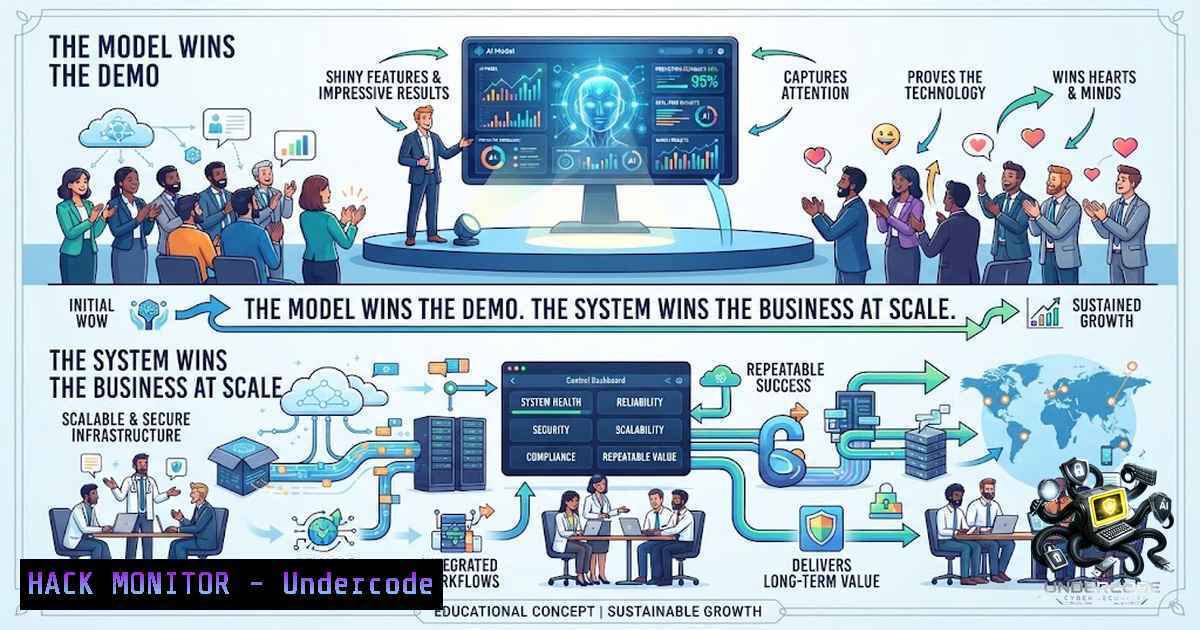
The demo is the gym. Production is the cage. Everybody looks unbeatable on the pads—then the bell rings, someone hits back, and pretty falls apart. Enterprise AI is no different. The leaders who succeed have stopped asking which model is best. They’re asking which combination performs when the lights come on.
The hard truth about AI production: Building production-grade infrastructure around AI models typically requires 6–12 months of engineering work for infrastructure, security hardening, compliance implementation, and operational tooling. The challenges that appear in production—poor data quality, integration debt, platform gaps, security exposure, and operating model lag—are rarely visible in a proof of concept.
Microsoft’s response to this gap is the Microsoft Frontier Company: a $2.5 billion investment with 6,000 industry and engineering experts embedded with customers to co-design, deploy, and continuously improve AI systems. The company supports multiple model providers including OpenAI, Anthropic, Microsoft AI, and open-source models rather than locking customers into a single platform. Early projects with customers including London Stock Exchange Group, Land O’Lakes, Unilever, and Novo Nordisk have already delivered measurable results.
- Deploying Claude on Microsoft Foundry: The One-Command Path
Claude in Microsoft Foundry is now generally available, giving Azure customers access to Claude Opus 4.8 and Claude Haiku 4.5 with native authentication, billing, and governance. The “Hosted on Azure” option processes prompts and outputs on Azure infrastructure with data at rest stored in the selected Azure geography. For teams that have been blocked by procurement and vendor onboarding, this removes real friction—usage draws down existing Microsoft Azure Consumption Commitments without opening a new vendor relationship.
QuickStart Deployment (One Command):
 Clone the starter kit
git clone https://github.com/Azure-Samples/claude.git
cd claude/infra-bicep

Authenticate to Azure
az login
azd auth login

Create a new environment
azd env new my-claude

Set required attestation values
azd env set CLAUDE_ORGANIZATION_NAME "Contoso"
azd env set CLAUDE_COUNTRY_CODE "US"
azd env set CLAUDE_INDUSTRY "technology"
azd env set AZURE_LOCATION "eastus2"
azd env set CLAUDE_SONNET_MODEL "claude-sonnet-4-6"
azd env set CLAUDE_SONNET_CAPACITY 25
azd env set ASSIGN_RBAC true

Deploy everything
azd up
What this does: The `azd up` command provisions a Foundry account, project, and your chosen Claude model deployments using either Bicep or Terraform. The Cognitive Services RP auto-signs the Azure Marketplace offer for Anthropic Claude on your behalf—no manual click-through required.
Windows (PowerShell) equivalent:
git clone https://github.com/Azure-Samples/claude.git
cd claude\infra-bicep
az login
azd auth login
azd env new my-claude
azd env set CLAUDE_ORGANIZATION_NAME "Contoso"
azd env set CLAUDE_COUNTRY_CODE "US"
azd env set CLAUDE_INDUSTRY "technology"
azd env set AZURE_LOCATION "eastus2"
azd env set CLAUDE_SONNET_MODEL "claude-sonnet-4-6"
azd env set CLAUDE_SONNET_CAPACITY 25
azd env set ASSIGN_RBAC true
azd up
Calling the deployed model from Python:
from anthropic import Anthropic
import os

No API keys needed—uses Microsoft Entra ID authentication
client = Anthropic(
base_url="https://your-foundry-endpoint.ai.azure.com/anthropic",
api_key=os.environ.get("AZURE_ENTRA_TOKEN")  Acquired via Entra ID
)

response = client.messages.create(
model="claude-sonnet-4-6",
max_tokens=1024,
messages=[{"role": "user", "content": "Explain enterprise AI deployment"}]
)
print(response.content[bash].text)
3. Security Hardening: Zero-Trust for AI Workloads
Security is the make-or-break factor for enterprise AI. Claude in Microsoft Foundry integrates with your existing Azure identity, networking, and governance controls. For high-sensitivity workloads, zero data retention means prompts and completions are not retained by Anthropic after the API call completes.
Key security controls to implement:
Entra ID Authentication (No API Keys): The Claude on Foundry starter kit enables calling Claude from the Anthropic SDK and Claude Code CLI over Microsoft Entra ID—no API keys. This eliminates the risk of API key exposure.
Role-Based Access Control (RBAC):
 Grant model invocation access to a specific user
az role assignment create \
--assignee "[email protected]" \
--role "Cognitive Services User" \
--scope "/subscriptions/{subscription-id}/resourceGroups/{rg}/providers/Microsoft.CognitiveServices/accounts/{account}"
Private Networking: Deploy models with private endpoints to prevent exposure to the public internet:
 Create a private endpoint for your Foundry deployment (Bicep snippet)
resource privateEndpoint 'Microsoft.Network/privateEndpoints@2023-11-01' = {
name: 'foundry-private-endpoint'
location: resourceGroup().location
properties: {
privateLinkServiceConnections: [
{
name: 'foundry-connection'
properties: {
privateLinkServiceId: cognitiveServicesAccount.id
groupIds: ['account']
}
}
]
subnet: { id: subnet.id }
}
}
Data Privacy Considerations: Even with the “Hosted on Azure” option, Anthropic remains the independent data processor for prompts and outputs. Automatic safeguards can flag content for Anthropic Trust & Safety review on an exceptions-only basis. Critically, no European data zone exists for Claude models today—processing is scoped to “Global” or “DataZone” deployment options, both US-based. European enterprises with strict data residency requirements cannot deploy Claude through Foundry at this time.
4. Infrastructure as Code: Bicep vs. Terraform
The Claude on Foundry Starter Kit ships in both Bicep and Terraform, working in the cloud or on your laptop. This enables repeatable, auditable, and version-controlled deployments.
Terraform deployment (alternative to Bicep):
cd claude/infra-terraform
azd env new my-claude-terraform
azd env set CLAUDE_ORGANIZATION_NAME "Contoso"
azd env set CLAUDE_COUNTRY_CODE "US"
azd env set CLAUDE_INDUSTRY "financial-services"
azd env set AZURE_LOCATION "eastus2"
azd up
Customizing deployment capacity:
 Set different capacity (tokens per minute)
azd env set CLAUDE_SONNET_CAPACITY 50  50,000 tokens per minute
azd env set CLAUDE_HAIKU_MODEL "claude-haiku-4-5"
azd env set CLAUDE_HAIKU_CAPACITY 100
Terraform configuration snippet for Claude deployment:
resource "azurerm_cognitive_account" "foundry" {
name = "foundry-${var.environment}"
location = var.location
resource_group_name = azurerm_resource_group.main.name
kind = "AI Services"
sku_name = "S0"

Anthropic model provider attestation
model_provider_data {
organization_name = var.claude_organization_name
country_code = var.claude_country_code
industry = var.claude_industry
}
}

resource "azurerm_cognitive_deployment" "claude_sonnet" {
name = "claude-sonnet-4-6"
cognitive_account_id = azurerm_cognitive_account.foundry.id
model {
format = "Anthropic"
name = "claude-sonnet-4-6"
version = "1.0"
}
scale {
type = "Standard"
tier = "Standard"
capacity = var.sonnet_capacity
}
}
5. Monitoring, Observability, and Cost Governance
Production AI requires the same operational rigor as any enterprise workload. Key practices include:
Cost Management: Claude usage draws down Microsoft Azure Commitment for eligible customers with a Microsoft Enterprise Agreement. Sonnet 5 launched at promotional pricing of $2/$10 per million input/output tokens through August 31.
Observability Setup (Azure Monitor):
 Enable diagnostic settings for your Foundry account
az monitor diagnostic-settings create \
--1ame "foundry-logs" \
--resource "/subscriptions/{sub}/resourceGroups/{rg}/providers/Microsoft.CognitiveServices/accounts/{account}" \
--logs '[{"category": "Audit","enabled": true},{"category": "RequestResponse","enabled": true}]' \
--workspace "/subscriptions/{sub}/resourceGroups/{rg}/providers/Microsoft.OperationalInsights/workspaces/{workspace}"
Guardrails for Production AI: Essential guardrails include validated inputs and outputs, strict access controls, continuous monitoring, human oversight for risk tiers, and comprehensive audit logging.
Monitoring key metrics:
- Token throughput and latency
- Error rates (4xx, 5xx responses)
- Cost per request and per user
- Content safety violations
- Authentication failures
6. Multi-Model Strategy: Model-Diverse by Design
Microsoft’s approach is model-diverse by design. This isn’t about picking a winner—it’s about becoming where winners run. The Foundry leaderboard shows Claude models accounting for two of the top five when rated by quality.
Why multi-model matters:
- Different models excel at different tasks (reasoning, coding, creative writing)
- Avoid vendor lock-in
- Optimize cost by routing to appropriate models
- Redundancy and failover
Sample routing logic:
def route_to_model(task_type: str, complexity: str):
if task_type == "coding" and complexity == "high":
return "claude-sonnet-4-6"
elif task_type == "reasoning" and complexity == "high":
return "claude-opus-4-8"
elif task_type == "simple_chat":
return "claude-haiku-4-5"
else:
return "default_model"
7. The Fable/Mythos Cautionary Tale: Regulatory Risk
The enterprise AI landscape carries regulatory risk. In June 2026, the U.S. government issued an export-control directive suspending access to Anthropic’s Fable 5 and Mythos 5 by any foreign national, forcing Anthropic to abruptly disable both models for all customers. Anthropic pushed back sharply, stating it disagreed that “the finding of a narrow potential jailbreak should be cause for recalling a commercial model deployed to hundreds of millions of people”.
This underscores the importance of:
- Model-agnostic architecture that can swap providers
- Contractual protections for model availability
- Geographic redundancy and compliance monitoring
- Regular security assessments of model outputs
What Undercode Say
- The demo is not the product. A working model is not the same as a working AI product. Production requires infrastructure, security, monitoring, and operational discipline that no demo can showcase.
-
Security and compliance are non-1egotiable. Entra ID integration, zero data retention options, and private networking make Azure-1ative AI deployments viable for regulated industries. However, the lack of European data zones for Claude today is a significant limitation for global enterprises.
-
Infrastructure as Code is the only way to scale. One-command deployments with Bicep or Terraform enable repeatable, auditable, and version-controlled AI infrastructure. This is how you move from one-off experiments to enterprise-grade systems.
-
The $2.5B bet changes everything. Microsoft embedding 6,000 engineers inside customer organizations signals that the bottleneck isn’t models—it’s implementation. The company is betting on becoming the systems integrator for enterprise AI, not just the model provider.
-
Regulatory risk is real. The Fable/Mythos access suspension demonstrates that even frontier models can be abruptly unavailable. Enterprise architects must build for model portability and have contingency plans.
Prediction
-
+1 Agentic AI will drive 30% of enterprise application software revenue by 2035, creating a $450B market. Organizations that master production-grade AI deployment now will capture disproportionate value.
-
+1 Microsoft Frontier Company’s embedded engineer model will become the industry standard for enterprise AI adoption, forcing competitors like AWS and Google to replicate the approach.
-
-1 The lack of EU data zones for Claude in Foundry will create a two-tier AI market, with European enterprises either waiting for compliance or turning to alternative providers.
-
-1 Regulatory interventions like the Fable/Mythos suspension will increase, creating supply chain risk for enterprises reliant on any single model provider.
-
+1 Infrastructure as Code and model-agnostic architectures will become table stakes, with enterprises demanding portability and avoiding vendor lock-in as a core architectural principle.
▶️ Related Video (84% Match):
https://www.youtube.com/watch?v=7k5aKhMeKb8
🎯Let’s Practice For Free:
🎓 Live Courses & Certifications:
Join Undercode Academy for Verified Certifications
🚀 Request a Custom Project:
Secure, high-velocity infrastructure and disruptive technological engineering. Contact our engineering team for high-tier development and proprietary systems:
[email protected]
💎 Smart Architecture | 🛡️ Secure by Design | ⭐ Trusted by Thousands
IT/Security Reporter URL:
Reported By: Robertwashington83 The – Hackers Feeds
Extra Hub: Undercode MoN
Basic Verification: Pass ✅


