Listen to this Post
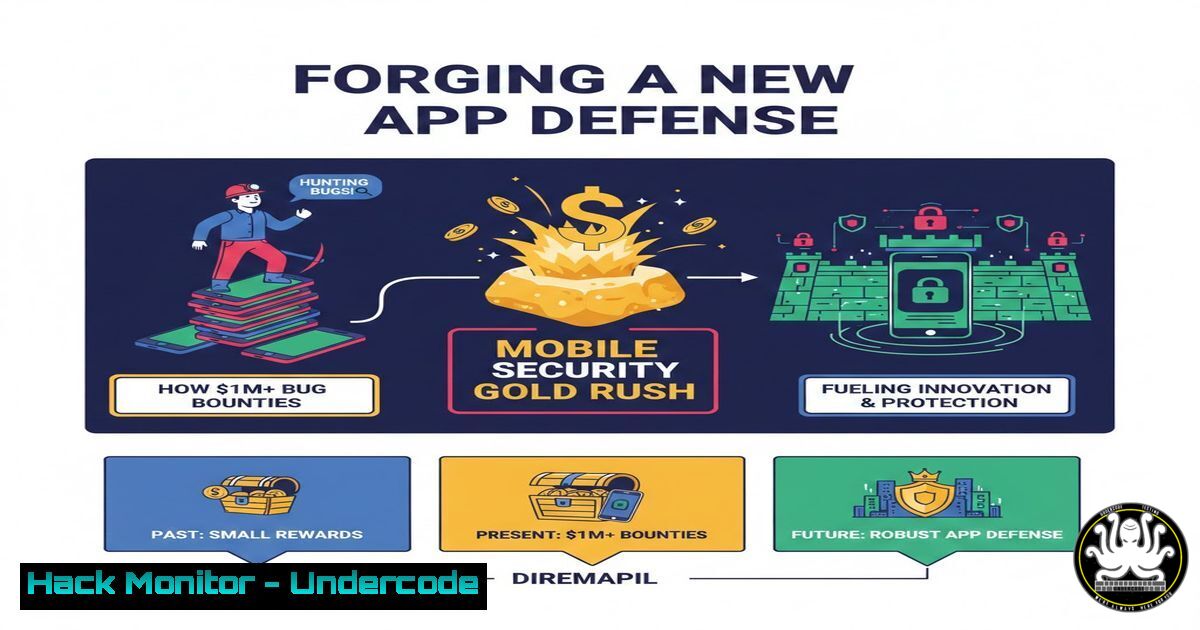
Introduction:
The landscape of application security is undergoing a seismic shift, with mobile platforms at its epicenter. As leading security researchers like Sergey Toshin transition from solo bug bounty hunters to architects of enterprise-scale mobile security, the focus is now on building specialized, automated infrastructure. This evolution underscores a critical industry truth: securing billions of iOS and Android users requires moving beyond generic tools to mobile-specific SAST (Static Application Security Testing) and DAST (Dynamic Application Security Testing) solutions.
Learning Objectives:
- Understand the critical components of a modern mobile AppSec program: SAST, DAST, and automated Proof-of-Concept (PoC) generation.
- Learn practical steps to implement basic mobile security testing using open-source tools.
- Grasp the importance of custom security rules and data-flow analysis for identifying complex vulnerabilities.
You Should Know:
1. Building Your Mobile-Specific SAST Foundation
The core of Sergey Toshin’s disclosed architecture lies in a vast repository of over 5,500 SAST rules. These rules are tailored to mobile frameworks, identifying issues like insecure data storage, hardcoded secrets, and improper platform usage that generic scanners miss.
Step‑by‑step guide explaining what this does and how to use it.
Concept: SAST analyzes source code or bytecode for security flaws without executing the application. Mobile-specific SAST understands contexts like Android’s `SharedPreferences` or iOS’s Keychain.
Tool Setup: Start with the open-source MobSF (Mobile Security Framework).
 Clone the MobSF repository
git clone https://github.com/MobSF/Mobile-Security-Framework-MobSF.git
cd Mobile-Security-Framework-MobSF
 Run using Docker (recommended)
docker-compose up
Action: Navigate to `http://localhost:8000` in your browser. Upload an Android APK or iOS IPA file. MobSF will perform static analysis, generating a report covering code issues, permissions, and manifest configurations.
Custom Rules: To emulate advanced setups, you can write custom YAML rules for MobSF or tools like `Semgrep` to detect proprietary API key patterns or unsafe function calls.
2. Deploying Dynamic Analysis (DAST) & Instrumentation
While SAST examines code at rest, DAST tests the running application, crucial for finding logic flaws, runtime vulnerabilities, and issues in compiled dependencies.
Step‑by‑step guide explaining what this does and how to use it.
Concept: DAST interacts with the app as a user would, while instrumenting the runtime to monitor for sensitive data leaks, insecure network traffic, and improper session handling.
Tool Setup: Use `Frida` for dynamic instrumentation and `mitmproxy` for traffic interception.
 Install Frida on your testing machine
pip install frida-tools
 Install mitmproxy
pip install mitmproxy
 On a rooted Android device/emulator, push the Frida server
adb push frida-server /data/local/tmp/
adb shell "chmod 755 /data/local/tmp/frida-server"
adb shell "/data/local/tmp/frida-server &"
Action: Write a Frida script to hook into a mobile app’s functions, such as `java.crypto.Cipher` to monitor decryption operations. Simultaneously, configure the device proxy to point to `mitmproxy` to intercept and inspect all HTTP/HTTPS traffic for cleartext data or weak TLS configurations.
3. Automating Proof-of-Concept (PoC) Generation
A key differentiator for elite programs is automating the creation of reproducible exploits from scan findings, drastically reducing triage time for developers.
Step‑by‑step guide explaining what this does and how to use it.
Concept: By integrating data-flow analysis from SAST with runtime context from DAST, systems can auto-generate scripts that demonstrate the exploit path.
Basic Example: For a hardcoded API key found in source code, an automated system could generate a simple Python PoC.
 Auto-generated PoC for Hardcoded Secret Exposure
import requests

extracted_key = "eyJhbGciOiJIUzI1NiIsInR5cCI6IkpXVCJ9..."  Found by SAST
target_endpoint = "https://api.victimapp.com/admin/users"  Identified via DAST/analysis

headers = {'Authorization': f'Bearer {extracted_key}'}
response = requests.get(target_endpoint, headers=headers)

if response.status_code == 200:
print(f"[bash] Successfully accessed sensitive endpoint with hardcoded key. Data leaked: {response.text[:100]}")
Action: This script, attached to the vulnerability report, provides immediate, actionable evidence to the development team.
4. Securing Mobile APIs: The Backend Attack Surface
Mobile apps rely heavily on APIs. A vulnerable API can nullify even the most secure app. Testing must extend to the backend endpoints the app communicates with.
Step‑by‑step guide explaining what this does and how to use it.
Concept: Perform authenticated scanning of APIs, testing for Broken Object Level Authorization (BOLA), excessive data exposure, and injection flaws.
Tool Setup: Use `OWASP Amass` for endpoint discovery and Postman/newman for automated security testing.
 Use Amass to enumerate API endpoints related to a domain
amass enum -active -d api.targetcompany.com -o endpoints.txt
Action: Import the discovered endpoints into Postman. Create test collections that manipulate object IDs (e.g., `/api/user/123` to /api/user/456) and check for authorization failures. Automate with `newman` in your CI/CD pipeline.
- Infrastructure as Code (IaC) for Mobile Cloud Hardening
Mobile backends often use cloud services (AWS S3, Firebase). Misconfigurations lead to massive data breaches. IaC security scanning is essential.
Step‑by‑step guide explaining what this does and how to use it.
Concept: Scan Terraform, CloudFormation, or Firebase configuration files for security misconfigurations before deployment.
Tool Setup: Use `checkov` or `tfsec` for automated scanning.
 Install checkov
pip install checkov
 Scan a Terraform directory for misconfigurations
checkov -d /path/to/terraform/code --quiet
Action: The tool will output findings like [bash]: Ensure S3 bucket has 'block public access' enabled. Integrate this scan into your version control system to prevent risky configurations from being merged.
What Undercode Say:
- Specialization is Non-Negotiable: The era of using generic web application scanners for mobile apps is over. Effective defense requires tools and rules built specifically for mobile operating systems, frameworks, and supply chains.
- Automation is the Force Multiplier: The scale of billions of devices makes manual review impossible. The future belongs to integrated systems that combine SAST, DAST, and automated exploit generation to provide context-rich, actionable intelligence to developers at speed.
Analysis: Sergey Toshin’s journey from individual researcher to community leader highlights a maturation in the cybersecurity field. The intense Q&A on custom rules and data-flow analysis reveals a market gap and a hunger for deep technical knowledge. This meetup wasn’t just about sharing findings; it was about standardizing methodologies and industrializing mobile security. The collaboration between major corporations signals that mobile security is now a strategic board-level concern, driven by the escalating costs of breaches and bug bounties. The disclosed architecture serves as a blueprint for enterprises aiming to build proactive, rather than reactive, defense postures.
Prediction:
The next five years will see AI and Machine Learning deeply integrated into mobile SAST/DAST platforms, moving beyond signature-based rules to behavior-based anomaly detection that can identify zero-day logic flaws. Furthermore, the rise of “Security as Code” will lead to version-controlled, shareable custom rule repositories, creating a community-driven immune system for mobile apps. Bug bounty platforms will increasingly integrate these automated testing frameworks, allowing researchers to run preliminary scans before deep-diving, ultimately leading to more sophisticated reports and even higher bounties for complex, chained exploits that automated tools can only hint at.
🎯Let’s Practice For Free:
IT/Security Reporter URL:
Reported By: Bagipro Back – Hackers Feeds
Extra Hub: Undercode MoN
Basic Verification: Pass ✅


