
Listen to this Post
Introduction:
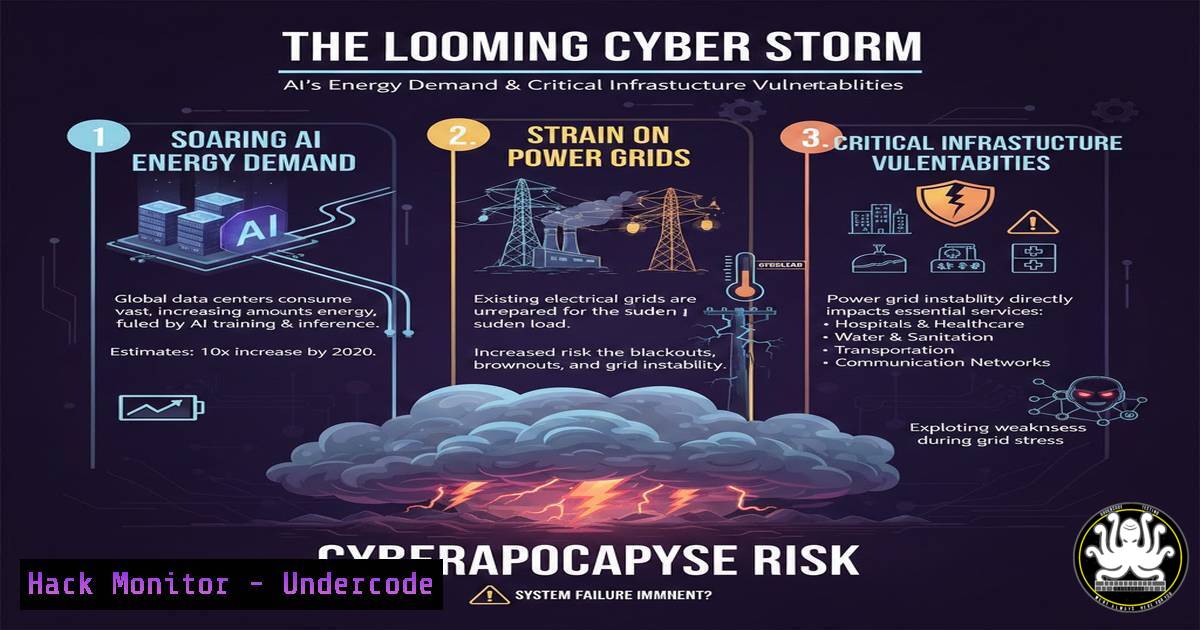
The exponential growth of Artificial Intelligence is driving an unprecedented surge in energy consumption, with U.S. data centers projected to consume up to 12% of the nation’s electricity by 2028. This massive demand, powered by an aging grid, creates a vast and complex attack surface for threat actors. The integration of AI-powered building management systems like Schneider Electric’s EcoStruxure, while essential for efficiency, introduces new vectors for cyber-attacks that could cripple both digital and physical infrastructure.
Learning Objectives:
- Understand the cybersecurity risks inherent in the convergence of IT, OT (Operational Technology), and energy grids.
- Learn to harden AI infrastructure and smart building systems against potential attacks.
- Develop strategies for securing the software supply chain for critical energy automation systems.
You Should Know:
1. The Expanded Attack Surface of Smart Buildings
The push for energy efficiency has led to the integration of traditionally separate systems—power, HVAC, lighting, and IT networks—onto unified platforms. EcoStruxure Foresight Operation is a prime example of this convergence. However, this creates a scenario where a breach in a corporate network can lead to physical consequences, such as manipulating a data center’s cooling system to cause hardware failure through overheating.
A step-by-step guide to segmenting these networks is crucial:
Step 1: Identify all IoT and OT devices. Use network scanning tools like `nmap` to discover devices.
`nmap -sS -O 10.0.100.0/24` (Scans the OT subnet for devices and OS fingerprinting).
Step 2: Implement strict network segmentation. Use firewalls to create VLANs, isolating OT, IT, and IoT networks. Ensure rules are in place to block all traffic from the IT network to the OT network by default.
Step 3: Harden industrial protocols. Discover and monitor protocols like BACnet, Modbus, and Siemens S7, which often lack native authentication. Tools like Wireshark can be used to analyze traffic for malicious commands.
Step 4: Deploy an Industrial Demilitarized Zone (IDMZ). This network segment sits between the corporate IT network and the OT network, acting as a buffer zone where data diodes or deeply inspected proxies control all cross-domain traffic.
2. Securing the AI Training and Inference Pipeline
AI’s massive computational needs make its infrastructure a high-value target. Adversaries can poison training data, steal proprietary models, or disrupt inference workloads, causing massive financial and operational damage.
A step-by-step guide to foundational AI security:
Step 1: Secure the training data repository. Implement strict access controls and integrity monitoring. Use `git` with signing for dataset version control.
`git commit -S -m “Certified clean training dataset v2.1″` (Creates a cryptographically signed commit).
Step 2: Harden the GPU clusters. Ensure all nodes in your AI training cluster are patched and configured securely. Use automated compliance scanning with OpenSCAP.
`oscap xccdf eval –profile stig-rhel8-server-upstream –results results.xml –report report.html /usr/share/xml/scap/ssg/content/ssg-rhel8-ds.xml`
Step 3: Protect models in production. Encrypt models at rest and in transit. Use confidential computing (e.g., AMD SEV, Intel SGX) to process sensitive data without exposing the model’s inner workings in memory.
3. API Security for Energy Management Platforms
Platforms like EcoStruxure rely heavily on APIs to communicate between sensors, controllers, and cloud analytics. Insecure APIs are a primary vector for data exfiltration and system takeover.
A step-by-step guide to API hardening:
Step 1: Enforce strict authentication and authorization. Use OAuth 2.0 with short-lived tokens and implement fine-grained role-based access control (RBAC). Never use API keys in URLs.
Step 2: Implement robust input validation and rate limiting. This prevents injection attacks and Denial-of-Service (DoS) attempts. For a web server like nginx, you can add rate limiting:
`http { limit_req_zone $binary_remote_addr zone=api:10m rate=10r/s; … server { … limit_req zone=api burst=20 nodelay; } }`
Step 3: Automate API security testing. Integrate tools like OWASP ZAP into your CI/CD pipeline to dynamically test for vulnerabilities like broken object level authorization (BOLA) and mass assignment.
4. Cloud Hardening for Critical Workloads
The energy sector’s rapid shift to cloud platforms for managing distributed assets introduces misconfiguration risks. A single flawed security group can expose critical control systems.
A step-by-step guide for cloud hardening:
Step 1: Enforce infrastructure-as-code (IaC) security. Scan all Terraform or CloudFormation templates before deployment with tools like `tfsec` or checkov.
`checkov -d /path/to/terraform/code` (Scans for misconfigurations).
Step 2: Apply the principle of least privilege to cloud identities. Use AWS IAM Roles or Azure Managed Identities for services instead of long-term access keys. Regularly audit permissions with tools like pmapper.
Step 3: Enable comprehensive logging and monitoring. Aggregate logs from cloud services (e.g., AWS CloudTrail, Azure Activity Logs) into a SIEM. Create alerts for suspicious activities, such as configuration changes to critical resources outside of maintenance windows.
5. Vulnerability Management in a Converged World
The software supply chain for systems that manage energy, from operating systems to third-party libraries, is a prime target. The 2021 SolarWinds attack demonstrated the scale of this threat.
A step-by-step guide to proactive vulnerability management:
Step 1: Automate asset discovery and inventory. You cannot protect what you do not know. Use tools like Lansweeper or run a script to pull asset data from Windows machines via WMI:
`Get-WmiObject -Class Win32_ComputerSystem` (Gets basic system info).
Step 2: Prioritize patching based on exploitability. Use the Common Vulnerability Scoring System (CVSS) in conjunction with context about whether the vulnerability is being actively exploited in the wild. Focus on critical and high-severity flaws with public proof-of-concept code first.
Step 3: Conduct continuous penetration testing. Go beyond automated scans. Employ red teams to simulate sophisticated adversaries attempting to move from the IT network into the OT environment, testing both technical controls and human vigilance.
What Undercode Say:
- The energy crisis driven by AI is not just a capacity problem; it is the defining cybersecurity challenge of the next decade, merging digital and physical threat landscapes.
- The rush for efficiency through automation must be matched by an equal investment in cyber-resilience, with a focus on securing the software supply chain and implementing zero-trust architectures in OT environments.
The relentless growth of AI is acting as a forcing function, accelerating the integration of our digital and physical worlds at a pace that likely outstrips our current security maturity. The sophisticated AI-powered platforms designed to manage our energy future are themselves high-value targets. A successful cyber-attack on such a system would no longer be just a data breach; it would be a direct attack on national critical infrastructure, with the potential to cause widespread blackouts and disrupt the very AI ecosystems that depend on it. The industry’s focus must shift from merely building smarter systems to building inherently secure and resilient ones from the ground up.
Prediction:
Within the next 3-5 years, we will witness the first major, multi-city disruptive event caused by a cyber-attack that exploits the interdependencies between AI data centers and the smart grid. This will not be a simple ransomware attack on a single company, but a sophisticated campaign designed to cause cascading failures. It will force a global regulatory reckoning, leading to mandatory and stringent cybersecurity standards for all energy automation software, similar to the evolution of regulations in the financial and healthcare sectors, fundamentally changing how critical infrastructure technology is developed and audited.
🎯Let’s Practice For Free:
IT/Security Reporter URL:
Reported By: Scottwindonluton Ad – Hackers Feeds
Extra Hub: Undercode MoN
Basic Verification: Pass ✅


