Listen to this Post
Introduction:
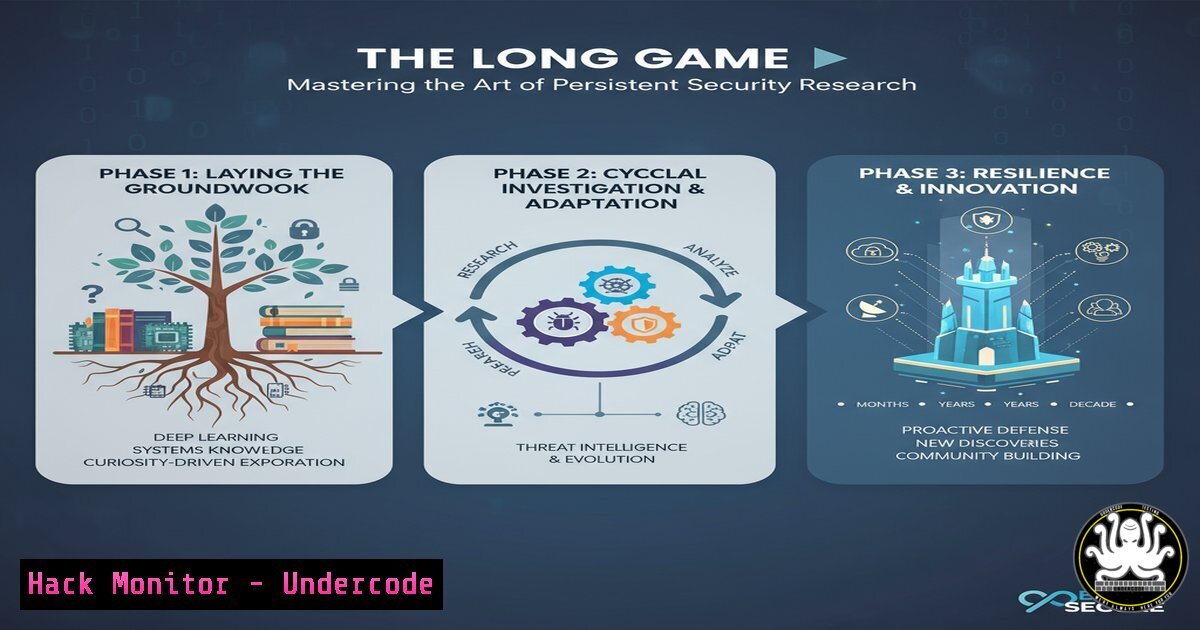
Security research is a marathon, not a sprint, as exemplified by the meticulous process of responsible vulnerability disclosure. A recent submission to Apple, which the company successfully reproduced and is now addressing, underscores the critical timeline from discovery to patch, a journey that can span months. This deliberate pace is not a sign of inefficiency but a hallmark of rigorous, impactful security work that ensures robust protections for end-users.
Learning Objectives:
- Understand the end-to-end workflow of responsible vulnerability disclosure.
- Develop the technical skills to identify and validate common vulnerability classes.
- Learn to document and report security findings with the precision required by major bug bounty programs.
You Should Know:
1. The Vulnerability Discovery Mindset
Successful security research begins with a methodical approach to target analysis. Instead of random testing, researchers use a combination of static and dynamic analysis to narrow down potential attack surfaces.
Verified Command – Reconnaissance:
`nmap -sV -sC –script vuln `
Step-by-step guide:
nmap: The network mapper tool.-sV: Probes open ports to determine service/version info.-sC: Runs a default set of common scripts.--script vuln: Executes a specialized script set designed to identify known vulnerabilities.- This command provides a broad overview of the target’s network services and automatically checks for common weaknesses, serving as an initial triage step in the research process.
2. Crafting a Proof-of-Concept (PoC)
A valid bug report requires a reproducible PoC. This demonstrates the vulnerability’s impact without being destructive.
Verified Code Snippet – Python HTTP Request Manipulation:
import requests
target_url = "https://vulnerable-app.com/api/userData"
headers = {'User-Agent': 'Mozilla/5.0', 'X-Original-URL': '/admin'}
response = requests.get(target_url, headers=headers)
print(f"Status: {response.status_code}")
print(f"Response: {response.text}")
Step-by-step guide:
- This Python script uses the `requests` library to send a manipulated HTTP request.
- The `X-Original-URL` header is a common technique to bypass access controls, attempting to access an admin endpoint.
- By modifying the headers and observing the application’s response, a researcher can validate improper access control vulnerabilities. A successful PoC will return sensitive data or a `200 OK` status when it should not.
3. Static Analysis for Code Flaws
Inspecting an application’s source code (when available) is a powerful method for finding logic flaws and vulnerabilities that dynamic scanning might miss.
Verified Command – Static Analysis with `grep`:
`grep -r “password\|api_key\|secret” /path/to/source/ –include=”.py”`
Step-by-step guide:
grep -r: Recursively searches through directories."password\|api_key\|secret": The search pattern for hardcoded credentials or secrets.--include=".py": Limits the search to Python files.- This command helps identify the most basic yet critical security flaw: hardcoded secrets in the source code, a common finding in security assessments.
4. Dynamic Analysis with Interception Proxies
Tools like Burp Suite or OWASP ZAP are indispensable for manipulating live traffic between the client and server.
Verified Configuration – Burp Suite Proxy Setup:
- Launch Burp Suite and navigate to the “Proxy” tab.
- In your browser, configure the proxy settings to
127.0.0.1:8080.
3. Turn “Intercept” on to capture outgoing requests.
Step-by-step guide:
- With interception active, every HTTP/S request from your browser is paused in Burp Suite.
- This allows the researcher to modify parameters, headers, and the request body in real-time before forwarding it to the server.
- By observing how the application responds to malformed or malicious inputs, researchers can uncover injection flaws, business logic errors, and broken authentication mechanisms.
5. Validating Input Sanitization Bypasses
A primary target for researchers is input validation. Testing for SQL Injection (SQLi) remains a fundamental skill.
Verified Command – SQLi Test with `sqlmap`:
`sqlmap -u “https://test.com/products?id=1” –batch –level=3 –risk=2`
Step-by-step guide:
sqlmap: An automated tool for detecting and exploiting SQLi flaws.-u: Specifies the target URL.--batch: Runs the tool with default answers to prompts.--level/--risk: Increases the thoroughness of the tests.- This command automates the process of fuzzing the `id` parameter to determine if it is susceptible to SQL injection, a critical vulnerability leading to data breaches.
6. Memory Corruption Analysis
For lower-level research, understanding memory corruption is key. This often involves using debuggers and specialized tools.
Verified Command – Linux Binary Analysis with `gdb`:
`gdb ./vulnerable_binary`
`(gdb) run $(python -c ‘print “A”100’)`
`(gdb) info registers`
Step-by-step guide:
– `gdb` is the GNU Debugger. The command `run` executes the binary with a long string of ‘A’s as an argument to trigger a potential buffer overflow.
– After a crash, `info registers` displays the CPU register values. If the EIP/RIP (Instruction Pointer) register is overwritten with `0x41414141` (the hex for ‘AAAA’), a buffer overflow is confirmed.
– This is the first step in developing an exploit for memory corruption vulnerabilities.
7. Cloud Security Misconfigurations
Modern research extends to cloud environments, where misconfigured storage services are a common source of data leaks.
Verified Command – AWS S3 Bucket Check:
`aws s3 ls s3://target-bucket/ –recursive –no-sign-request –region us-east-1`
Step-by-step guide:
- This AWS CLI command attempts to list the contents of an S3 bucket without authentication (
--no-sign-request). - If the bucket policy is misconfigured to allow public `List` permissions, this command will succeed, revealing sensitive files.
- Identifying such misconfigurations is a critical aspect of cloud security research and is often part of bug bounty programs’ scope.
What Undercode Say:
- Patience is a Technical Skill: The timeline from initial report to vendor patch is a critical component of the vulnerability lifecycle. Rushing this process can lead to incomplete fixes or collateral damage in complex software ecosystems.
- Process Over Glory: The most impactful research is often not the flashy zero-day but the consistent, methodical application of fundamental techniques across a target’s entire attack surface. Trusting a structured process—recon, analysis, PoC development, and reporting—yields more reliable and valuable results over time. The post highlights that true expertise is demonstrated not just in the discovery, but in the perseverance and professional rigor applied throughout the long investigation and remediation period. This disciplined approach is what separates hobbyists from professional security researchers.
Prediction:
The future of security research will see an increased emphasis on automation for initial vulnerability discovery, but the deep, analytical work of chain exploitation and logic flaw identification will remain a human-driven domain. As software becomes more complex and interconnected, the “long game” will become even more critical. Researchers will need to specialize in specific domains (e.g., AI model security, cloud-native infrastructure, or supply chain integrity), and the most sought-after talents will be those who combine deep technical prowess with the strategic patience to see complex, multi-faceted vulnerabilities through to a responsible and effective resolution.
🎯Let’s Practice For Free:
IT/Security Reporter URL:
Reported By: Joseph Semaan – Hackers Feeds
Extra Hub: Undercode MoN
Basic Verification: Pass ✅


