Listen to this Post
Introduction:
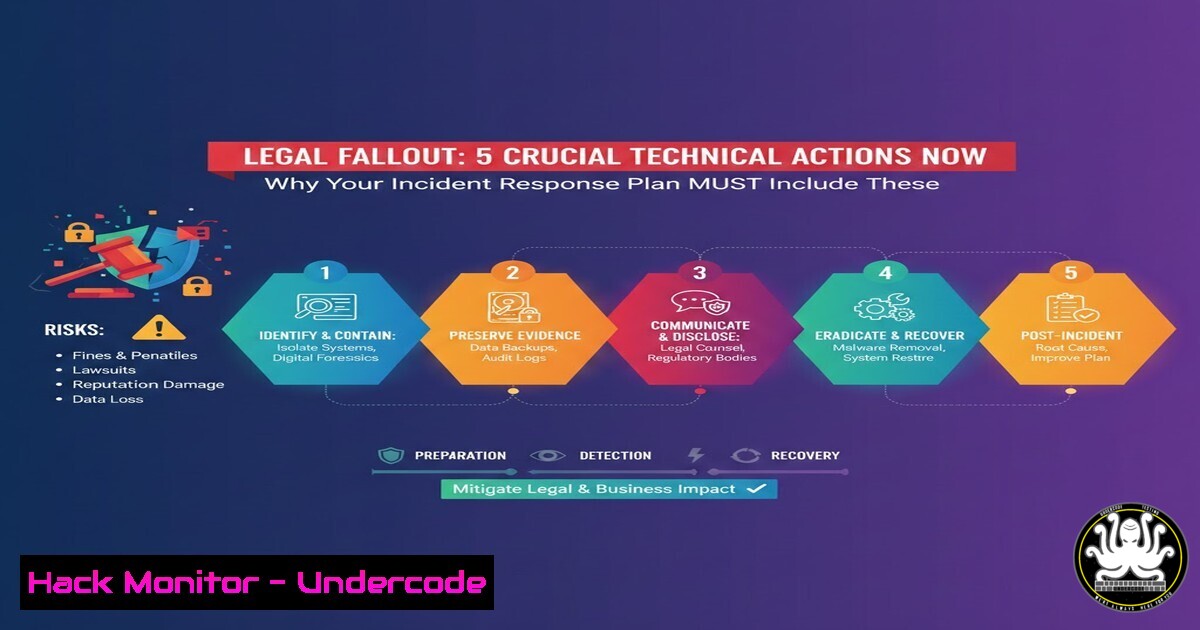
A data breach is no longer just a technical crisis—it’s a legal battlefield. As regulatory scrutiny intensifies globally, organizations must bridge the gap between technical response and legal compliance from the first moment of detection. The recent SitusAMC breach analysis circulating among cybersecurity leaders reveals how immediate technical actions directly determine legal liability.
Learning Objectives:
- Understand the critical intersection between technical forensics and legal compliance requirements
- Implement immediate technical actions that preserve legal defensibility post-breach
- Develop cross-functional protocols that synchronize IT, security, and legal team responses
You Should Know:
1. Immediate Evidence Preservation: The 72-Hour Legal Clock
The moment a breach is detected, your technical actions either preserve or destroy legal defensibility. Legal teams require pristine evidence chains, while attackers continue their operations. This creates a tension where technical teams must balance containment with preservation.
Step-by-step guide:
- Isolate affected systems WITHOUT powering down: ` Linux: sudo iptables -A INPUT -s
-j DROP`
– Create forensic images before containment: ` Windows: FTK Imager or dd if=/dev/sda1 of=/evidence/disk1.img bs=4K`
– Preserve memory artifacts: ` Linux: sudo dd if=/dev/mem of=/evidence/memory.img bs=1M`
– Document chain of custody: Every action must be logged with timestamps and justification - Enable audit logging across all systems: ` Linux: sudo auditctl -e 1`
- Notification Triggers: The Technical Evidence That Demands Disclosure
Legal notification requirements hinge on specific technical findings. Understanding what evidence triggers mandatory reporting is crucial for both compliance and liability protection.
Step-by-step guide:
- Identify personal data locations: ` Linux: grep -r “SSN” /var/www/ –include=”.php” | wc -l`
– Quantify affected records: ` SQL: SELECT COUNT() FROM users WHERE breach_date BETWEEN ‘2023-01-01’ AND ‘2023-01-31’`
– Document data classification: Create matrix mapping data types to notification requirements - Establish data flow diagrams: Map where sensitive data travels across networks
- Implement data loss prevention: ` Windows: New-DlpPolicy -Name “PCI_Compliance” -Template “PCI”`
- Cloud Evidence Collection: Legal Holds in Distributed Environments
Modern breaches span cloud and hybrid environments, creating complex evidence collection scenarios that must meet legal standards for admissibility.
Step-by-step guide:
- Freeze cloud storage: ` AWS: aws s3api put-object-legal-hold –bucket
–key –legal-hold Status=ON`
– Preserve log files: ` Azure: az monitor activity-log list –start-time 2023-01-01T00:00:00Z`
– Capture IAM changes: ` GCP: gcloud logging read “resource.type=iam_role” –freshness=30d`
– Document access patterns: Analyze CloudTrail, Azure Activity Logs, or GCP Audit Logs - Export for legal review: Ensure proper formatting and metadata preservation
4. Communication Security: Protecting Attorney-Client Privilege Post-Breach
All breach-related communications become discoverable unless properly protected. Technical teams must understand how to secure communications with legal counsel.
Step-by-step guide:
- Establish privileged communication channels: Implement encrypted channels specifically for legal discussions
- Segment legal communications: ` Network: iptables -A FORWARD -p tcp –dport 587 -m state –state NEW -j ACCEPT`
– Train technical staff on legal communication protocols: What to document vs. what to discuss verbally - Implement legal hold on relevant communications: Preserve emails, chats, and incident tracking systems
- Use encrypted documentation: ` PGP: gpg –encrypt –recipient [email protected] incident_report.docx`
- Regulatory Mapping: Technical Controls That Satisfy Multiple Jurisdictions
Different regulations require specific technical evidence. Mapping controls to requirements streamlines legal defense and demonstrates due diligence.
Step-by-step guide:
- Conduct gap analysis: Map existing controls against GDPR, CCPA, HIPAA, etc.
- Implement configuration baselines: ` CIS: sudo apt-get install openssh-server && sudo authselect select sssd with-fingerprint`
– Document encryption status: ` Linux: find /home -name “.pdf” -exec file {} \; | grep -i encrypted`
– Establish audit trails: Ensure logs capture required events for each regulation - Generate compliance evidence: Automated reporting showing control effectiveness
What Undercode Say:
- Technical teams now operate as first responders in legal proceedings—every command typed becomes potential evidence
- The 72-hour post-breach window determines both containment success and legal liability
- Cloud forensics requires specialized skills that many organizations lack but desperately need
- Communication protocols between technical and legal teams must be established before incidents occur
- Regulatory mapping transforms from compliance exercise to legal defense strategy
The intersection of technical response and legal requirements represents the new frontier in cybersecurity management. Organizations that fail to integrate these domains face not only continued breach risk but potentially existential legal consequences. The SitusAMC analysis demonstrates that courts and regulators increasingly expect sophisticated technical understanding coupled with immediate legal compliance—a standard that requires cross-functional expertise most organizations have yet to develop.
Prediction:
Within 24 months, we’ll see the emergence of “forensic legal engineering” as a dedicated discipline, with technical professionals requiring legal training and legal professionals demanding technical fluency. Regulatory bodies will begin mandating specific technical evidence formats, and courts will render judgments based on the adequacy of technical response measures. Organizations that pioneer integrated technical-legal response protocols will achieve significant competitive advantage, while those maintaining siloed approaches will face escalating liability and potentially business-ending consequences.
🎯Let’s Practice For Free:
IT/Security Reporter URL:
Reported By: Andrew Alston – Hackers Feeds
Extra Hub: Undercode MoN
Basic Verification: Pass ✅


