Listen to this Post
Introduction:
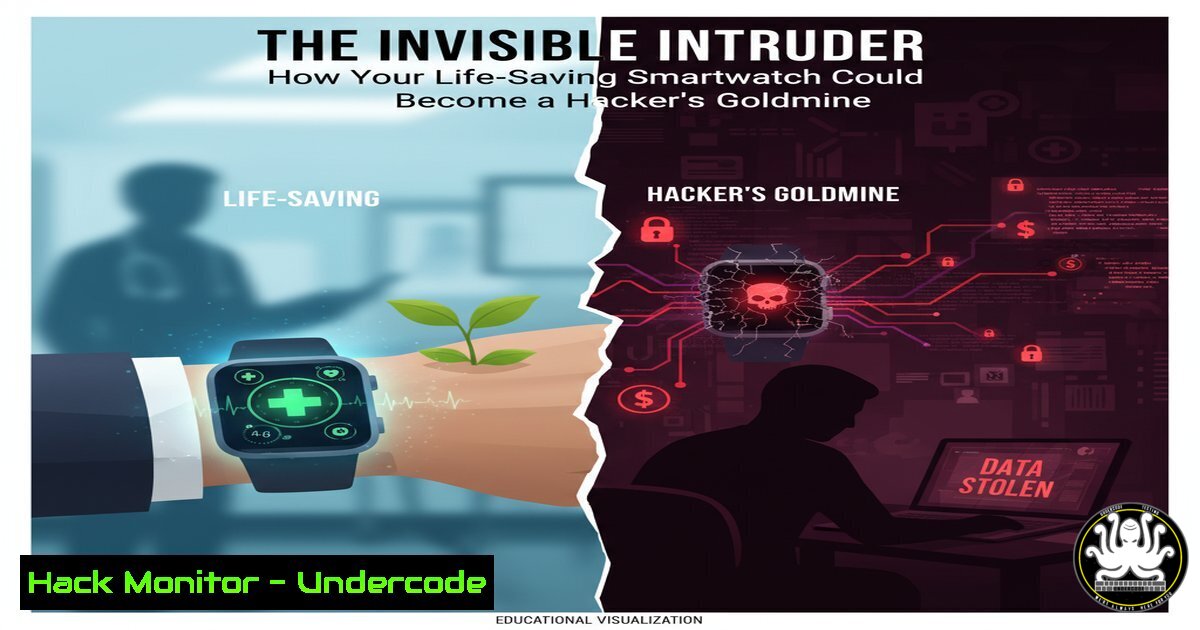
Samsung’s groundbreaking FDA approval for a smartwatch that detects Left Ventricular Systolic Dysfunction (LVSD) marks a pivotal leap in consumer healthcare. This fusion of AI, biometric sensors, and continuous monitoring transforms wearables from fitness trackers into critical medical devices. However, this very capability creates an unprecedented attack surface, turning deeply personal physiological data into a high-value target for cybercriminals.
Learning Objectives:
- Understand the new cybersecurity risks introduced by advanced health-monitoring wearables.
- Learn how to secure data in transit from IoT devices and harden network perimeters.
- Develop incident response strategies for a compromised medical IoT (MIoT) device.
You Should Know:
- Securing the Data Lifeline: Bluetooth LE Sniffing & Hardening
The constant communication between the smartwatch and a paired smartphone is the first vulnerability chain. Attackers can intercept this Bluetooth Low Energy (BLE) traffic to harvest raw biometric data.` Command to scan for Bluetooth Low Energy devices (Linux)`
`sudo hcitool lescan`
` Use a tool like Gatttool or Bluelog to further interrogate found devices.`
`gatttool -b [bash] –interactive`
Step-by-step guide:
The `hcitool lescan` command initiates a scan for nearby BLE devices, revealing their MAC addresses and names. An attacker uses this for reconnaissance. To harden against this, ensure your device uses BLE pairing with strong, temporary keys and that it doesn’t broadcast its identity when not in pairing mode. For users, this means always using secure pairing methods and disabling Bluetooth when not in use.
2. Fortifying the Gateway: Smartphone Firewall Configuration
The connected smartphone acts as a gateway to the cloud. A compromised phone means compromised health data. Hardening the host device is critical.
` Windows PowerShell command to create a firewall rule blocking unauthorized outbound traffic`
`New-NetFirewallRule -DisplayName “Block Unauthorized Outbound” -Direction Outbound -Action Block -Program “C:\Path\To\SuspiciousApp.exe” -RemoteAddress Any`
` Android (via ADB): Check for open listening ports that shouldn’t be.`
`adb shell netstat -tulpn`
Step-by-step guide:
The Windows PowerShell command creates a specific outbound block rule, preventing a potentially malicious application from exfiltrating stolen data. On mobile devices, using `netstat` via an ADB connection helps you audit for unexpected open network ports that could be backdoors. Regularly audit your device’s firewall and application permissions.
3. Cloud Data Integrity: Validating API Security
The Samsung Health cloud platform, where your long-term health trends are stored, is a prime target. Ensuring the security of the APIs that transmit this data is paramount.
` Using curl to test for weak API headers on a health endpoint (Replace with authorized test endpoint)`
`curl -I -X GET https://api.samsunghealth.com/v1/user/data -H “Authorization: Bearer
` Look for missing security headers like:`
` Strict-Transport-Security: max-age=31536000; includeSubDomains`
` X-Content-Type-Options: nosniff`
Step-by-step guide:
This `curl` command fetches the headers from an API endpoint. A security analyst would check for the presence of key headers like Strict-Transport-Security, which forces HTTPS, and X-Content-Type-Options, which prevents MIME sniffing attacks. The absence of these headers indicates a weaker security posture for the cloud service.
- The AI Model Itself: Adversarial Machine Learning Attacks
The AI that analyzes brainwaves and heart patterns with 92.86% accuracy is not immune. Attackers can use adversarial attacks to poison the AI’s training data or manipulate its inputs to cause misdiagnosis.` Python pseudocode snippet illustrating a basic adversarial input perturbation`
`import numpy as np`
` original_ecg_signal = [clean data from sensor]`
` adversarial_noise = carefully crafted small perturbation`
`adversarial_ecg = original_ecg_signal + adversarial_noise`
` The AI model now classifies ‘adversarial_ecg’ incorrectly, e.g., healthy instead of LVSD.`
Step-by-step guide:
This simplified code demonstrates the core concept. An attacker generates a tiny, human-imperceptible noise pattern (adversarial_noise) and adds it to a clean ECG signal. When the AI model processes this “adversarial example,” it can be fooled into making a dangerously wrong prediction. Mitigation involves training the AI on adversarial examples to improve its robustness.
5. Network-Level Defense: Isolating IoT Traffic
The most effective defense is to assume your IoT devices are compromised and isolate them from your main network.
` Cisco IOS example to create a VLAN for IoT devices`
`configure terminal`
`vlan 50`
`name IoT-Isolated`
`exit`
`interface gigabitethernet0/1`
`switchport mode access`
`switchport access vlan 50`
` Then create a firewall rule to block this VLAN from initiating connections to your main LAN.`
Step-by-step guide:
This sequence of commands on a managed network switch creates a separate Virtual LAN (VLAN) with the ID 50, named “IoT-Isolated.” The physical port `gigabitethernet0/1` is then configured to place any device plugged into it into this isolated VLAN. A subsequent firewall rule ensures devices in VLAN 50 cannot access your trusted computers and servers, containing any potential breach.
6. Post-Exploitation: Detecting Data Exfiltration
If an attacker gains access, they will try to steal the data. Monitoring for unusual outbound traffic patterns is key to detection.
` Linux command using tcpdump to capture and inspect outbound packets over a certain size`
`sudo tcpdump -i any -A ‘dst port 80 or 443 and greater 1000’`
` Windows Command: using netstat to find established connections suspiciously sending data.`
`netstat -ano | findstr “ESTABLISHED” | findstr “:443″`
Step-by-step guide:
The `tcpdump` command captures all traffic on any interface destined for web ports (80/443) where the packet size is greater than 1000 bytes, printing the payload in ASCII (-A). A large, sustained flow of such traffic to an unknown IP could indicate data exfiltration. The Windows `netstat` command helps identify which processes have active, encrypted (port 443) connections that could be sending data.
7. The Human Firewall: Social Engineering the User
The most sophisticated technology can be undone by tricking the user. Phishing attacks tailored to health anxiety are a potent threat.
` Example of a malicious HTML page mimicking a Samsung Health login (for awareness)`
``
``
`
`
`
Please wait, updating your health data…
`
``
``
Step-by-step guide:
This HTML code represents a crude phishing page. It could be sent via a targeted email claiming to be from Samsung Health. The page automatically submits a hidden form to an attacker’s server, stealing any pre-filled credentials. The best defense is user education: never click links in unsolicited emails and always verify the URL in your browser’s address bar before logging in.
What Undercode Say:
- The Attack Surface Has Moved Inside the Body. We are no longer just protecting financial data; we are protecting the integrity of our own physiological data and the AI systems that diagnose us. A data breach here is not just about privacy; it’s about physical safety.
- Regulatory Approval Does Not Equal Cybersecurity. FDA clearance validates medical efficacy, not resistance to sophisticated cyber attacks. The responsibility for security is a shared, ongoing burden between the manufacturer, the cloud provider, and the end-user.
The convergence of AI and medical-grade wearables creates a “perfect storm” of attractiveness to attackers. The data is incredibly sensitive, the devices are always-on and personal, and the potential for harm through manipulation is real. The industry must shift from a mindset of “secure enough” to “security-by-design,” building in encryption, robust authentication, and user-centric privacy controls from the ground up. The cost of failure is no longer just a stolen credit card; it could be a manipulated health diagnosis.
Prediction:
Within the next 3-5 years, we will witness the first major, publicly disclosed cyberattack that successfully manipulates the diagnostic output of a widely used medical wearable. This will not be a mere data theft but an active manipulation event, causing public panic, eroding trust in digital health, and triggering a wave of stringent, legally mandated cybersecurity regulations for the entire medical IoT industry. The race is on to build defenses that are as sophisticated as the life-saving technology they are meant to protect.
🎯Let’s Practice For Free:
IT/Security Reporter URL:
Reported By: Michael Tchuindjang – Hackers Feeds
Extra Hub: Undercode MoN
Basic Verification: Pass ✅


