Listen to this Post
Introduction:
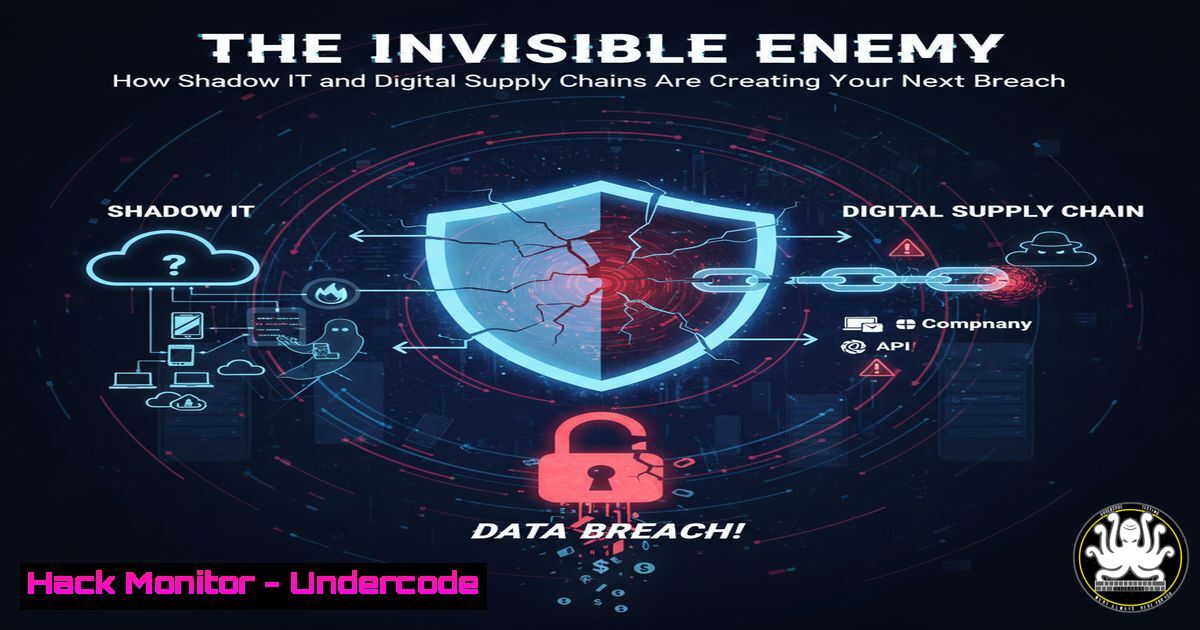
The modern enterprise is a sprawling digital ecosystem, far exceeding the boundaries of its official IT department. The rise of shadow IT and unvetted third-party SaaS applications has created a porous attack surface that traditional security models are ill-equipped to defend. This article deconstructs the critical vulnerabilities introduced by digital supply chains and unauthorized software, providing a technical blueprint for visibility, control, and hardening.
Learning Objectives:
- Understand and identify shadow IT and SaaS usage within your network.
- Implement controls to harden your environment against third-party and supply chain risks.
- Establish a proactive data governance and lifecycle management policy.
You Should Know:
1. Uncovering Shadow IT with Network Traffic Analysis
The first step to mitigating shadow IT is discovering it. Security teams can leverage network flow data to identify unauthorized applications and services communicating with external IPs.
Verified Command & Step-by-Step Guide:
 Use tcpdump to capture HTTP Host headers to identify web-based SaaS traffic
sudo tcpdump -i any -A 'tcp port 80 and (tcp[((tcp[12:1] & 0xf0) >> 2):4] = 0x486f7374)' | grep -E 'Host: [a-zA-Z0-9.-]+'
What this does: This `tcpdump` command captures traffic on port 80 (HTTP) and filters for packets containing the “Host” header, which reveals the domain name of the web service an internal machine is accessing.
How to use it:
- Run the command on a central server or a machine with network mirroring/SPAN port access.
- Let it run for a typical business cycle (e.g., 24-48 hours).
3. Analyze the output, extracting unique domain names.
- Correlate these domains against a whitelist of approved corporate services. Any unknown domains are potential shadow IT instances requiring investigation.
-
Enforcing SaaS Security with OAuth Audit and Revocation
Employees often grant excessive permissions to third-party SaaS applications via OAuth tokens. These tokens can persist long after the application is no longer used, creating a significant risk.
Verified Command & Step-by-Step Guide:
 PowerShell to connect to MS Graph and list all authorized OAuth applications (Requires MS Graph PowerShell Module)
Connect-MgGraph -Scopes "Application.Read.All"
Get-MgServicePrincipal -Filter "servicePrincipalType eq 'Application'" | Where-Object { $_.PublisherName -notlike "Microsoft" } | Format-List DisplayName, AppId, PublisherName
What this does: This PowerShell script uses the Microsoft Graph API to list all third-party OAuth applications authorized in your Azure AD/Microsoft 365 tenant, excluding Microsoft’s own apps.
How to use it:
1. Install the `Microsoft.Graph` PowerShell module (`Install-Module Microsoft.Graph`).
- Run the script with an account that has the `Application.Read.All` permission.
- Review the list of `DisplayName` and
PublisherName. Identify any unknown or unauthorized applications. - To revoke, navigate to Azure AD -> Enterprise Applications -> Find the app -> Delete.
-
Hardening the Software Supply Chain with SBOM Generation
A Software Bill of Materials (SBOM) is a formal, machine-readable inventory of software components and dependencies. It is critical for identifying vulnerable components introduced by third-party vendors.
Verified Command & Step-by-Step Guide:
 Use Syft to generate an SBOM for a container image
syft ubuntu:latest -o cyclonedx-json > ubuntu-sbom.json

Use Grype to scan the generated SBOM for vulnerabilities
grype sbom:ubuntu-sbom.json
What this does: `Syft` is a CLI tool that generates an SBOM from a container image or filesystem. `Grype` is a vulnerability scanner that can consume an SBOM to identify known CVEs within the listed components.
How to use it:
- Install Syft and Grype from the Anchore project.
- Generate an SBOM for your application’s container or a vendor’s provided container (
syft your-app-image:tag -o cyclonedx-json > sbom.json). - Scan the resulting `sbom.json` file with Grype to get a list of vulnerabilities.
- Integrate this process into your CI/CD pipeline to fail builds that introduce critical vulnerabilities from third-party code.
-
Mitigating Cloud Supply Chain Attacks via IAM Hardening
Overly permissive Identity and Access Management (IAM) roles for cloud services are a primary vector for supply chain attacks. The principle of least privilege is paramount.
Verified Command & Step-by-Step Guide:
 AWS CLI command to simulate IAM policies and identify over-permissioning
aws iam simulate-custom-policy --policy-input-list file://mypolicy.json --action-names "s3:DeleteBucket" "iam:CreateUser" "ec2:TerminateInstances"
What this does: This AWS CLI command uses IAM Policy Simulator to check which actions are allowed by a given IAM policy without actually executing them. This helps identify dangerous permissions like the ability to delete critical resources or create new users.
How to use it:
- Export an IAM user or role’s policy to a JSON file (
mypolicy.json). - Create a list of high-risk actions relevant to your environment (e.g.,
s3:DeleteBucket,ec2:TerminateInstances,iam:). - Run the `simulate-custom-policy` command. Review the results and modify the policy to remove any unnecessary, high-risk permissions.
5. Automating Data Lifecycle Management
“Let go of your old data” is a key privacy and security principle. Retaining data beyond its useful life only increases attack surface and compliance burden.
Verified Command & Step-by-Step Guide:
 Python script using Boto3 to find and delete old S3 objects
import boto3
from datetime import datetime, timedelta

s3 = boto3.resource('s3')
bucket = s3.Bucket('your-bucket-name')
expiry_date = datetime.now().replace(tzinfo=None) - timedelta(days=365)  1 year retention

for obj in bucket.objects.all():
if obj.last_modified.replace(tzinfo=None) < expiry_date:
print(f"Deleting {obj.key}")
obj.delete()
What this does: This Python script uses the Boto3 AWS SDK to scan an S3 bucket and permanently delete all objects older than a specified retention period (e.g., 365 days).
How to use it:
- Configure AWS credentials with appropriate permissions (
s3:ListBucket,s3:DeleteObject). - Set the `’your-bucket-name’` and the `expiry_date` logic to match your corporate data retention policy.
- CRITICAL: Test this script on a non-production bucket first. Consider implementing a soft-delete (move to Glacier) before permanent deletion.
6. Implementing API Security Gateways
Shadow APIs and unmanaged endpoints are a subset of shadow IT. An API gateway provides centralized control, security, and visibility into all API traffic.
Verified Command & Step-by-Step Guide:
 Example Kong API Gateway declarative configuration to enforce rate limiting and authentication
apiVersion: configuration.konghq.com/v1
kind: KongPlugin
metadata:
name: global-rate-limit
plugin: rate-limiting
config:
minute: 60
policy: local

apiVersion: configuration.konghq.com/v1
kind: KongPlugin
metadata:
name: require-auth
plugin: key-auth
config:
key_names:
- apikey
hide_credentials: true
What this does: This YAML configuration for the Kong API Gateway applies two critical security policies: a rate-limiting rule (60 requests per minute) and a requirement for a valid API key for authentication.
How to use it:
- Deploy an API gateway like Kong, Apigee, or AWS API Gateway.
- Apply this configuration to your API routes declaratively or via the admin API.
- This prevents abuse from unmanaged clients and forces all API consumers through a secured, audited channel.
7. Proactive Threat Hunting with EDR Queries
Endpoint Detection and Response (EDR) platforms are invaluable for hunting threats that originate from compromised third-party software or supply chain attacks.
Verified Command & Step-by-Step Guide:
-- CrowdStrike EQL query to find processes making network connections followed by file writes
network_event where destination_port != 443 and destination_port != 80
| join [file_event where file_path <del> ".exe" or file_path </del> ".dll"] by pid
| unique pid, process_name
What this does: This Event Query Language (EQL) query, for platforms like CrowdStrike, hunts for suspicious sequences: a process that makes a non-standard web connection (not port 80/443) and then subsequently writes an executable or library file to disk. This is indicative of a download-and-execute payload.
How to use it:
- Access your EDR’s threat hunting or query interface.
- Paste the EQL query and execute it over a relevant time window (e.g., the last 7 days).
- Investigate any returned process PIDs and names. This could uncover a compromised vendor tool or a shadow IT application acting maliciously.
What Undercode Say:
- The Perimeter is Now a Web of Trust: Your security is only as strong as the weakest link in your digital supply chain. Proactive vendor risk management and continuous monitoring are no longer optional.
- Data is the Ultimate Liability: Aggressive data retention policies are a ticking time bomb. A rigorous data lifecycle management strategy is a primary control for reducing both breach impact and regulatory fines.
The insights from industry leaders like Andy Runyan and Elissa Doroff underscore a strategic shift. The conversation is moving from reactive breach response to proactive, intelligence-driven cyber resilience. The focus is on understanding that adversaries are not just attacking you, but your entire partner and vendor ecosystem. Building a defensible posture now requires deep visibility into every connected application and a zero-trust approach to both internal and external tools. The technical commands provided are the foundational steps to operationalize this shift, moving from theory to enforceable practice.
Prediction:
The convergence of AI-powered development tools and the expanding digital supply chain will create a new wave of AI-native supply chain attacks. We will see threat actors poison public AI training datasets or compromise AI code-generation tools (e.g., GitHub Copilot alternatives) to suggest subtly vulnerable code to developers, embedding backdoors at the very inception of software development. This will make SBOMs and code provenance verification not just a best practice, but a non-negotiable requirement for software acquisition and development, forcing a new era of “secure-by-design” and “verified-by-default” tooling.
🎯Let’s Practice For Free:
IT/Security Reporter URL:
Reported By: Stu Panensky – Hackers Feeds
Extra Hub: Undercode MoN
Basic Verification: Pass ✅


