
Listen to this Post
Introduction:
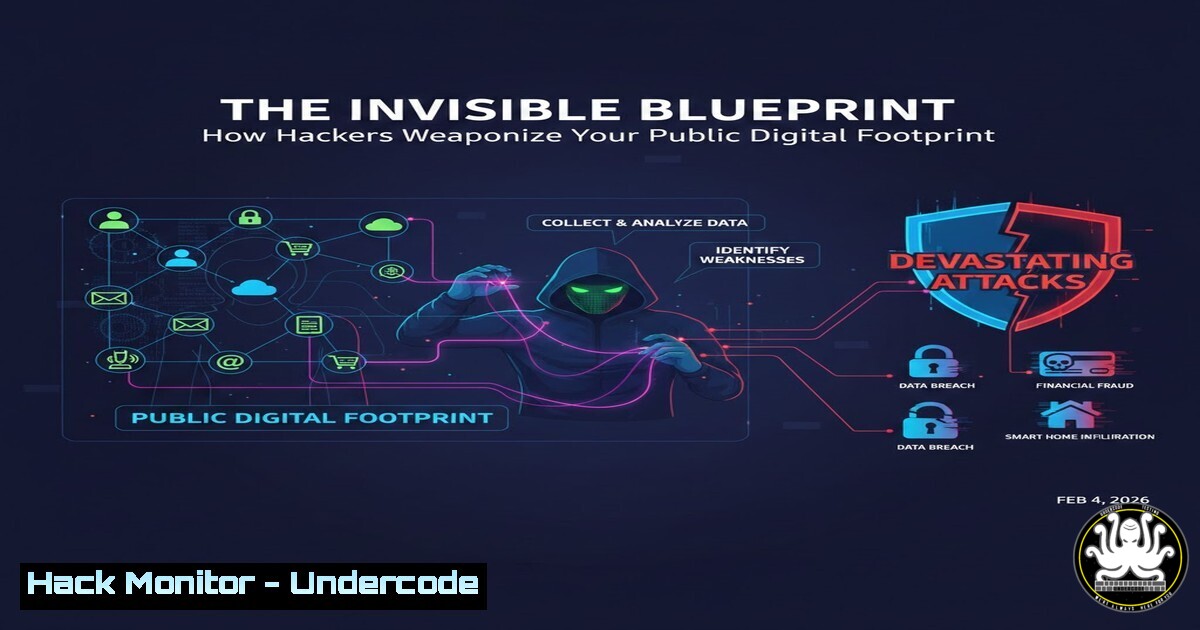
Modern cyber-attacks are increasingly orchestrated not in shadowy forums, but in the plain sight of your public digital presence. The foundational phase of a breach is no longer the exploitation of a software vulnerability, but the systematic harvesting and correlation of publicly available information—your organization’s digital footprint. This intelligence forms a blueprint that allows adversaries to engineer hyper-targeted social engineering campaigns, turning normal business workflows into weapons against you.
Learning Objectives:
- Understand the concept of the Organizational Digital Footprint and identify its most exploitable components.
- Learn the technical and methodological steps attackers use to collect, correlate, and weaponize this data.
- Implement practical countermeasures to reduce your attack surface and harden human and procedural defenses against intelligence-driven attacks.
You Should Know:
1. OSINT Reconnaissance: Mapping the Public Attack Surface
The attack begins with Open Source Intelligence (OSINT). Attackers systematically scrape every public source to build a profile of your organization. This isn’t just about finding email addresses; it’s about understanding hierarchy, projects, technology stacks, and internal culture.
Step‑by‑step guide explaining what this does and how to use it:
Tool Setup: Use a Linux distribution like Kali Linux or install tools on a secured machine. Begin with passive reconnaissance.
Harvesting Emails & Employees: Use a tool like `theHarvester` to find email addresses and subdomains linked to your target.
theHarvester -d "example.com" -b linkedin,google,bing
LinkedIn Intelligence: Manually or with automated scripts, analyze company pages, employee profiles, job postings (revealing new technologies/urgent needs), and group discussions. Tools like `LinkedInt` or Recon-ng‘s `linkedin_mentioned` module can automate parts of this.
Document Metadata Mining: Public PDFs (reports, whitepapers, job offers) are goldmines. Attackers use tools like `exiftool` to extract hidden metadata.
exiftool -a -u -g1 document_from_target.pdf
This can reveal author names, software versions, internal file paths, and creation dates.
- Correlation & Target Development: From Data to Victim Profile
Isolated data points are useless. Correlation creates a target profile. An attacker cross-references a job ad for a “SAP Financials Analyst” (revealing critical software) with a LinkedIn post from an employee in finance celebrating a work anniversary, and a PDF invoice from a known IT vendor. The target is now clear: the finance employee is likely overworked, uses SAP, and might trust an email spoofing that vendor.
Step‑by‑step guide explaining what this does and how to use it:
Data Aggregation: Use a tool like `Maltego` to visually link gathered data (emails, names, social profiles, domains). It graphically maps relationships.
Identifying Workflows: Analyze the language in job posts (“fast-paced,” “urgent turnaround”) and support forum posts to identify pressure points. Look for “out of office” messages or public calendar snippets (e.g., on team pages) to understand operational rhythms.
Persona Creation: Based on the profile, the attacker creates a credible persona. This could be a new colleague, a stressed vendor, or an internal helpdesk agent. The persona’s backstory is built entirely from the correlated public data.
3. Weaponization: Exploiting Human Workflows, Not Code
The actual “exploit” is a perfectly crafted message that leverages a human or procedural workflow. This moves the attack “outside the inbox” to channels like LinkedIn messages, phone calls to the helpdesk, or even fake login prompts.
Step‑by‑step guide explaining what this does and how to use it (Defensive Perspective):
Simulate a Vishing Attack: To test helpdesk resilience, use a VoIP service (e.g., Twilio) to simulate a call from a “distressed executive” who “forgot their password.” The script should use known internal jargon and names gathered from OSINT.
Craft a Credential Phishing Instead of email, create a fake corporate SSO page that is triggered by a malicious link in a Teams or Slack message, mimicking a common internal tool. Deploy this in a controlled red team exercise.
SEO Poisoning: Create a benign-looking internal document (e.g., “Q4 Travel Policy Update”) and host it on a lookalike domain. Use SEO techniques to get it to rank for internal employee searches. This tests user vigilance.
4. The AI Accelerant: Industrializing Precision Attacks
Artificial Intelligence scales and refines every step. LLMs can write flawless, personalized phishing messages in the tone of a company’s CEO. AI tools can scrape and correlate data 24/7, identifying new employees or project announcements in real-time to trigger an attack at the most vulnerable moment.
Step‑by‑step guide explaining what this does and how to use it (Awareness):
AI-Generated Message Detection: Train staff to spot signs of AI-generated content, though it’s becoming harder. Look for unusual uniformity in language or a lack of personal quirks. Use tools like `GPTZero` internally to scan suspicious communications (knowing they are not foolproof).
Defensive AI Monitoring: Implement AI-powered security tools that monitor for anomalous communication patterns outside email, such as a sudden spike in connection requests to key employees on LinkedIn from fake profiles.
5. Mitigation: Hardening Your Digital Ecosystem
Defense requires reducing the footprint and increasing resilience.
Step‑by‑step guide explaining what this does and how to use it:
Metadata Hygiene: Enforce corporate policies to scrub metadata from all public documents. Use automated tools.
Windows (PowerShell): Use `Remove-ItemProperty` or dedicated software.
Linux/Mac: Mandate the use of `exiftool` for cleaning: exiftool -all= .pdf.
Social Media Policy: Train employees on safe sharing. Encourage them to review privacy settings on LinkedIn and avoid disclosing specific technical stacks or internal project codenames.
Process Verification: Implement out-of-band verification for all high-risk actions (password resets, wire transfers, access grants). A phone call back using a previously known number, not one provided in the suspicious request.
Continuous Threat Exposure Management (CTEM): Regularly use OSINT tools on yourself. Run `theHarvester` and `exiftool` on your own public documents to see what an attacker sees.
What Undercode Say:
- The Attack Begins Long Before the Intrusion: The critical phase of a modern compromise is the silent, legal reconnaissance of your public information. By the time malicious code is deployed, the attack is often already guaranteed to succeed.
- The Exploit is Context, Not Code: The most dangerous vulnerability is the predictable human response within a business workflow. Security investments that focus solely on technical perimeters while ignoring the human and procedural layer are fundamentally misaligned with the modern threat.
The post masterfully shifts the paradigm from a fortress mentality to an intelligence contest. The adversary wins by understanding your organization better than you understand your own exposure. Defensive tools that log only technical events will miss the entire reconnaissance and weaponization phase, creating a dangerous illusion of security. The solution is a cultural and procedural shift: every piece of public information must be treated as a potential tactical advantage for an enemy, and every routine process must be designed to fail safely under manipulation.
Prediction:
The integration of AI will lead to fully autonomous social engineering campaigns, where AI agents conduct continuous OSINT, dynamically generate and adapt personas, and engage targets across multiple communication channels (email, social, SMS, voice) simultaneously. The line between advanced persistent threats (APTs) and commonplace cybercrime will blur, as these capabilities become commoditized. Organizations will be forced to adopt AI-driven defensive counterparts that can simulate and preempt these attacks by continuously auditing their own digital footprint and stress-testing human responses, moving security from a state of compliance to one of active counter-intelligence.
▶️ Related Video (80% Match):
https://www.youtube.com/watch?v=4znBD3kI22c
🎯Let’s Practice For Free:
IT/Security Reporter URL:
Reported By: Yoann Dufour – Hackers Feeds
Extra Hub: Undercode MoN
Basic Verification: Pass ✅


