Listen to this Post
Introduction:
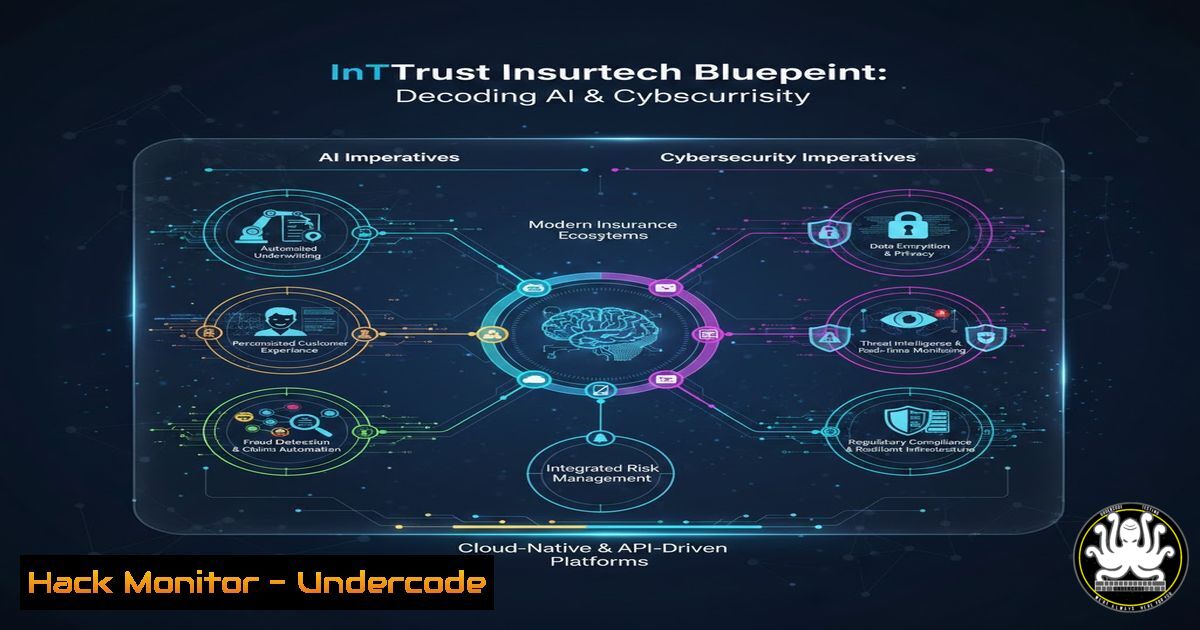
The convergence of artificial intelligence, cybersecurity, and trusted data is fundamentally reshaping the insurance industry. As highlighted by InTTrust’s sponsorship of the 9th Insurtech Conference, the future lies in open, intelligent ecosystems where cyber foresight is not an add-on but the core foundation. This article deconstructs the technical pillars required to build and secure these next-generation insurtech platforms.
Learning Objectives:
- Understand the critical intersection of API security, AI governance, and cloud hardening in an insurance context.
- Implement practical, technical controls to protect sensitive actuarial data and AI models.
- Develop a proactive security posture aligned with the principles of Zero Trust and cyber foresight.
You Should Know:
- Securing the API Gateway: Your Digital Insurance Front Door
The modern insurance ecosystem is built on APIs, enabling everything from telematics data ingestion to partner integrations. An unsecured API is a direct breach point to policyholder PII and sensitive financial data.
Step‑by‑step guide explaining what this does and how to use it.
Step 1: Implement Strict Authentication & Authorization. Move beyond basic keys. Use OAuth 2.0 with scopes specific to insurance data domains (e.g., claims:read, policy:write).
 Example using curl to test a token-scoped API call
curl -X GET https://api.your-insurer.com/v1/claims \
-H "Authorization: Bearer <ACCESS_TOKEN>" \
-H "Scope: claims:read"
Step 2: Schema Validation & Rate Limiting. Enforce strict JSON schemas for all request/response payloads to prevent injection attacks. Implement aggressive rate limiting per API key/IP to thwart data scraping bots.
 Example NGINX rate limiting rule for a critical endpoint
limit_req_zone $binary_remote_addr zone=apilimit:10m rate=10r/s;
location /api/v1/submit_claim {
limit_req zone=apilimit burst=20 nodelay;
proxy_pass http://backend_service;
}
Step 3: Automated Security Testing. Integrate API security testing into your CI/CD pipeline using tools like OWASP ZAP or Burp Suite.
 Run a basic ZAP API scan
docker run -v $(pwd):/zap/wrk/:rw -t owasp/zap2docker-stable zap-api-scan.py \
-t https://api.your-insurer.com/swagger.json -f openapi -r scan_report.html
2. Hardening AI/ML Models: Protecting the Actuarial Brain
Insurance AI models for risk assessment and fraud detection are high-value targets. Adversaries may attempt to steal, poison, or manipulate them.
Step‑by‑step guide explaining what this does and how to use it.
Step 1: Secure Model Registry & Artifact Storage. Use private, access-controlled registries (Azure ML Registry, AWS SageMaker) with role-based access. Encrypt model artifacts at rest.
 Example: Using AWS CLI to enforce encryption on S3 bucket for models
aws s3api put-bucket-encryption \
--bucket your-ml-models-bucket \
--server-side-encryption-configuration '{"Rules": [{"ApplyServerSideEncryptionByDefault": {"SSEAlgorithm": "AES256"}}]}'
Step 2: Implement Model Drift & Poisoning Detection. Monitor input data distributions and prediction outputs for significant drift, which could indicate poisoning or concept shift.
 Pseudocode for basic drift detection (using a library like alibi-detect)
from alibi_detect.cd import TabularDrift
drift_detector = TabularDrift(X_ref, p_val=0.05)
preds = drift_detector.predict(X_new)
if preds['data']['is_drift']:
alert_security_team()
Step 3: API Endpoint Hardening for Model Inference. Wrap model inference endpoints with the same rigorous authentication, input sanitization, and query per-minute limits as core business APIs.
3. Cloud Infrastructure Hardening for Sensitive Data Workloads
Insurance companies handle vast amounts of PHI and financial data in hybrid or multi-cloud environments. A misconfigured cloud storage bucket is a leading cause of breaches.
Step‑by‑step guide explaining what this does and how to use it.
Step 1: Enforce Infrastructure-as-Code (IaC) Security Scans. Scan Terraform or ARM templates for misconfigurations before deployment.
 Scan Terraform plans with Checkov
checkov -d /path/to/terraform/code
Step 2: Apply Zero-Trust Network Principles. Segment networks relentlessly. Use jump hosts/bastions for administrative access and deny all traffic by default.
 Example AWS CLI command to update a security group to deny all inbound as baseline
aws ec2 authorize-security-group-ingress \
--group-id sg-12345678 \
--protocol tcp \
--port 22 \
--cidr 203.0.113.0/24  ONLY allow SSH from specific IP range
Step 3: Encrypt Everything, Always. Enable encryption for all data at rest (storage, databases) and in transit (TLS 1.2+). Manage keys using a cloud KMS or HSM.
 PowerShell for Azure: Ensure storage account encryption
Set-AzStorageAccount -ResourceGroupName "YourRG" -Name "yourstorage" -EnableEncryptionService Blob,File
4. Implementing a Zero-Trust Architecture for Hybrid Workforces
The shift to remote underwriting and claims adjustment requires a “never trust, always verify” model for accessing internal systems.
Step‑by‑step guide explaining what this does and how to use it.
Step 1: Deploy Identity-Aware Proxies (IAP). Use solutions like Azure AD Application Proxy or Google IAP to provide secure access to internal web apps without a VPN.
Step 2: Enforce Device Compliance & Conditional Access. Integrate Intune or similar MDM tools. Create policies: “Block access if device is not encrypted or if antivirus is out of date.”
Step 3: Micro-Segment Critical Databases. Place actuarial or claims databases in isolated network segments. Require just-in-time (JIT) privileged access for engineers.
 Example using Azure CLI to create a just-in-time VM access request (conceptual)
az security jit-policy create -l "EastUS" -g "SecGroup" -n "jit-vm-access" --targets <vmID> ...
5. Proactive Threat Hunting with Cyber Foresight
Cyber foresight means moving from reactive alerts to proactively hunting for adversaries already in your network.
Step‑by‑step guide explaining what this does and how to use it.
Step 1: Centralize Logs from All Sources. Ingest logs from endpoints, cloud workloads, network devices, and applications into a SIEM like Microsoft Sentinel or Splunk.
Step 2: Build Detections for Insurance-Specific TTPs. Create alerts for unusual access to large sets of policyholder data, abnormal batch query patterns, or geographic impossibilities in user logins.
// Sample Microsoft Sentinel KQL query for detecting mass data access
AWSCloudTrail
| where EventName == "GetObject"
| where RequestParameters.bucketName == "policyholder-data-bucket"
| summarize DataAccessCount = count(), DistinctIPs = dcount(sourceIpAddress) by bin(TimeGenerated, 5m), userIdentity.arn
| where DataAccessCount > 1000 // Threshold tuned to your baseline
Step 3: Conduct Regular Purple Team Exercises. Simulate real-world attacks against your production-like environment to test detection and response capabilities collaboratively.
- Building a Culture of Security: From CISOs to Claims Adjusters
Technology is only as strong as the people using it. Social engineering remains a top risk.
Step‑by‑step guide explaining what this does and how to use it.
Step 1: Implement Role-Based, Continuous Training. Don’t use generic training. Provide specific modules for developers (secure coding), data scientists (model security), and frontline staff (phishing for claims handlers).
Step 2: Run Phishing Simulations. Use controlled platforms to send simulated phishing emails and provide immediate, constructive feedback to those who engage.
Step 3: Establish Clear Security Champions. Embed knowledgeable security advocates within each development and business unit to serve as first-line advisors and feedback conduits.
What Undercode Say:
- Integration is Non-Negotiable: Security cannot be a separate silo. It must be integrated into the DevOps pipeline (DevSecOps), the AI/ML lifecycle (MLSecOps), and the very fabric of data governance. The “embedded ecosystems” mentioned in the post require embedded security.
- Foresight Beats Hindsight: The insurance industry’s core competency is predicting and mitigating risk. This must extend seamlessly into the digital realm. Investing in proactive threat hunting, adversary simulation, and architecture reviews pays dividends far greater than responding to breaches after the fact.
Prediction:
The insurance industry’s rapid digitization and AI adoption will make it a premier target for sophisticated ransomware gangs and nation-state actors seeking to manipulate markets or steal vast troves of sensitive personal data. The firms that will thrive are those treating “cyber foresight” and “data trust” not as conference buzzwords, but as foundational operational disciplines. We will see the rise of “cyber actuarial” roles, blending traditional risk modeling with cyber threat intelligence to underwrite policies and internal security investments quantitatively. The partnership between insurtech innovators and seasoned cybersecurity solution providers, as highlighted by InTTrust’s role, will be the critical factor in determining which organizations survive the coming wave of digital threats.
▶️ Related Video (80% Match):
🎯Let’s Practice For Free:
IT/Security Reporter URL:
Reported By: Inttrustae Inttrust – Hackers Feeds
Extra Hub: Undercode MoN
Basic Verification: Pass ✅


