Listen to this Post
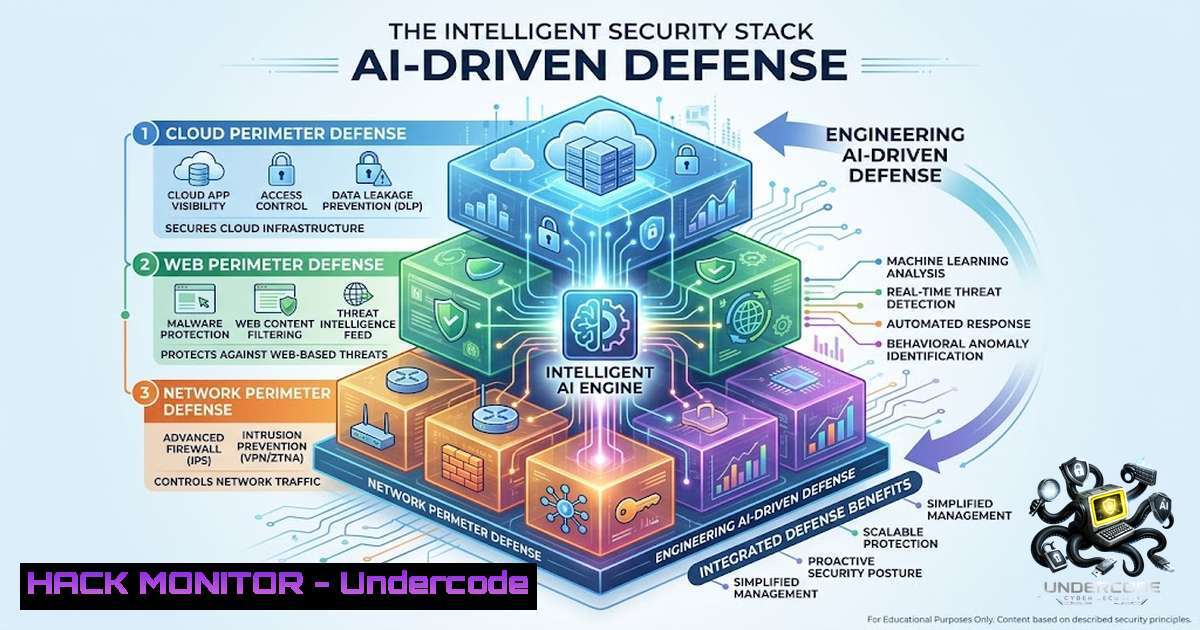
Introduction:
The enterprise attack surface has fractured beyond the traditional perimeter, spanning multi-cloud environments, API-driven web applications, identity stores, and distributed endpoints. As security teams grapple with alert fatigue and sophisticated threat actors leveraging generative AI, the integration of artificial intelligence into cloud security platforms, Security Operations Centers (SOCs), Zero Trust architectures, and extended detection and response (XDR) frameworks has become an operational necessity rather than a strategic luxury. The August 31, 2026 webinar hosted by EC-Council University and featuring Cloud Security Architect Ali Chinwala addresses this paradigm shift, exploring how intelligent automation, behavioral analytics, and unified threat correlation can transform siloed security tools into a cohesive, adaptive defense ecosystem【7†L1-L4】【8†L1-L4】.
Learning Objectives:
- Understand how AI augments cloud security posture management (CSPM), web application firewalls (WAF), and network detection and response (NDR) through intelligent automation and predictive analytics【8†L5-L7】.
- Learn to architect and operationalize AI-driven threat detection, correlation, and automated response across integrated platforms including SIEM, SOAR, and XDR【8†L8-L10】.
- Master the implementation of AI within Zero Trust frameworks to enforce dynamic, context-aware access policies and continuous verification【8†L11-L13】.
You Should Know:
- AI-Enhanced Cloud Security Posture Management (CSPM) and Workload Protection
Modern cloud environments—spanning AWS, Azure, and GCP—generate an immense volume of configuration data and logs that overwhelm manual review processes. AI-driven CSPM tools continuously analyze cloud infrastructure for misconfigurations, overly permissive IAM roles, and compliance drift against frameworks like CIS Benchmarks and NIST. By employing machine learning models that baseline normal configuration states, these systems can detect anomalous changes—such as an S3 bucket becoming publicly readable or a security group opening port 22 to 0.0.0.0/0—and trigger automated remediation workflows.
Step‑by‑step guide to implementing AI-driven CSPM:
- Deploy a cloud-1ative CSPM agent (e.g., AWS Security Hub, Azure Defender, or third-party tools like Wiz or Orca Security) across all subscribed accounts and regions.
- Enable continuous scanning with machine learning anomaly detection for configuration deviations. For AWS, use the following AWS CLI command to enable Security Hub and start automated checks:
aws securityhub enable-security-hub --tags "Environment=Production"
aws securityhub batch-enable-standards --standards-subscription-requests Arn=arn:aws:securityhub:us-east-1::standards/aws-foundational-security-best-practices/v/1.0.0
- Integrate with a SIEM (e.g., Splunk ES or Microsoft Sentinel) to forward CSPM findings for AI-based correlation. Use the AWS CLI to create a custom event bridge rule that sends all `SECURITY_HUB_FINDING` events to a designated SIEM ingest queue:
aws events put-rule --1ame "ForwardSecurityHubFindings" --event-pattern "{\"source\":[\"aws.securityhub\"],\"detail-type\":[\"Security Hub Findings - Imported\"]}" aws events put-targets --rule "ForwardSecurityHubFindings" --targets "Id"="1","Arn"="arn:aws:sqs:region:account:siem-ingest-queue" - Configure automated remediation playbooks in a SOAR platform (e.g., Palo Alto Cortex XSOAR) that trigger upon high-confidence AI-detected misconfigurations. For example, a playbook can automatically revoke a publicly exposed S3 bucket policy:
aws s3api put-bucket-acl --bucket vulnerable-bucket --acl private
- Establish a feedback loop where security analysts label false positives, retraining the AI model to improve detection accuracy over time.
-
AI-Powered Threat Detection and Correlation in SIEM and XDR
Traditional SIEM systems rely on static rule-based correlation, leading to high false-positive rates and missed zero-day attacks. AI introduces behavioral analytics that establish a baseline of “normal” user and entity behavior (UEBA), enabling the detection of subtle deviations indicative of insider threats, credential compromise, or lateral movement. XDR platforms extend this by ingesting telemetry from endpoints, networks, and cloud workloads, using AI to correlate seemingly disparate events into a unified incident timeline.
Step‑by‑step guide to operationalizing AI-driven threat detection:
- Ingest high-fidelity telemetry into your SIEM/XDR platform from all sources: endpoints (EDR), network flow logs, cloud audit trails (CloudTrail), and identity providers (Azure AD, Okta).
- Train the AI/ML model on 30–90 days of historical data to establish behavioral baselines for each user, device, and application. For Elastic SIEM users, enable the machine learning jobs for anomaly detection via the Kibana UI or API:
Example API call to start an ML job for network anomaly detection curl -X PUT "https://elastic-host:5601/api/ml/anomaly_detectors/network_anomalies" \ -H "kbn-xsrf: true" \ -H "Content-Type: application/json" \ -d '{"description":"Network traffic anomaly detection","analysis_config":{"bucket_span":"15m","detectors":[{"function":"rare","field_name":"destination.ip"}]}}' - Configure alerting rules that use anomaly scores (e.g., a threshold of 85/100) to trigger alerts, reducing noise by 60–70% compared to static rules.
- Implement a triage workflow in your SOAR platform that automatically enriches AI-generated alerts with threat intelligence feeds (e.g., VirusTotal, MISP) and assigns a priority score. For Windows environments, use PowerShell to query the local event log for suspicious process creations that correlate with AI alerts:
Get-WinEvent -FilterHashtable @{LogName='Security'; ID=4688} | Where-Object { $_.Properties[bash].Value -match "powershell.exe -e" } | Format-Table TimeCreated, Message - Conduct regular purple-team exercises to validate the AI model’s detection capabilities against simulated adversary techniques (e.g., MITRE ATT&CK T1003 credential dumping) and retune as necessary.
-
Zero Trust Architecture Reinforcement through AI-Driven Identity and Access Management
Zero Trust is predicated on the principle of “never trust, always verify.” AI transforms this from a static policy framework into a dynamic, risk-based access control system. By continuously evaluating user behavior, device posture, geolocation, and time-based patterns, AI models can assign a real-time risk score to every access request. High-risk requests trigger step-up authentication (e.g., MFA, biometric verification) or outright denial, while low-risk requests are seamlessly approved, minimizing friction for legitimate users.
Step‑by‑step guide to implementing AI-driven Zero Trust:
- Deploy a modern Identity Provider (IdP) that supports continuous access evaluation (CAE) and risk-based conditional access policies (e.g., Azure AD, Okta, or Ping Identity).
- Integrate the IdP with an AI-based UEBA engine (e.g., Microsoft Defender for Identity, Exabeam) that ingests sign-in logs, device health signals, and network context.
- Define risk-based policies using the AI-derived risk score. For example, in Azure AD, create a Conditional Access policy that blocks access if the sign-in risk is “High” and requires MFA if the risk is “Medium”:
PowerShell example to create a conditional access policy via Microsoft Graph Connect-MgGraph -Scopes "Policy.ReadWrite.ConditionalAccess" $params = @{ displayName = "Block High Risk Sign-ins" state = "enabled" conditions = @{ signInRiskLevels = @("high") applications = @{ includeApplications = @("All") } users = @{ includeUsers = @("All") } } grantControls = @{ operator = "OR" builtInControls = @("block") } } New-MgIdentityConditionalAccessPolicy -BodyParameter $params - Configure identity threat detection to alert on anomalies such as impossible travel (user logs in from New York and Tokyo within 5 minutes) or atypical token usage. Use the following Linux command to monitor for suspicious authentication attempts in
/var/log/auth.log:sudo grep "Failed password" /var/log/auth.log | awk '{print $1,$2,$3,$9,$11}' | sort | uniq -c | sort -1r - Automate response actions in your SOAR platform—such as forcing a password reset, revoking active sessions, or isolating an endpoint—when the AI risk score exceeds a critical threshold.
4. AI-Enabled Security Orchestration, Automation, and Response (SOAR)
The volume of security alerts far exceeds human analytical capacity. SOAR platforms leverage AI to automate tier-1 and tier-2 incident response tasks, from alert triage and enrichment to containment and eradication. AI-powered playbooks can dynamically adapt based on the specific threat context, reducing mean time to respond (MTTR) from hours to minutes. This is particularly critical for cloud-1ative incidents, where rapid API-driven responses can halt an attack in progress.
Step‑by‑step guide to building an AI-driven SOAR playbook:
- Select a SOAR platform with built-in AI/ML capabilities for alert prioritization and playbook recommendation (e.g., Palo Alto Cortex XSOAR, Splunk SOAR, or IBM Resilient).
- Integrate all security tools via REST APIs: SIEM, EDR, firewalls, cloud providers, threat intelligence feeds, and ticketing systems.
- Create a playbook for a common scenario—e.g., phishing email detected. The AI engine analyzes the email header, extracts URLs and attachments, and queries threat intelligence APIs in parallel.
- Automate containment actions based on the AI verdict. For example, if a malicious URL is confirmed, the playbook can use the firewall API to block the domain:
Example curl command to add a URL to a Palo Alto firewall block list via API
curl -X POST "https://firewall-mgmt/api/?type=config&action=set&key=API_KEY&xpath=/config/devices/entry[@name='vsys1']/rulebase/security/rules/block_malicious/url-filtering&element=<url-filter><member>malicious-domain.com</member></url-filter>"
- For Windows-based incidents, the playbook can execute a PowerShell script to isolate an infected endpoint using Microsoft Defender for Endpoint API:
Invoke-WebRequest -Uri "https://api.securitycenter.microsoft.com/api/machines/{machine-id}/isolate" -Method POST -Headers @{"Authorization"="Bearer $token"} -Body '{"Comment":"Isolated by SOAR playbook","IsolationType":"Full"}' - Establish a post-incident analysis where the AI reviews the playbook execution and recommends optimizations, creating a self-improving response framework.
-
Governance, Privacy, and Operational Considerations for AI Security
Deploying AI in security introduces new governance challenges, including model bias, adversarial AI attacks, data privacy concerns, and regulatory compliance (GDPR, CCPA, HIPAA). Organizations must establish an AI governance framework that addresses model explainability, data lineage, and continuous monitoring for model drift. Furthermore, security teams must protect the AI models themselves from poisoning and evasion attacks, ensuring the integrity of the decision-making pipeline.
Step‑by‑step guide to establishing AI governance in security operations:
- Inventory all AI/ML models used in security tools, documenting their training data sources, algorithms, and update cadence.
- Implement data minimization and anonymization techniques for training datasets to comply with privacy regulations. For Linux environments, use `openssl` to encrypt sensitive log data before feeding into the AI pipeline:
openssl enc -aes-256-cbc -salt -in raw_logs.csv -out encrypted_logs.csv.enc -pass pass:your_strong_password
- Establish a model validation process where security architects regularly test models against adversarial inputs (e.g., modified malware binaries) to assess robustness.
- Deploy monitoring dashboards that track model performance metrics (precision, recall, F1 score) and alert on significant deviations (drift). Use the following Python snippet to calculate drift using population stability index (PSI):
import numpy as np
def calculate_psi(expected, actual, buckets=10):
expected_percents = np.histogram(expected, bins=buckets)[bash] / len(expected)
actual_percents = np.histogram(actual, bins=buckets)[bash] / len(actual)
psi = np.sum((actual_percents - expected_percents)  np.log(actual_percents / expected_percents))
return psi
- Create an incident response plan specifically for AI failures, including rollback procedures to previous model versions and manual override capabilities.
What Undercode Say:
- AI is not a silver bullet but a force multiplier. The effectiveness of AI in security hinges on the quality of telemetry data, continuous model tuning, and human oversight. Organizations must invest in data hygiene and skilled personnel to realize the full potential of AI-driven defense.
- Unified visibility is the prerequisite for intelligent automation. Siloed security tools fragment the attack narrative; integrating AI across CSPM, SIEM, XDR, and SOAR creates a holistic view that enables proactive threat hunting and rapid response.
Analysis: The webinar’s focus on “The Intelligent Security Stack” reflects a critical industry transition from reactive, rule-based security to proactive, AI-driven defense. However, the adoption of AI introduces new attack vectors—adversarial machine learning, data poisoning, and model theft—that security teams must proactively mitigate. Furthermore, the governance, privacy, and operational considerations highlighted in the webinar are often overlooked in the rush to deploy AI, leading to compliance risks and eroded trust. Successful implementation requires a balanced approach that combines cutting-edge AI capabilities with robust governance frameworks and skilled security practitioners who can interpret AI-generated insights and make informed decisions. The integration of AI with Zero Trust and XDR represents a paradigm shift where security becomes adaptive, context-aware, and capable of outmaneuvering sophisticated adversaries in real-time【7†L5-L7】【8†L8-L13】.
Prediction:
- +1 The webinar and its associated training programs will catalyze a new wave of AI-1ative security certifications and curricula, elevating the skill sets of cybersecurity professionals and creating a talent pool capable of architecting and defending intelligent security stacks.
- +1 By 2027, AI-driven security operations will become the de facto standard for enterprises, with 70% of organizations deploying AI-enhanced SIEM and SOAR platforms, significantly reducing breach detection and response times.
- -1 The rapid adoption of AI in security will outpace governance frameworks, leading to high-profile incidents where AI models are exploited or fail catastrophically, prompting regulatory intervention and a temporary loss of confidence in AI-driven security solutions.
- -1 Adversarial actors will increasingly target the AI models powering security tools, using techniques like data poisoning and evasion to blind defenses, necessitating a new category of “AI security” tools and practices.
- +1 The convergence of AI with cloud-1ative architectures and Zero Trust will enable autonomous security operations that can contain and remediate threats without human intervention for 80% of common attack patterns, freeing analysts to focus on advanced persistent threats and strategic security planning.
Registration & Further Learning: To dive deeper into these concepts and gain practical insights from industry expert Ali Chinwala, register for the live webinar “The Intelligent Security Stack: AI Across Cloud, Web, and Network Defense” scheduled for August 31, 2026, at 4:30 PM. Secure your spot here: https://shorturl.at/y4Qeb【7†L1-L4】【8†L1-L4】.
▶️ Related Video (82% Match):
🎯Let’s Practice For Free:
🎓 Live Courses & Certifications:
Join Undercode Academy for Verified Certifications
🚀 Request a Custom Project:
Secure, high-velocity infrastructure and disruptive technological engineering. Contact our engineering team for high-tier development and proprietary systems:
[email protected]
💎 Smart Architecture | 🛡️ Secure by Design | ⭐ Trusted by Thousands
IT/Security Reporter URL:
Reported By: Shilpa Sharma – Hackers Feeds
Extra Hub: Undercode MoN
Basic Verification: Pass ✅


