Listen to this Post
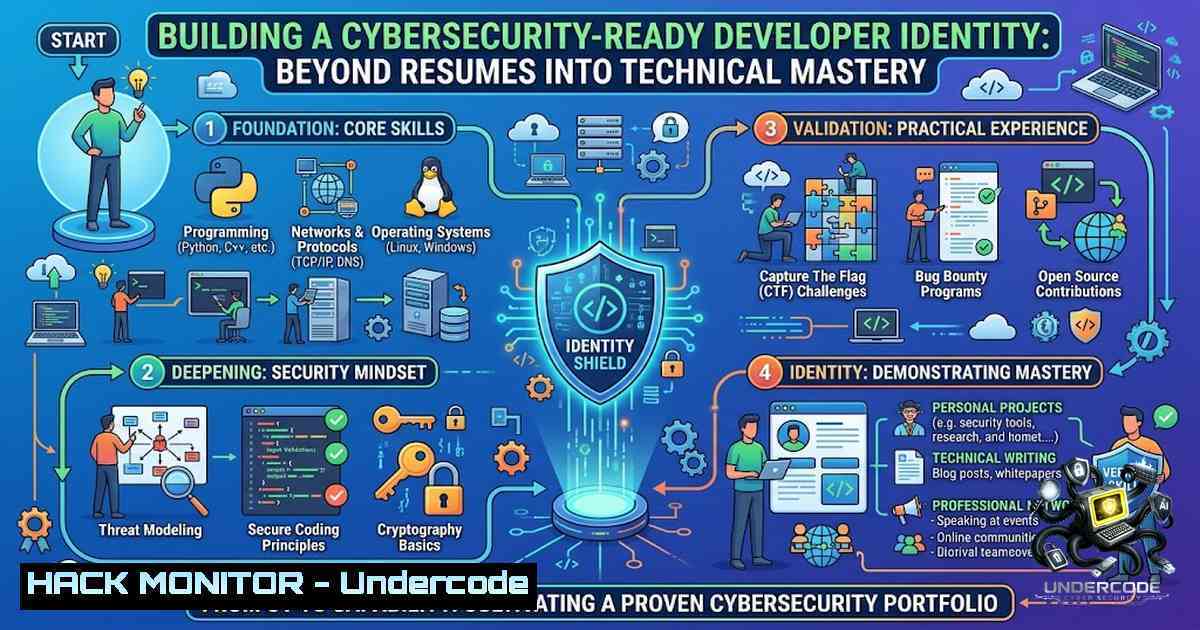
Introduction:
Your resume is the perimeter defense of your career—the first line of engagement in a competitive hiring landscape. However, as highlighted in the recent discourse on professional development, listing skills is insufficient. The market demands demonstrable technical fluency, particularly in the high-stakes realms of AI, cloud security, and system administration. This guide transforms the foundational advice of resume building into a technical roadmap, equipping you with the command-line expertise, security configurations, and AI integration skills required to validate your claims and secure your professional future.
Learning Objectives:
- Master Linux and Windows command-line utilities for system monitoring and security auditing.
- Implement basic cloud hardening techniques to protect development environments.
- Integrate Generative AI workflows to automate penetration testing and vulnerability analysis.
- Understand critical security protocols for API and network configurations.
- Build and secure a personal development portfolio that withstands technical scrutiny.
You Should Know:
1. Hardening Your Development Environment: Linux Security Fundamentals
A common oversight is treating development environments as permanently safe. Before you showcase your project code, ensure your system is hardened. An attacker often enters through misconfigured services. Begin by auditing listening ports. On Linux, use `sudo ss -tulpn` to list all active ports and the associated services. If you find an open port for a service you don’t recognize (e.g., port 22 for SSH requiring key-based authentication), you must secure it.
Step‑by‑step guide:
- Disable Root Login: Edit `/etc/ssh/sshd_config` and set
PermitRootLogin no. - Implement Fail2ban: Install `sudo apt-get install fail2ban` to protect against brute-force attacks. Configure it to monitor SSH and HTTP logs.
- Firewall Configuration: Use UFW (Uncomplicated Firewall) to deny all incoming connections and allow only specific ports (e.g., `sudo ufw allow 22/tcp` for SSH and `sudo ufw allow 80/tcp` for web).
- Automatic Updates: Configure unattended upgrades with `sudo dpkg-reconfigure –priority=low unattended-upgrades` to ensure security patches are applied automatically.
For Windows administrators, the equivalent involves using `Get-1etTCPConnection` in PowerShell to view listening ports and configuring the Windows Defender Firewall via netsh advfirewall set allprofiles state on.
2. AI Integration for Vulnerability Assessment
Given the emphasis on Generative AI courses, practical application is key. AI can augment your security posture by automating repetitive reconnaissance tasks. You can use a Python script leveraging OpenAI’s API to parse configuration files and identify hardcoded secrets.
Step‑by‑step guide:
- Environment Setup: Create a Python virtual environment and install
pip install openai python-dotenv. - Script Logic: The following script (adapted for security audits) reads a file and asks an AI model to identify potential SQL injection points or exposed API keys in the code. In a real-world scenario, you would combine this with static analysis tools like Bandit (
bandit -r your_project_folder). - Execution: Run the script with specific prompts to generate security reports. This demonstrates a competency in using AI for “Gen AI for Automation specialization,” as listed in the core curriculum.
3. API Security and Authentication Protocols
Modern developers frequently deploy APIs. A “clean” resume often lists REST APIs, but a true engineer understands OAuth 2.0 and JWT intricacies. Misconfiguration here leads to data breaches.
Step‑by‑step guide:
- Testing with cURL: To verify your API headers, use
curl -X GET "http://your-api.com/data" -H "Authorization: Bearer YOUR_TOKEN". - Token Expiration: Ensure your JWT tokens have a short expiry (
expclaim). Implement refresh tokens. - Rate Limiting: Implement middleware to prevent API abuse. For Nginx, use `limit_req_zone` and `limit_req` directives to handle traffic spikes and potential DDoS attempts.
- Validate Input: Never trust client data. Use libraries like `Joi` (Node.js) or `pydantic` (Python) to validate incoming JSON payloads against strict schemas.
4. Cloud Hardening for Developers (DevSecOps Approach)
If you are deploying applications, you must understand cloud security groups. The Google IT Support and Cybersecurity courses emphasize this.
Step‑by‑step guide:
- Principle of Least Privilege: When creating IAM users, apply strict policies. Avoid granting `:` permissions.
- S3 Bucket Security: Ensure your S3 buckets are not public. Use
aws s3api put-bucket-acl --bucket your-bucket --acl private. - VPC Configuration: Configure Network ACLs to restrict traffic to specific IP ranges. Use Security Groups as an additional layer of protection.
- Logging: Enable CloudTrail and Monitor Logs for unusual activities.
5. Windows Hardening and Active Directory Basics
For those targeting enterprise roles, understanding Active Directory (AD) is crucial. Google’s IT Support curriculum often covers this fundamental structure for identity management.
Step‑by‑step guide:
- PowerShell Audit: Run `Get-ADUser -Filter -Properties PasswordLastSet, LastLogonDate` to check user activity and stale accounts.
- Local Security Policy: Use `secpol.msc` to enforce password policies and account lockout thresholds.
- Windows Defender: Enable real-time protection and scheduled scans via
Set-MpPreference -DisableRealtimeMonitoring $false. - Registry Hardening: Disable SMB v1, a known attack vector, using PowerShell:
Set-SmbServerConfiguration -EnableSMB1Protocol $false.
6. Penetration Testing and Vulnerability Mitigation
A single vulnerability in your project can destroy a career. Set up a penetration testing environment to simulate attacks.
Step‑by‑step guide:
- Set up a Lab: Use VirtualBox and Kali Linux.
- Network Scanning: Use `nmap -sV 192.168.1.1/24` to find open ports in your network.
- Web Scraping & Injections: Use `sqlmap` to check for SQL injection vulnerabilities in your web apps:
sqlmap -u "http://yourapp.com?id=1". - Patch Management: Regularly update dependencies. Use `npm audit fix` for Node.js or `pip list –outdated` for Python to avoid known security flaws.
What Undercode Say:
- Key Takeaway 1: A resume secures the interview; your technical skills secure the job. Focus on building projects that demonstrate security awareness.
- Key Takeaway 2: The technical landscape is shifting toward AI-powered automation. Understanding how to integrate AI into security pipelines (like using LLMs for log analysis) is the new competitive advantage.
- Analysis: The core message transcends the “resume tips” post. In 2026, the distinction between a developer and a security engineer is blurring. The courses listed (Google Cybersecurity, Gen AI for Software Developers) indicate a growing need for professionals who can code defensively. The real differentiator is not just what you list under “Skills” but what you can do with a terminal and a security mindset. The window for “generalist developers” is closing; specialists who understand the infrastructure, hardening, and automation are in high demand. Effective learning involves applying these commands and concepts daily to internal projects.
Prediction:
- +1 Increased adoption of AI-driven code audits will lead to a higher baseline security standard, making the industry more robust.
- -1 Over-reliance on AI for security without understanding the underlying principles may lead to complex “black-box” vulnerabilities that are difficult to patch.
- +1 Demand for professionals skilled in both development and cybersecurity (DevSecOps) will skyrocket, commanding premium salaries and career growth.
- -1 As AI automates coding tasks, entry-level positions will become more competitive, making practical security certifications crucial for freshers.
- +1 Integration of security curriculum (like the mentioned Google courses) into mainstream developer education will improve code quality globally.
▶️ Related Video (88% Match):
🎯Let’s Practice For Free:
🎓 Live Courses & Certifications:
Join Undercode Academy for Verified Certifications
🚀 Request a Custom Project:
Secure, high-velocity infrastructure and disruptive technological engineering. Contact our engineering team for high-tier development and proprietary systems:
[email protected]
💎 Smart Architecture | 🛡️ Secure by Design | ⭐ Trusted by Thousands
IT/Security Reporter URL:
Reported By: Abhinendra Patel – Hackers Feeds
Extra Hub: Undercode MoN
Basic Verification: Pass ✅


