
Listen to this Post
Introduction:
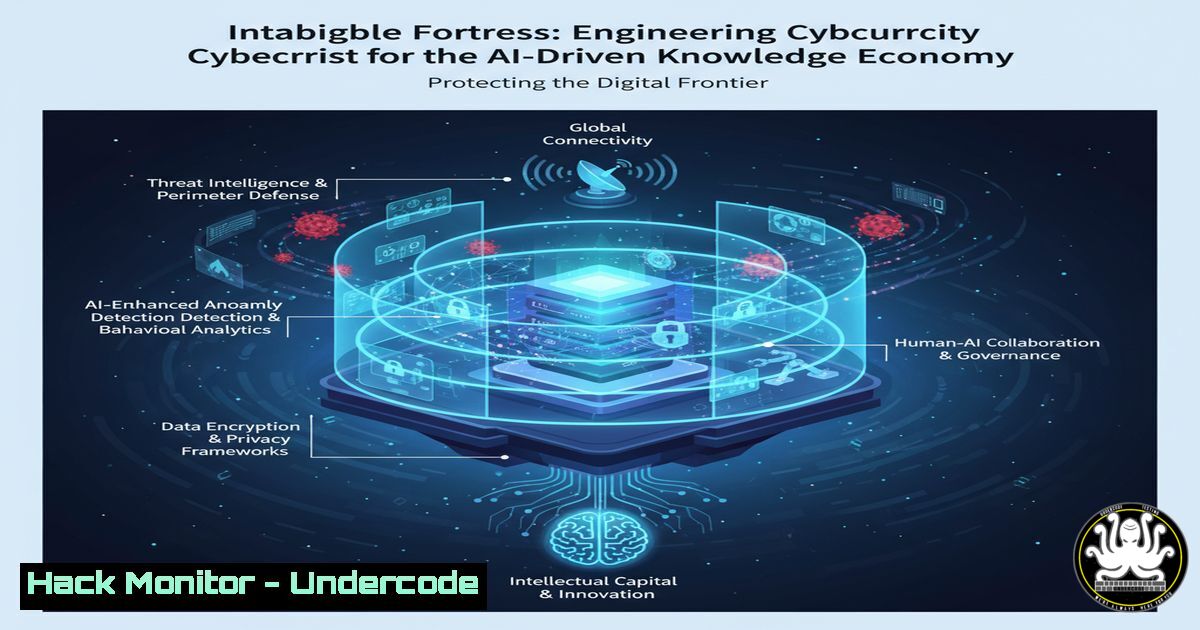
The modern enterprise is no longer built solely on physical assets but on an intricate ecosystem of intellectual property, AI models, and proprietary data—the intangible capital that drives growth. This shift creates a new frontier for cybersecurity, where protecting algorithms, training data, and strategic know-how is as critical as defending network perimeters. This article explores the technical controls required to secure the intangible value engine.
Learning Objectives:
- Understand the convergence of AI governance, intellectual property law, and cybersecurity.
- Implement technical controls to protect AI models, training data, and proprietary code.
- Develop a strategy for securing the entire lifecycle of an intangible asset, from creation in an R&D environment to deployment in a commercial product.
You Should Know:
1. Securing the AI Development Pipeline
The integrity of an AI model is entirely dependent on the security of its development pipeline. A compromise in the source code, training data, or model repository can lead to biased outcomes, intellectual property theft, or a complete system failure.
Verified Commands & Code Snippets:
 1. Scan a Git repository for accidentally committed secrets
git secrets --scan-history

<ol>
<li>Generate a Software Bill of Materials (SBOM) for a Python project using Syft
syft packages:dir:/path/to/your/python-project -o json > sbom.json</p></li>
<li><p>Scan the generated SBOM for vulnerabilities with Grype
grype sbom:sbom.json</p></li>
<li><p>Use pre-commit hooks to automatically scan for secrets before committing
.pre-commit-config.yaml
repos:

<ul>
<li>repo: https://github.com/pre-commit/pre-commit-hooks
rev: v3.4.0
hooks:</li>
<li>id: detect-aws-credentials</li>
<li>id: detect-private-key
Step-by-Step Guide:
This process establishes a secure foundation for AI development. First, install `git-secrets` and configure it with prohibited patterns. The `syft` tool generates an SBOM, which is a formal inventory of all software components. This SBOM is then fed into `grype` to cross-reference known vulnerabilities. Finally, implementing pre-commit hooks automates secret detection, preventing credentials from ever entering the codebase.
2. Implementing Zero Trust for R&D Environments
Research and Development environments housing “high intellectual potential people + AI” are prime targets. A Zero Trust architecture, which verifies every request as though it originates from an untrusted network, is essential.
Verified Commands & Configurations:
 On a Linux Bastion Host / Access Proxy
 1. Set up multi-factor authentication (MFA) for SSH using Google Authenticator
sudo apt install libpam-google-authenticator
google-authenticator

Edit /etc/pam.d/sshd and add:
auth required pam_google_authenticator.so

Edit /etc/ssh/sshd_config and ensure:
ChallengeResponseAuthentication yes
AuthenticationMethods publickey,keyboard-interactive

<ol>
<li>Use `fail2ban` to block brute force attacks
sudo apt install fail2ban
sudo systemctl enable fail2ban</p></li>
<li><p>Implement application-level firewall rules with `ufw`
sudo ufw enable
sudo ufw default deny incoming
sudo ufw allow from 10.0.0.0/8 to any port 22
sudo ufw allow from 192.168.1.100 to any port 8080
Step-by-Step Guide:
Begin by installing the PAM module for Google Authenticator on your SSH bastion host. Running the `google-authenticator` command generates a QR code for a user to link to their authenticator app. The SSH configuration is then modified to require both a public key and the TOTP code. `Fail2ban` is deployed to monitor logs and automatically ban IPs showing malicious signs. Finally, `ufw` (Uncomplicated Firewall) is used to enforce a default-deny policy, only permitting SSH and specific application traffic from trusted IP ranges.
3. Trade Secret and Model Weight Protection
The core intellectual property of an AI enterprise often resides in its model weights and training datasets. These assets must be encrypted at rest and in transit, with access tightly audited.
Verified Commands & Code Snippets:
 1. Encrypt a directory containing model weights using `gocryptfs`
sudo apt install gocryptfs
gocryptfs -init /path/to/model_weights_cipherdir
gocryptfs /path/to/model_weights_cipherdir /path/to/model_weights_plaindir

<ol>
<li>Use `auditd` on Linux to monitor access to sensitive files
sudo auditctl -w /path/to/model_weights_plaindir/ -p war -k model_weights_access</p></li>
<li><p>Search the audit log for access attempts
ausearch -k model_weights_access | aureport -f -i

PowerShell: Enable Windows Auditing for a specific file
Set-AuditRule -Path "C:\TopSecretModels\model.pt" -User "Everyone" -AccessType "Read" -InclusionType "Success" -InheritanceFlags "None" -PropagationFlags "None"
Step-by-Step Guide:
`gocryptfs` creates an encrypted filesystem. The `-init` command creates the encrypted ciphertext directory. You then mount this directory to a plaintext mount point, where you can work with the files normally; they are encrypted on the underlying disk. The Linux Audit Daemon (auditd) is configured to watch the plaintext directory (-w) for any write, attribute change, or read (-p war), logging all access. The `ausearch` command is used to review these logs.
4. API Security for AI Copilots and Agents
AI copilots expose APIs that are high-value targets. Security must focus on robust authentication, rate limiting, and input sanitization to prevent data exfiltration and model poisoning.
Verified Code Snippets (Python/FastAPI):
from fastapi import FastAPI, Depends, HTTPException, status, Request
from fastapi.security import HTTPBearer, HTTPAuthorizationCredentials
from pydantic import BaseModel
import re
from slowapi import Limiter, _rate_limit_exceeded_handler
from slowapi.util import get_remote_address
from slowapi.errors import RateLimitExceeded

app = FastAPI()
security = HTTPBearer()
limiter = Limiter(key_func=get_remote_address)
app.state.limiter = limiter
app.add_exception_handler(RateLimitExceeded, _rate_limit_exceeded_handler)

Simulated API Key validation
def verify_api_key(credentials: HTTPAuthorizationCredentials = Depends(security)):
if credentials.credentials != "SECRET_API_KEY_123":
raise HTTPException(
status_code=status.HTTP_401_UNAUTHORIZED,
detail="Invalid authentication credentials",
)

class PromptRequest(BaseModel):
prompt: str

@app.post("/v1/copilot")
@limiter.limit("5/minute")  Rate limiting
async def generate_response(request: Request, prompt_req: PromptRequest, token: str = Depends(verify_api_key)):
 Input sanitization to prevent prompt injection
malicious_pattern = r'(?i)(sudo|rm -rf|/etc/passwd|union select)'
if re.search(malicious_pattern, prompt_req.prompt):
raise HTTPException(status_code=400, detail="Invalid input detected.")

... AI processing logic here ...
return {"response": "Generated safe response."}
Step-by-Step Guide:
This FastAPI snippet demonstrates a secure API endpoint. The `HTTPBearer` dependency forces clients to provide an API key. The `@limiter.limit` decorator implements rate limiting to prevent abuse. Most critically, the endpoint performs input sanitization using a regular expression to detect and block common malicious payloads, a primary defense against prompt injection attacks.
5. Cloud Hardening for Decision-Intelligence Platforms
Platforms performing predictive analytics and portfolio scoring hold sensitive strategic data. Cloud infrastructure must be hardened against misconfiguration and unauthorized access.
Verified Commands (AWS CLI & Terraform):
 AWS CLI: Check for public S3 buckets (a common misconfiguration)
aws s3api list-buckets --query "Buckets[].Name" --output text | xargs -I {} aws s3api get-bucket-acl --bucket {} --query "Grants[?Grantee.URI=='http://acs.amazonaws.com/groups/global/AllUsers']" --output table --bucket {}

Terraform: Enforce S3 bucket encryption and block public access
resource "aws_s3_bucket" "intel_data" {
bucket = "delso-edge-intel-data"
}

resource "aws_s3_bucket_public_access_block" "example" {
bucket = aws_s3_bucket.intel_data.id

block_public_acls = true
block_public_policy = true
ignore_public_acls = true
restrict_public_buckets = true
}

resource "aws_s3_bucket_server_side_encryption_configuration" "example" {
bucket = aws_s3_bucket.intel_data.id

rule {
apply_server_side_encryption_by_default {
sse_algorithm = "AES256"
}
}
}
Step-by-Step Guide:
The AWS CLI command lists all S3 buckets and checks their ACLs for a grant to “AllUsers,” which indicates a public bucket. The Terraform code defines infrastructure-as-code to create an S3 bucket securely by default. The `aws_s3_bucket_public_access_block` resource is critical for overriding any policy that might accidentally make the bucket public, and the `aws_s3_bucket_server_side_encryption_configuration` mandates encryption at rest.
What Undercode Say:
- The Attack Surface is Now Abstract. The primary assets are no longer servers but algorithms, data relationships, and strategic IP. Defenders must shift from hardening networks to securing data lineages, model pipelines, and API interactions.
- AI is Both Shield and Sword. While organizations like DELSOL Group use AI for “predictive decision-intelligence,” threat actors will weaponize AI to automate vulnerability discovery, craft sophisticated social engineering, and create evasive malware. The future cybersecurity arms race will be fought between autonomous AI systems.
The analysis suggests that the business models of the future will be built on these “intangible engines,” making them the single most attractive target for advanced persistent threats (APTs) and corporate espionage. The technical controls outlined are no longer optional; they are the fundamental cost of doing business in an AI-driven economy. The integration of security into the very fabric of the R&D and product development lifecycle—”shifting left”—is the only viable strategy.
Prediction:
The convergence of AI and intangible asset management will lead to the first major “AI Model Heist,” where a state-level actor will systematically exfiltrate the model weights and training data of a competitor’s foundational AI model. This will not be a simple data breach but a strategic theft of capability, causing catastrophic devaluation of the victim company and triggering a new era of regulatory and military-grade cybersecurity requirements for private sector AI labs. The defense will rely on the multi-layered technical approach detailed above, combining encryption, Zero Trust, and rigorous pipeline security.
🎯Let’s Practice For Free:
IT/Security Reporter URL:
Reported By: Benjamindelsol What – Hackers Feeds
Extra Hub: Undercode MoN
Basic Verification: Pass ✅


