Listen to this Post
Introduction:
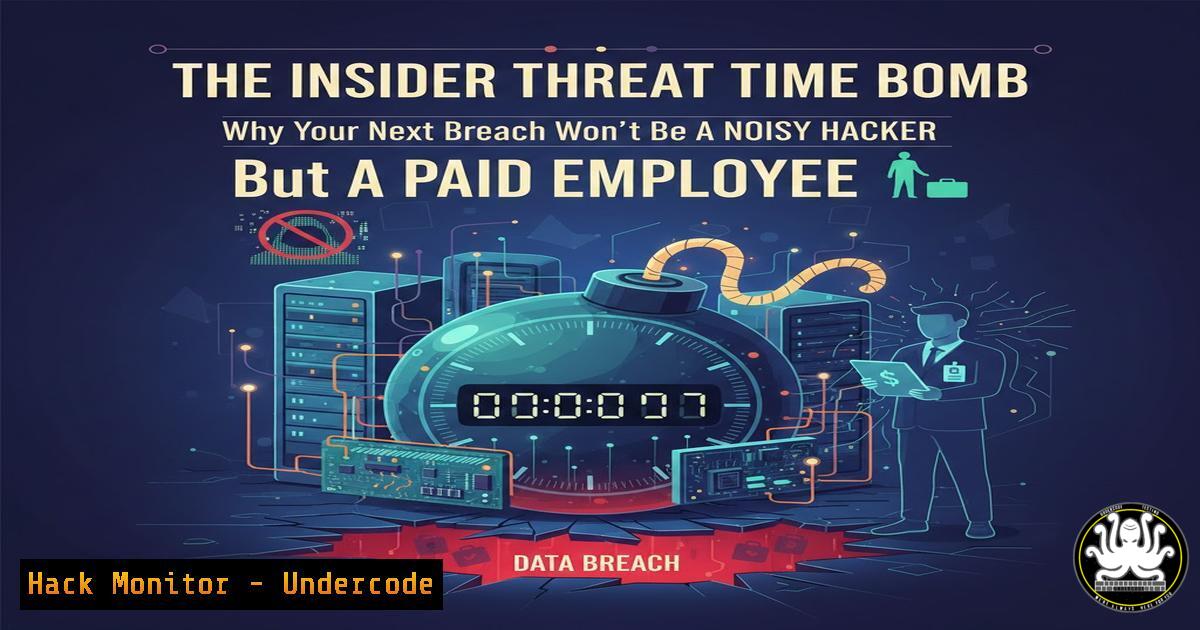
The recent allegations that CrowdStrike staff were paid by a hacking group to expose internal information have sent shockwaves through the cybersecurity industry. However, this risk is not new; it is a persistent and often underestimated threat known as the insider threat. This article delves into the modern strategies and technical controls organizations must implement to detect and mitigate malicious internal activities before they lead to a catastrophic breach.
Learning Objectives:
- Understand the technical mechanisms for monitoring user and entity behavior to detect anomalies.
- Learn how to implement robust audit logging and analysis across key IT systems.
- Develop a strategy for enforcing the principle of least privilege to limit potential damage.
You Should Know:
1. Implementing User and Entity Behavior Analytics (UEBA)
The core modern defense against insider threats is UEBA. Unlike traditional security tools that look for known malicious signatures, UEBA uses machine learning to establish a baseline of normal behavior for every user and system. It then flags significant deviations, such as an employee accessing databases they never use, downloading large volumes of data, or logging in at unusual hours.
Step‑by‑step guide explaining what this does and how to use it.
Step 1: Data Collection: Integrate your UEBA solution with critical data sources. This includes your Identity Provider (e.g., Active Directory, Azure AD), network logs (firewalls, proxies), endpoint detection and response (EDR) systems, and cloud application logs (e.g., Office 365, G Suite, AWS CloudTrail).
Step 2: Baseline Establishment: Allow the UEBA system a “learning period” (typically 2-4 weeks) to observe normal activity patterns without generating major alerts. It will learn typical login times, data access patterns, and network traffic volumes per user and device.
Step 3: Alerting and Investigation: Configure alerts for high-risk anomalies. For example, create an alert for any user who accesses a sensitive file server and then immediately attempts to exfiltrate data to a personal cloud storage service. Investigate these alerts by correlating the UEBA data with endpoint and network forensics.
2. Comprehensive Audit Logging and Monitoring
Without detailed logs, you are blind to internal activities. Ensuring that you are collecting the right logs and actively monitoring them is fundamental to detecting insider threats.
Step‑by‑step guide explaining what this does and how to use it.
Step 1: Enable Centralized Logging: Use a SIEM (Security Information and Event Management) like Splunk, Elastic SIEM, or Microsoft Sentinel to aggregate logs from all systems.
Step 2: Configure Critical Log Sources:
Windows: Enable Command Line Auditing via Group Policy (Computer Configuration > Policies > Administrative Templates > System > Audit Process Creation > Include command line in process creation events). Use PowerShell logging to capture scripts (Transcript and Script Block Logging).
Linux: Configure `auditd` to monitor sensitive files and directories. Example rule to monitor access to the `/etc/passwd` file:
sudo auditctl -w /etc/passwd -p wa -k identity_theft
Cloud: Enable AWS CloudTrail in all regions, Azure Activity Log, and GCP Audit Logs.
Step 3: Create Detections: Build SIEM correlation rules. For instance, a rule to detect potential data theft: (EventID: 4663 - File Access Success) AND (TargetFile: ".csv" OR ".xlsx") AND (AccessMask: 0x100081 - READ_CONTROL, READ_DATA) AND (User NOT IN [Authorized Data Science Team]).
3. Enforcing the Principle of Least Privilege (PoLP)
Insiders can only exploit the access they have. Strictly enforcing PoLP ensures that users, applications, and systems have only the minimum permissions necessary to perform their functions.
Step‑by‑step guide explaining what this does and how to use it.
Step 1: Conduct a Privilege Audit: Use tools like BloodHound for Active Directory or PMapper for AWS to visualize and identify excessive permissions and dangerous attack paths.
Step 2: Implement Just-Enough-Access (JEA): For administrative tasks, move away from persistent admin accounts. Use Privileged Access Management (PAM) solutions that require checkout and monitoring of privileged credentials. For Azure, use Privileged Identity Management (PIM) to make roles time-bound and require justification for activation.
Step 3: Apply File System Permissions: On critical file servers, use Access-Based Enumeration (ABE) so users only see files and folders they have access to. Regularly review and clean up Active Directory group memberships.
4. Data Loss Prevention (DLP) Strategies
A paid insider’s goal is often data exfiltration. DLP tools are designed to monitor and control data in motion, at rest, and in use.
Step‑by‑step guide explaining what this does and how to use it.
Step 1: Classify Your Data: Use automated tools in Microsoft 365 or third-party classifiers to discover and tag sensitive data (PII, Intellectual Property, Financials).
Step 2: Create DLP Policies: Configure policies to block or flag actions. For example, create a policy in Microsoft Purview that prevents files labeled “Confidential” from being emailed to external addresses or uploaded to unauthorized cloud storage providers.
Step 3: Monitor Endpoint DLP: Deploy endpoint DLP agents to control actions on managed devices, such as blocking the copying of sensitive data to USB drives.
5. Proactive Threat Hunting for Insider Activity
Don’t wait for alerts. Proactively hunt for evidence of malicious insider activity using hypothesis-driven investigations.
Step‑by‑step guide explaining what this does and how to use it.
Step 1: Formulate a Hypothesis: Start with a scenario, e.g., “An employee is preparing to leave the company and is stealing customer lists.”
Step 2: Query Your Data: In your SIEM, craft queries to find evidence. Look for patterns like:
Large data transfers to personal cloud storage (e.g., destination_domain CONTAINS "dropbox.com" AND bytes_sent > 100000000).
Unusual printing volumes of sensitive documents outside business hours.
Access to a wide range of network shares in a short period that the user doesn’t normally access.
Step 3: Triage and Investigate: Correlate the findings from your hunt with HR data (e.g., employees who have given notice) and other contextual information to prioritize the investigation.
What Undercode Say:
- The Insider Threat is a Constant, Not a Variable. The motivation for insiders—financial gain, espionage, disgruntlement—has existed for decades and will not disappear. Modern technology has only changed the methods of detection and execution, not the fundamental nature of the risk.
- Visibility is Your Primary Weapon. The central theme of all these mitigations is gaining deep, correlated visibility into user, system, and data activity. You cannot defend against what you cannot see. Investing in a robust logging, SIEM, and UEBA architecture is non-negotiable for a mature security program.
The CrowdStrike incident serves as a stark reminder that the human element remains the most unpredictable and potentially damaging attack vector. While the industry often focuses on external threats, sophisticated adversaries have long recognized that bribing an insider is often cheaper, quieter, and more effective than launching a complex technical attack. The key differentiator for resilient organizations will not be their firewall rules, but their ability to maintain a state of continuous, intelligent monitoring over their own internal environment, trusting no single user or system implicitly.
Prediction:
The future of the insider threat will be shaped by AI on both sides. Attackers will use AI to identify potential insider recruits by analyzing social media and professional networks for disgruntled or financially vulnerable employees. Conversely, defensive AI in UEBA and DLP will become exponentially better at identifying subtle, low-and-slow data exfiltration attempts that would be invisible to human analysts. We will see a shift towards “Zero-Trust for People,” where continuous behavioral authentication and micro-segmentation of user access become standard, making it significantly harder for a malicious insider to operate without triggering a high-fidelity alert.
🎯Let’s Practice For Free:
IT/Security Reporter URL:
Reported By: Theonejvo Yes – Hackers Feeds
Extra Hub: Undercode MoN
Basic Verification: Pass ✅


