
Listen to this Post
Introduction:
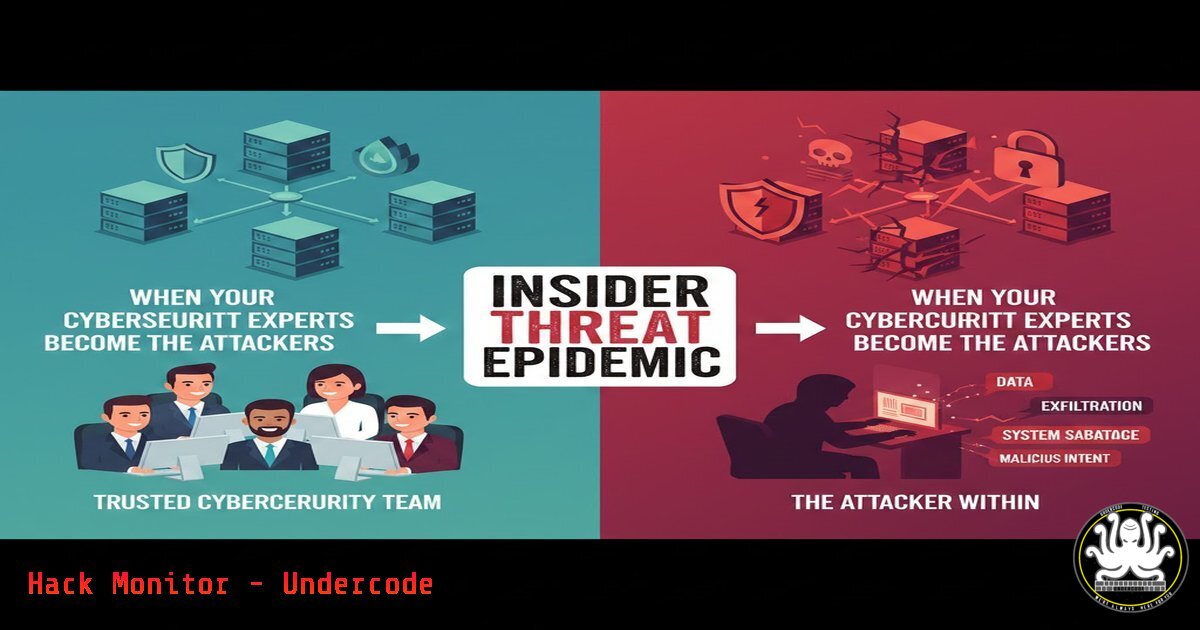
In a shocking case that blurs the lines between defender and attacker, two established US cybersecurity professionals have pleaded guilty to conspiring with a notorious ransomware gang. This incident exposes a critical, often underestimated vulnerability: the insider threat from highly credentialed individuals. As organizations invest millions in perimeter defenses, this case proves that technical expertise without ethical integrity can become the most potent weapon in a criminal arsenal.
Learning Objectives:
- Understand the technical and behavioral red flags of a malicious insider.
- Learn key forensic commands to detect unauthorized access and data exfiltration.
- Implement layered controls to mitigate risks posed by privileged users.
You Should Know:
1. Profiling the Malicious Insider: Beyond Credentials
The case of Goldberg and Martin underscores that certifications and job titles are not indicators of trust. A malicious insider with security knowledge will bypass common alerts and abuse legitimate tools.
Step-by-step guide:
Behavioral Analysis: Monitor for unusual activity patterns. Use SIEM queries to flag after-hours access to critical systems, abnormal volume of data downloads, or access to unrelated business units.
Example Splunk Query: `index=windows EventCode=4624 LogonType=3 user= | stats count, values(ComputerName) by user | where count > threshold`
Privileged Access Management (PAM): Enforce Just-In-Time and Just-Enough-Access principles. No user, especially in security roles, should have persistent admin access to all systems.
Segmentation of Duties: Separate the roles of threat hunter, incident responder, and system administrator. The individuals who monitor logs should not have unlimited rights to delete them.
2. Forensic Triage: Hunting for the Insider’s Footprints
When suspicion arises, targeted forensic analysis is crucial. Insiders often use privileged access to cover tracks, but artifacts remain.
Step-by-step guide for Windows:
Audit Log Analysis: Ensure process creation and PowerShell logging are enabled (Event IDs 4688, 4104). Search for execution of hacking tools (e.g., Mimikatz, CrackMapExec) or legitimate tools used maliciously (e.g., PsExec, living-off-the-land binaries).
Command: `Get-WinEvent -FilterHashtable @{LogName=’Security’; ID=4688} | Where-Object {$_.Properties[bash].Value -like “psexesvc”} | Select-Object TimeCreated, Message`
Prefetch & Shimcache Analysis: Review prefetch files for evidence of executed applications, even if deleted.
Command (Using KAPE): `kape.exe –tsource C: –tdest D:\Evidence\ –target Prefetch`
Network Connections: Review established connections from admin workstations to unexpected external IPs.
Command: `netstat -ano | findstr ESTABLISHED`
Step-by-step guide for Linux:
Auditd Configuration: Ensure auditd is configured to monitor key files and sudo commands.
Rule to log /etc/shadow access: `-w /etc/shadow -p wa -k shadow_access`
View logs: `ausearch -k shadow_access | aureport -f -i`
Bash History Examination: Check for suspicious commands in user history files, but note they can be cleared.
Command: `cat ~/.bash_history | grep -E “(wget|curl|nc|nmap|ssh.@|chmod 777)”`
3. Hardening Monitoring & Anomaly Detection
Assume your monitoring infrastructure itself is a target. Protect logs and implement anomaly detection on admin behavior.
Step-by-step guide:
Immutable Logging: Configure syslog or Windows Event Forwarding to send logs in real-time to a hardened, write-only SIEM or separate log server where admin users have no delete permissions.
UEBA Implementation: Deploy User and Entity Behavior Analytics (UEBA). Train models on baseline behavior for privileged users (login times, typical commands, data access volume). Alert on significant deviations.
Command & Control (C2) Detection: Use network monitoring (Zeek/Suricata) to detect beaconing to known-bad IPs or domains, even from trusted subnets.
Sample Suricata Rule: `alert ip $INTERNAL_NETS any -> $EXTERNAL_NETS any (msg:”Possible C2 Beacon from Internal IP”; flow:established; detection_filter:track by_src, count 50, seconds 300; sid:1000001;)`
4. Secure Credential Hygiene and Session Monitoring
The convicted experts likely had or could easily obtain powerful credentials. Protecting these is paramount.
Step-by-step guide:
Credential Guard & LAPS: On Windows, enable Credential Guard for virtualization-based security. Use the Local Administrator Password Solution (LAPS) to manage unique, rotating local admin passwords.
Privileged Session Recording: For critical infrastructure (e.g., domain controllers, firewalls), mandate that all SSH or RDP sessions by admins are fully recorded and reviewed.
Linux (using tlog & SSSD): Configure `sssd.conf` to use `pam_tlog` for session recording.
Multi-Factor Authentication (MFA) Enforcement: MFA for all administrative access, including console/login and privileged interfaces. Use hardware tokens (FIDO2) where possible, as they are more resistant to phishing than SMS/OTP.
5. Ransomware-Specific Mitigations & Response
These insiders aided a ransomware gang. Strengthen defenses against the threat they facilitated.
Step-by-step guide:
Immutable Backups: Implement the 3-2-1-1 rule: 3 copies, 2 media types, 1 off-site, 1 immutable (e.g., object storage with WORM compliance). Test restoration quarterly.
Application Allowlisting: Use tools like AppLocker (Windows) or an application allowlisting solution to prevent execution of ransomware binaries in user directories like `%APPDATA%` or /tmp/.
AppLocker PowerShell Policy: `New-AppLockerPolicy -RuleType Publisher, Path -User Everyone -Execute -XML > baseline.xml`
Network Segmentation: Isolate critical assets (AD servers, backup repositories). Use firewall rules to block SMB (445) and RDP (3389) traffic from user workstations to all but a few necessary jump hosts.
What Undercode Say:
- The Highest Privilege is Trust. The most dangerous vulnerability in any organization is the trusted individual who decides to exploit their access. Technical controls must be designed with this betrayal in mind.
- Ethics is a Non-Negotiable Core Competency. The cybersecurity industry must elevate ethical training and psychological vetting to the same level as technical certification. Integrity cannot be an afterthought.
This case is not an anomaly but a harbinger. As the value of data and the pressure of extortion increase, so will the temptation for skilled professionals to cross the line. The future of cybersecurity defense requires a paradigm shift from “trust but verify” to “zero-trust and continuously validate.” Organizations will increasingly deploy invasive monitoring on their own security teams, a dystopian but necessary step. Furthermore, we will see a rise in insurance and compliance mandates for rigorous insider threat programs, including periodic forensic audits of privileged user activity. The era of blind trust in credentials is over.
▶️ Related Video (86% Match):
🎯Let’s Practice For Free:
IT/Security Reporter URL:
Reported By: Michael Tchuindjang – Hackers Feeds
Extra Hub: Undercode MoN
Basic Verification: Pass ✅


