Listen to this Post
Introduction:
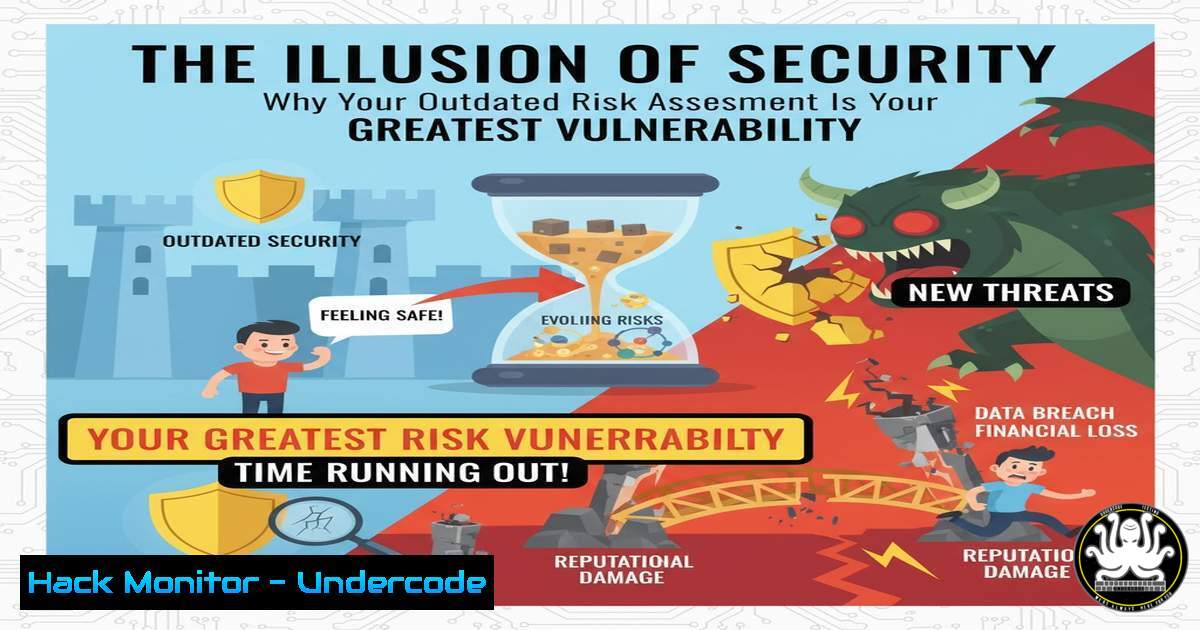
In the digital age, an outdated risk assessment provides a dangerous false sense of security, akin to displaying a masterpiece without a guard. As threat landscapes evolve with increasing speed, static defenses become obsolete, leaving critical assets like customer data and intellectual property exposed. Proactive measures, including regular penetration testing and architectural reviews, are no longer optional but fundamental to modern cyber resilience.
Learning Objectives:
- Understand the critical components of a dynamic risk assessment process.
- Learn practical commands and techniques for initial security reconnaissance and vulnerability scanning.
- Implement hardening measures across Windows, Linux, and cloud configurations to mitigate identified risks.
You Should Know:
1. Network Reconnaissance with Nmap
Verifying what services are exposed to the network is the first step in understanding your attack surface.
 Basic TCP SYN scan on a target range
nmap -sS -sV -O 192.168.1.0/24

Script scanning for common vulnerabilities
nmap --script vuln target_ip

Scan for specific ports (Web, DNS, SMB)
nmap -p 80,443,53,135,139,445 -sV target_ip
Step-by-step guide:
The `-sS` flag initiates a SYN scan, which is stealthy as it doesn’t complete the TCP handshake. `-sV` probes open ports to determine service and version information, while `-O` enables OS detection. Running these scans against your own network perimeter from an external perspective mimics an attacker’s first steps, revealing unnecessary exposures.
2. Vulnerability Assessment with Nessus
Automated vulnerability scanners provide a comprehensive view of known security weaknesses.
 Starting the Nessus service (Linux)
sudo systemctl start nessusd

Access via browser: https://localhost:8834
Step-by-step guide:
After installing and starting the Nessus service, log into the web interface. Create a new “Basic Network Scan” policy. Configure the scan to target your internal network ranges. The scanner will systematically probe for thousands of known vulnerabilities, misconfigurations, and missing patches, generating a detailed report prioritized by severity.
3. Windows Security Hardening
Lock down Windows endpoints by auditing and configuring local security policy.
 Check current password policy
Get-LocalUser | Select Name, PasswordLastSet, PasswordNeverExpires

Enable Windows Defender Firewall for all profiles
Set-NetFirewallProfile -Profile Domain,Public,Private -Enabled True

Disable SMBv1 (a legacy, vulnerable protocol)
Disable-WindowsOptionalFeature -Online -FeatureName SMB1Protocol
Step-by-step guide:
These PowerShell commands are part of a foundational hardening process. Checking password policies ensures compliance with complexity and expiration rules. Enforcing the host-based firewall restricts unauthorized network traffic, while disabling SMBv1 mitigates against exploits like WannaCry.
4. Linux System Hardening
Secure a Linux server by minimizing its attack surface and applying the principle of least privilege.
 Check for unnecessary open ports
ss -tuln

Check for files with SUID/SGID bits set (potential privilege escalation)
find / -perm /6000 -type f 2>/dev/null

Verify that only root has UID 0 (ensuring no duplicate root accounts)
awk -F: '($3 == "0") {print}' /etc/passwd

Update the system and remove unused packages
sudo apt update && sudo apt upgrade -y
sudo apt autoremove
Step-by-step guide:
The `ss` command replaces `netstat` for viewing active connections and listening ports. The `find` command locates special permission files that could be exploited. Regularly updating the system is the single most effective step to patch known vulnerabilities.
5. Web Application Security Scanning
Web applications are common attack vectors and must be tested for OWASP Top 10 vulnerabilities.
 Using Nikto for web server scanning
nikto -h http://target_website.com

Simple directory brute-forcing with Gobuster
gobuster dir -u http://target_website.com -w /usr/share/wordlists/dirb/common.txt
Step-by-step guide:
Nikto is a comprehensive scanner that checks for outdated server software, dangerous files, and common misconfigurations. Gobuster uses a wordlist to discover hidden directories and files that may not be linked from the main site, such as admin panels or backup files.
6. Cloud Infrastructure Hardening (AWS S3)
Misconfigured cloud storage is a leading cause of data breaches.
 Check an S3 bucket for public read/write permissions using AWS CLI
aws s3api get-bucket-acl --bucket my-bucket-name
aws s3api get-bucket-policy --bucket my-bucket-name

Command to block all public access to a bucket
aws s3api put-public-access-block --bucket my-bucket-name --public-access-block-configuration BlockPublicAcls=true,IgnorePublicAcls=true,BlockPublicPolicy=true,RestrictPublicBuckets=true
Step-by-step guide:
The first commands audit the current access controls on an S3 bucket. The `put-public-access-block` command is a critical safeguard that enforces a strict no-public-access policy, preventing accidental exposure of sensitive data, a common failure in risk assessments.
7. API Security Testing
Modern applications rely heavily on APIs, which require specific security testing.
 Using curl to test for common API security issues
 Test for insecure HTTP methods
curl -X OPTIONS -i http://api.target.com/v1/users

Test for missing authentication on an endpoint
curl http://api.target.com/v1/admin/users

Test for mass assignment vulnerability
curl -X POST -H "Content-Type: application/json" -d '{"username":"user","role":"admin"}' http://api.target.com/v1/users
Step-by-step guide:
These `curl` commands probe an API for weak configurations. Testing for OPTIONS reveals available methods. Accessing an admin endpoint without credentials checks for broken authentication. The last command attempts to set a privileged `role` field, testing for mass assignment flaws where users can override sensitive properties.
What Undercode Say:
- An outdated risk assessment is not a neutral state; it is an active liability that creates a measurable security debt.
- The most significant threats often arise not from sophisticated zero-days, but from the accumulation of unaddressed, known vulnerabilities and misconfigurations.
The analogy of the Louvre is strikingly accurate. A static defense is a museum piece—observed, studied, and ultimately circumvented by a determined adversary. The comments on the original post highlight the core issue: the pervasive myths of “I’m not a target” and “my antivirus is enough.” These are not just misconceptions; they are the very foundations upon which successful breaches are built. The provided GitHub repository, Aif4thah/Dojo-101, underscores the necessity of continuous learning and access to an offline knowledge base, ensuring that security practices are not reliant on a potentially compromised network. The move from a periodic, compliance-driven check-box exercise to a continuous, integrated, and intelligence-driven risk management process is the only viable path forward.
Prediction:
The failure to adopt dynamic, continuous risk assessment and penetration testing will be the primary causal factor in the next wave of major data breaches, particularly for SMEs. As AI-powered offensive security tools become more accessible, the attack surface will expand exponentially, allowing less-skilled threat actors to exploit the gap left by stagnant security postures. Organizations that treat their risk assessment as a living document, updated in near real-time with threat intelligence and automated scanning data, will create a defensive agility that can adapt to emerging threats, while those that do not will face irreversible reputational and financial damage.
🎯Let’s Practice For Free:
IT/Security Reporter URL:
Reported By: Mvacarella Pentest – Hackers Feeds
Extra Hub: Undercode MoN
Basic Verification: Pass ✅


