
Listen to this Post
Introduction:
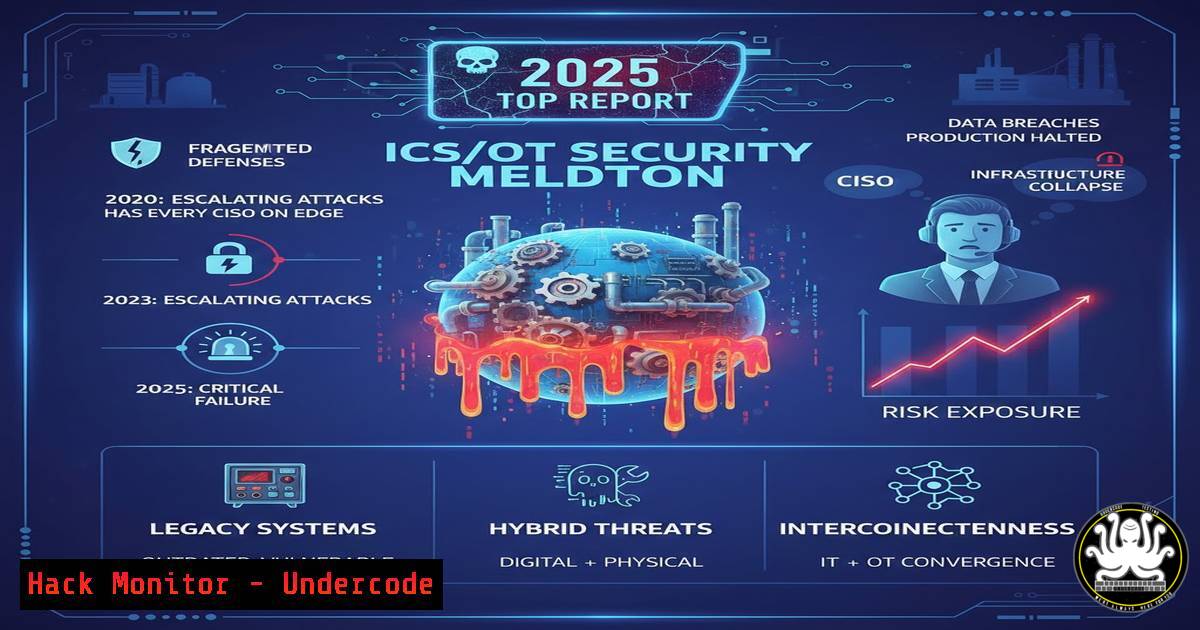
The operational technology (OT) environments running our critical infrastructure are under siege, with new data revealing an alarming persistence of disruptive cyber incidents. The SANS Institute’s “State of ICS/OT Security 2025” report uncovers a stark reality where recovery capabilities are failing to keep pace with detection improvements, leaving organizations vulnerable to extended operational downtime and significant safety impacts.
Learning Objectives:
- Understand the primary attack vectors and security gaps plaguing modern ICS/OT environments
- Implement practical technical controls to harden remote access points and network segmentation
- Develop incident response procedures specifically tailored for OT infrastructure recovery
You Should Know:
1. Harden Your Remote Access Gateways Immediately
The SANS report reveals that unauthorized external access accounted for 50% of all incidents, making remote access the single biggest vulnerability in OT environments. Many organizations still rely on basic VPN solutions without OT-specific security layers.
Step-by-step guide explaining what this does and how to use it:
First, implement application-aware access controls instead of traditional network-level VPNs. Configure a jump host architecture with multi-factor authentication:
 On your bastion host, restrict SSH access to specific user groups
sudo nano /etc/ssh/sshd_config
 Add these critical restrictions:
AllowGroups ot_engineers
PermitRootLogin no
PasswordAuthentication no
AuthenticationMethods publickey,keyboard-interactive
AllowTcpForwarding no
PermitTunnel no
For Windows-based access points, implement these PowerShell commands to audit and restrict RDP access:
 Check current RDP security settings
Get-ItemProperty -Path 'HKLM:\System\CurrentControlSet\Control\Terminal Server' -Name 'fDenyTSConnections'

Enable Network Level Authentication (required)
Set-ItemProperty -Path 'HKLM:\System\CurrentControlSet\Control\Terminal Server' -Name 'UserAuthentication' -Value 1

Restrict RDP access to specific security groups
Set-ItemProperty -Path 'HKLM:\System\CurrentControlSet\Control\Terminal Server' -Name 'TSUserEnabled' -Value 0
2. Implement Micro-Segmentation in OT Networks
Traditional IT segmentation strategies often fail in OT environments where legacy protocols and availability requirements create unique challenges. Organizations with proper segmentation experienced 50% fewer financial losses according to the SANS data.
Step-by-step guide explaining what this does and how to use it:
Start by mapping your OT communication flows using passive monitoring, then implement layer 7 firewall rules that understand industrial protocols:
 Using iptables to create OT-specific segmentation rules
 Allow only MODBUS TCP from engineering workstations to PLCs
iptables -A FORWARD -p tcp --dport 502 -s 192.168.1.0/24 -d 192.168.10.0/24 -j ACCEPT
iptables -A FORWARD -p tcp --dport 502 -j DROP

Block cross-zone traffic between different process control networks
iptables -I FORWARD -i eth1 -o eth2 -j DROP
iptables -I FORWARD -i eth2 -o eth1 -j DROP
For modern industrial firewalls, configure Deep Packet Inspection (DPI) for OT protocols:
 Example configuration for Siemens S7 communication filtering
rule name "Allow_S7_ReadOnly"
source zone "ENGINEERING"
destination zone "CONTROL"
service "S7"
application "S7_READ"
action permit
3. Deploy ICS-Specific Threat Intelligence Feeds
The report highlights that organizations leveraging ICS-specific threat intelligence were significantly more effective at adjusting defensive priorities and detection capabilities.
Step-by-step guide explaining what this does and how to use it:
Integrate OT threat intelligence into your SIEM and network monitoring tools. Create custom signatures based on known ICS malware patterns:
 Example Python script to check for known malicious ICS commands
def detect_malicious_modbus(command_code):
malicious_codes = [0x5A, 0x5B, 0x5C]  Known malicious function codes
if command_code in malicious_codes:
alert_security_team(f"Suspicious MODBUS command detected: {hex(command_code)}")
return True
return False

YARA rule for detecting ICS malware families
rule TRITON_Malware {
meta:
description = "Detects TRITON/TRISIS malware indicators"
strings:
$s1 = "TriconexSrv.exe" nocase
$s2 = { 53 51 52 56 48 83 EC 28 33 F6 }
condition:
any of them
}
4. Develop OT-Centric Incident Response Playbooks
With nearly 20% of incidents taking over a month to remediate, having specialized response procedures for OT environments is critical. Organizations that included frontline technicians in exercises were 1.7 times more likely to report strong readiness.
Step-by-step guide explaining what this does and how to use it:
Create incident response scenarios that address OT-specific constraints, such as the inability to immediately patch systems or take critical processes offline:
 Emergency network isolation script for compromised OT segments
!/bin/bash
 Isolate compromised PLC subnet without affecting entire operation
iptables -I FORWARD -s 192.168.20.0/24 -j DROP
iptables -I FORWARD -d 192.168.20.0/24 -j DROP

Allow only essential engineering access during incident
iptables -I FORWARD -s 10.1.1.50 -d 192.168.20.100 --dport 502 -j ACCEPT
5. Implement Continuous OT Asset Inventory Management
Unknown and unmanaged assets remain a significant blind spot in OT security. Automated asset discovery must be performed carefully to avoid disrupting sensitive equipment.
Step-by-step guide explaining what this does and how to use it:
Use passive monitoring techniques to build and maintain your OT asset inventory without impacting operations:
 Passive fingerprinting for OT devices using Scapy
from scapy.all import

def ot_device_fingerprint(pkt):
if pkt.haslayer(TCP):
 Analyze timing and banner patterns for OT devices
if pkt[bash].dport in [502, 44818, 47808]:  Common OT ports
analyze_ot_characteristics(pkt)

Monitor for industrial protocol communications
sniff(prn=ot_device_fingerprint, filter="tcp port 502 or tcp port 44818", store=0)
What Undercode Say:
- The regulatory compliance gap is creating a two-tier security landscape where compliant organizations experience significantly fewer financial and safety impacts
- Frontline technician involvement in security exercises provides the highest readiness ROI, yet remains underutilized
- The convergence of IT and OT security requires specialized knowledge that blends traditional cybersecurity with operational continuity priorities
The SANS data reveals a troubling maturity gap where basic security controls remain partially implemented despite growing threats. Organizations are improving at detection but failing at recovery, suggesting incident response capabilities haven’t evolved at the same pace as threat detection. The 50% reduction in financial impact for regulated entities demonstrates that mandatory frameworks drive tangible security outcomes, making the case for expanded ICS security regulations.
Prediction:
The increasing connectivity of critical infrastructure combined with geopolitical tensions will drive a 300% increase in state-sponsored OT attacks by 2027. We’ll see the first successful cyber-physical attack causing regional infrastructure failure within two years, prompting dramatic regulatory expansion. Organizations that haven’t implemented advanced remote access controls and segmentation will face existential threats, while those leveraging ICS-specific threat intelligence and including frontline staff in security planning will emerge as resilient industry leaders.
🎯Let’s Practice For Free:
IT/Security Reporter URL:
Reported By: Mthomasson Out – Hackers Feeds
Extra Hub: Undercode MoN
Basic Verification: Pass ✅


