Listen to this Post
Introduction:
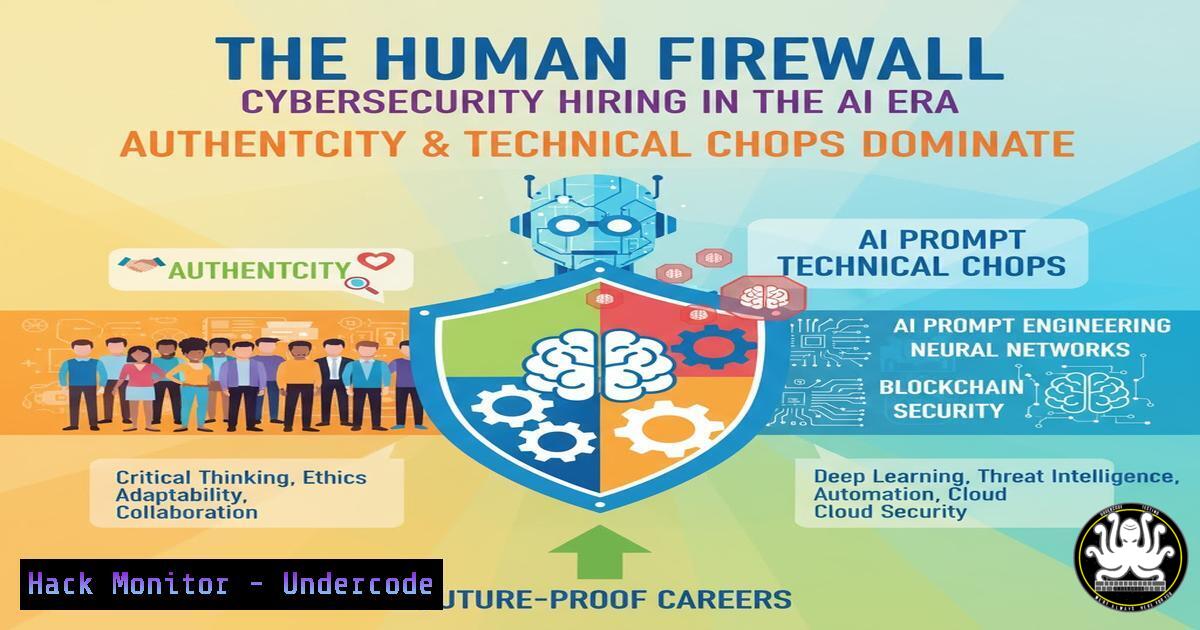
The cybersecurity landscape is undergoing a seismic shift, driven by the dual forces of artificial intelligence and a demand for high-quality, novel security engagements. As firms like Galah Cyber outline their growth trajectories, the focus is sharpening on professionals who blend deep technical expertise with genuine human ingenuity. This article deconstructs the core technical competencies and human-centric skills that will be paramount for success in the next generation of application security and penetration testing roles.
Learning Objectives:
- Decipher the technical requirements for next-gen AppSec and penetration testing roles, including AI-native security capabilities.
- Master fundamental command-line and tooling techniques for code review, threat modeling, and vulnerability assessment.
- Develop a strategic approach to crafting an authentic, non-AI-generated job application that showcases unique technical value.
You Should Know:
- Penetration Testing in Novel Environments: Videogames & AI Startups
The demand for “novel engagements” like videogames and AI startups moves beyond traditional web application testing. Videogame security involves protecting proprietary engines, preventing cheating, and securing real-time multiplayer infrastructure. AI startups present a unique attack surface, including model poisoning, data exfiltration from training sets, and adversarial machine learning attacks.
Step‑by‑step guide explaining what this does and how to use it.
Step 1: Reconnaissance & Asset Identification. For an AI startup, this means identifying the AI/ML pipeline. Use command-line tools to map the data flow.
`$ find /opt/application -name “.py” | xargs grep -l “TensorFlow\|PyTorch\|sklearn”` (Linux/macOS)
`> Get-ChildItem -Path C:\Projects -Recurse -Include .py | Select-String -Pattern “TensorFlow|PyTorch”` (Windows PowerShell)
This command recursively searches Python files for common ML library imports to locate the core AI components.
Step 2: Assessing the Model Endpoints. Many AI applications expose models via APIs. Test these endpoints for common vulnerabilities like SQLi and input sanitization bypasses that could corrupt the model.
`$ curl -X POST https://api.ai-startup.com/predict -H “Content-Type: application/json” -d ‘{“input”:”“}’`
This tests if the model’s input validation is vulnerable to cross-site scripting (XSS) or other injection attacks, which could be a vector for poisoning.
Step 3: Analyzing Game Network Traffic. For videogames, intercept and analyze traffic between the client and server.
Use tools like Wireshark or a specialized proxy like Burp Suite’s non-HTTP proxy extension.
Look for unencrypted data, predictable session tokens, or unvalidated server-bound commands that could allow for cheating or server takeover.
- The Principal AppSec Engineer’s Toolkit: SDLC, Code Review, and Threat Modeling
A technical AppSec engineer is expected to harden the entire Software Development Lifecycle (SDLC). This involves automating security checks, conducting deep code reviews, and leading threat modeling sessions to “shift left” and embed security from the design phase.
Step‑by‑step guide explaining what this does and how to use it.
Step 1: Integrate Static Application Security Testing (SAST) into the CI/CD pipeline. This automatically scans source code for vulnerabilities before deployment.
Example using a Git hook for pre-commit scanning:
`!/bin/sh`
` .git/hooks/pre-commit`
`semgrep –config=auto .`
`if [ $? -ne 0 ]; then`
`echo “Semgrep SAST scan found vulnerabilities. Commit rejected.”`
`exit 1`
`fi`
This hook uses Semgrep to scan the codebase and prevents committing if issues are found.
Step 2: Conducting a Manual Code Review for Business Logic Flaws. Automation misses context. Manually review critical functions.
Focus on authentication/authorization flows, payment processing, and data export features.
Look for flawed logic, such as: if (user.role == "admin" || user.id == post.authorId) { deletePost(); }. This might allow a user to delete any post by spoofing the authorId.
Step 3: Facilitate a STRIDE Threat Modeling Session. Use the STRIDE model to systematically identify threats.
Spoofing: Can an attacker impersonate a user?
Tampering: Can data be altered in transit or at rest?
Repudiation: Can a user deny performing an action?
Information Disclosure: Is sensitive data exposed?
Denial of Service: Can the service be made unavailable?
Elevation of Privilege: Can a user gain admin rights?
Diagram the application data flow and apply STRIDE to each component.
3. Building AI-Native Security Capabilities for Engineering Teams
This goes beyond securing AI; it’s about leveraging AI to enhance security. This involves building automated tools for vulnerability detection, alert triage, and security training that are integrated directly into developer workflows.
Step‑by‑step guide explaining what this does and how to use it.
Step 1: Develop an AI-Powered Secrets Detector. Traditional regex-based scanners have high false-positive rates. Train a simple model to distinguish between real secrets and false positives (e.g., example API keys).
Use a tool like `gitleaks` to generate a dataset of findings.
Manually label findings as “True Positive” or “False Positive”.
Use a Python script with Scikit-learn to train a classifier on features like entropy, context keywords, and string length.
Step 2: Implement an AI-Driven Security Linter. Create custom Semgrep rules that learn from your codebase’s specific patterns to flag insecure code that standard rules miss.
`$ semgrep –generate-config` to start creating a custom rule based on a pattern you’ve found in your code.
4. Cloud Hardening for Modern Startups
Modern engagements, especially with AI startups, are cloud-native. Securing these environments is non-negotiable. This involves configuring Identity and Access Management (IAM), securing storage, and ensuring network isolation.
Step‑by‑step guide explaining what this does and how to use it.
Step 1: Audit IAM Policies for Over-Permissioning. Use cloud provider tools to find users and roles with excessive permissions.
AWS: `$ aws iam simulate-principal-policy –policy-source-arn arn:aws:iam::123456789012:user/JohnDoe –action-names “s3:” “ec2:”`
Azure: `> Get-AzRoleAssignment -SignInName “[email protected]” | Format-List`
These commands help identify the full scope of permissions granted to a specific identity.
Step 2: Ensure All Data at Rest is Encrypted. Mandate encryption on all storage services.
AWS S3: `$ aws s3api put-bucket-encryption –bucket my-bucket –server-side-encryption-configuration ‘{“Rules”: [{“ApplyServerSideEncryptionByDefault”: {“SSEAlgorithm”: “AES256”}}]}’`
5. The Ultimate Mitigation: The Authentic Application
The final and most critical layer of defense in your career strategy is authenticity. As stated, AI-generated applications are an immediate rejection. The “why” is a security mindset: if you outsource your first impression, how can you be trusted with a client’s crown jewels?
Step‑by‑step guide explaining what this does and how to use it.
Step 1: Showcase, Don’t Just Tell. Instead of writing “I know Python,” link to a GitHub repository where you’ve written a tool.
Example: A simple script that parses Nmap output and generates a report.
`!/usr/bin/env python3`
`import xml.etree.ElementTree as ET`
` … code to parse Nmap XML and print a summary of open ports and services …`
Step 2: Perform a “Threat Model” on Your Own Resume. Identify weak points (vague buzzwords, lack of metrics) and strengthen them with concrete examples.
Weak: “Improved system security.”
Strong: “Refactored authentication module, mitigating a broken access control flaw identified during internal testing, which prevented potential unauthorized data access.”
What Undercode Say:
- The future of top-tier cybersecurity consulting is niche specialization combined with T-shaped skills—deep in one area (AppSec, pentesting) but broad enough to understand adjacent domains like AI and cloud.
- The industry is developing a zero-tolerance policy for AI-generated fluff, viewing it as a proxy for a lack of original thought, passion, and diligence—the very attributes needed to outsmart determined adversaries.
The post from Galah Cyber isn’t just a hiring notice; it’s a market signal. It highlights a maturation in the cybersecurity industry where quality and specialization are trumping sheer volume. The emphasis on “novel engagements” and “AI-native” capabilities shows that the attack surface is evolving faster than traditional security paradigms can keep up with. Consequently, professionals must be equally dynamic, focusing on continuous, hands-on learning. The explicit ban on AI-written applications is the most telling detail—it’s a canary in the coal mine for a broader industry pushback against automation where human judgment is critical. Firms are not just hiring for skills; they are hiring for trust, curiosity, and the unique problem-solving lens that only a human can provide.
Prediction:
The explicit rejection of AI-generated job applications by forward-thinking firms like Galah Cyber will become a standard hiring practice across the cybersecurity industry within two years. This will force a “Great Authenticity Filter,” creating a clear divide between candidates who rely on automated crutches and those who cultivate genuine expertise. Concurrently, the demand for professionals skilled in securing AI systems and novel technologies like videogame platforms will outpace the generalist application security market, leading to significant salary premiums and specialized consulting firms dedicated exclusively to these verticals. The cybersecurity hiring landscape of 2025 will be defined by deep technical specialization and unwavering human authenticity.
🎯Let’s Practice For Free:
IT/Security Reporter URL:
Reported By: Colecornford Hey – Hackers Feeds
Extra Hub: Undercode MoN
Basic Verification: Pass ✅


