Listen to this Post
Introduction:
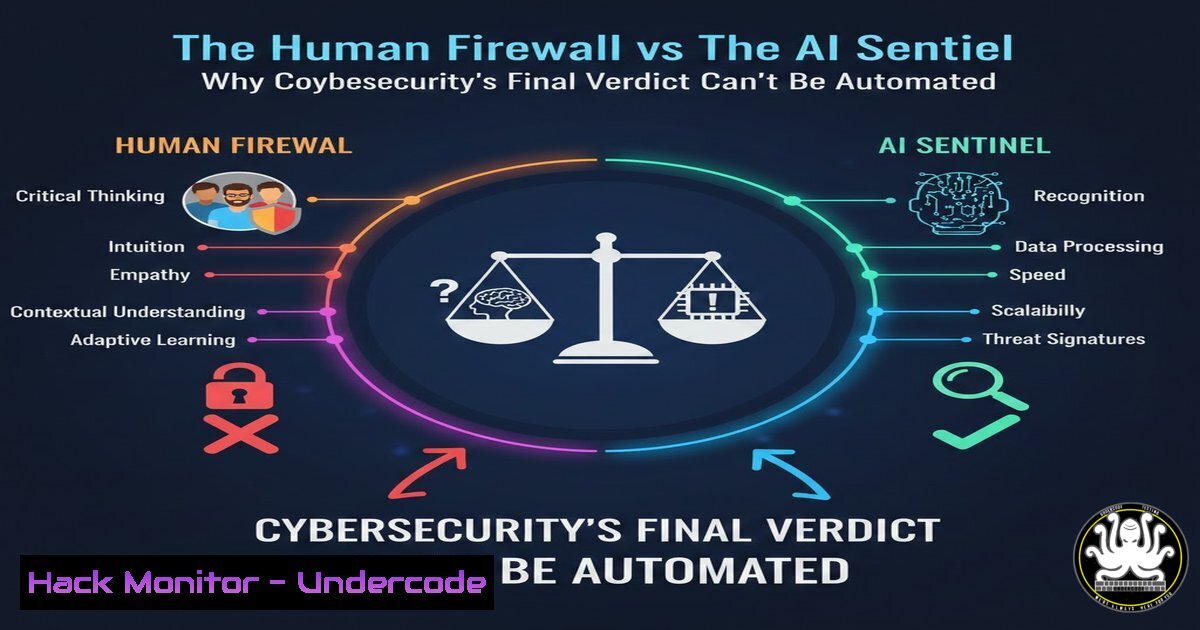
The integration of Artificial Intelligence (AI) into cybersecurity operations promises unprecedented speed in threat detection, compressing response times from hours to milliseconds. However, this raw analytical power hits a critical limit when contextual judgment, ethical considerations, and strategic decision-making are required. This article explores the evolving symbiotic relationship between human expertise and AI automation, outlining a blueprint for building a security operations framework where each plays to its strengths.
Learning Objectives:
- Understand the core capabilities and inherent limitations of AI in threat detection and response automation.
- Learn to configure and interpret AI-driven security tools while establishing critical human oversight checkpoints.
- Implement practical, cross-platform procedures that leverage AI as a force multiplier without ceding ultimate operational control.
You Should Know:
1. Configuring AI-Powered SIEM Alerts: Tuning the Signal
AI-powered Security Information and Event Management (SIEM) systems excel at correlating logs and identifying anomalous patterns. The critical step is tuning these alerts to reduce false positives and ensure humans are alerted to genuinely complex incidents.
Step-by-step guide:
Platform: Generic SIEM (e.g., Splunk ES, Sentinel, Elastic Security).
Action: Create a high-fidelity alert rule for potential credential stuffing.
Process:
- Define the Logic: Instruct the AI engine to flag not just multiple failed logins, but a sequence from distributed IP addresses that then includes a single successful login, all within a 2-minute window.
- Set Thresholds: Use historical baselines. Instead of a static “10 failed attempts,” set a dynamic threshold of “500% above the normal baseline for this user/service.”
- Automated Triage Script (Linux Example): A script can initially enrich the alert.
!/bin/bash Enrich SIEM alert data with geoIP and threat intel lookup SUSPECT_IP="$(get_alert_ip)" Function to extract IP from alert COUNTRY=$(curl -s https://ipapi.co/${SUSPECT_IP}/country_name/) THREAT_SCORE=$(query_threat_feed_api ${SUSPECT_IP}) Custom function echo "[ALERT ENRICHMENT] IP: $SUSPECT_IP, Country: $COUNTRY, Threat Score: $THREAT_SCORE" >> /opt/siem/enrichment.log - Human Gate: Configure the alert to create a high-priority ticket that pauses any automated remediation (like account lockout) for 120 seconds, allowing an analyst to review the enriched data and make the final call.
2. Securing APIs: The AI-Assisted Auditor
APIs are a prime attack vector. AI can model normal API traffic patterns and flag deviations, but human review is essential to distinguish between a malicious exploit and legitimate new application behavior.
Step-by-step guide:
Tool: API Security Gateway or WAAP with AI features (e.g., Gartner’s API Threat Protection).
Action: Implement AI-driven behavioral analysis for an API endpoint.
Process:
- Learning Phase: Place the API gateway in monitoring-only mode for 2 weeks to allow the AI to learn normal traffic patterns (endpoints, payload sizes, parameter sequences, time-of-day access).
- Create Policies: Define AI-based rules. For example: “Flag any request where the `user_id` parameter in `/api/v1/account` is iterated through more than 100 sequential numeric values per session.”
- Automated Response: Configure a graduated response. Initial violations might only be logged. High-confidence attacks can trigger rate-limiting.
- Human Analysis: All flagged “suspicious behavioral anomalies” should generate a case for an API security analyst. They must review the business context—is this a new partner integration or a data scraping bot?
3. Proactive Threat Hunting with AI-Augmented Queries
Threat hunters can use AI to generate and refine complex queries across massive datasets, moving beyond simple Indicators of Compromise (IoCs) to uncover Tactics, Techniques, and Procedures (TTPs).
Step-by-step guide:
Platform: EDR/XDR or advanced SIEM.
Action: Hunt for living-off-the-land (LotL) techniques using PowerShell.
Process:
- Human Hypothesis: A hunter suspects attackers are using trusted Windows processes to bypass application whitelisting.
- AI-Assisted Query Building: Use a natural language prompt in a tool like Microsoft Defender Advanced Hunting: “Find instances where PowerShell spawned by `svchost.exe` made network connections to external IPs not in the corporate allow-list.”
- Execute & Refine: Run the generated KQL (Kusto Query Language). The human refines based on results, perhaps adding time-of-day filters for unusual activity.
- Manual Deep-Dive (Windows Command): For a suspicious host identified, the hunter connects and manually examines process lineage.
Get detailed process creation chain for a suspicious PID
Get-WmiObject Win32_Process -Filter "ProcessId = [bash]" | Select-Object Name, ProcessId, ParentProcessId, CommandLine
Then query the parent
Get-WmiObject Win32_Process -Filter "ProcessId = [bash]" | Select-Object Name, CommandLine
4. The Orchestrator’s Playbook: Conditional Automation
Security Orchestration, Automation, and Response (SOAR) platforms execute playbooks. The key is designing playbooks where AI provides the “if” and humans control the “then.”
Step-by-step guide:
Tool: SOAR Platform (e.g., Palo Alto XSOAR, Splunk SOAR).
Action: Create a playbook for phishing email response.
Process:
- AI & Initial Analysis: Playbook triggers. AI analyzes email headers, attachments (detonates in sandbox), and body content for malicious links.
- Automated Containment: If AI confidence is >95%, playbook automatically quarantines the email from all mailboxes and blocks the URL at the firewall.
- Human Decision Gate: For any AI confidence score between 70%-95%, or if the email appears to target senior executives (“whaling”), the playbook must pause and:
Create an urgent incident ticket.
Post enriched data (sender reputation, link analysis) to the ticket.
Await analyst approval for containment actions. The analyst reviews the sender’s relationship and potential for business impact before proceeding.
- The Irreplaceable Human: Contextual Analysis & Ethical Oversight
This phase involves no code, only critical thinking. It’s the review of AI findings against business context, threat intelligence, and ethical guidelines.
Step-by-step guide:
Scenario: AI flags a data exfiltration attempt by a senior engineer moving 50GB of source code to a personal cloud drive at 2 AM.
Human Process:
- Context Gathering: The analyst doesn’t just look at the logs. They check: Is this person on the critical incident response team? Is there a production outage? Are they authorized for this data?
- Communication: The analyst contacts the engineer’s manager via secure, out-of-band communication to validate the activity before triggering an incident response.
- Strategic Decision: The human decides if this is a:
Policy Violation: Handled by HR.
Insider Threat: Triggers full IR.
Approved Emergency Action: Logged for audit and closed.
4. Feedback Loop: The analyst documents the outcome and provides this “ground truth” back to the AI system to improve its future classification accuracy.
What Undercode Say:
- AI is the Ultimate Pattern-Matching Engine, Not a Mind. It operates on probabilities and historical data. It cannot understand motive, business nuance, or the ethical ramifications of shutting down a critical service during a financial quarter close.
- Human Judgment is the Strategic Control Plane. Humans define the mission, set the rules of engagement for automation, interpret ambiguous signals, and bear ultimate responsibility. The future lies in Augmented Intelligence, where AI handles scale and speed, freeing humans to focus on strategy, deception, and complex adversarial reasoning.
Prediction:
The next five years will see the consolidation of the “Human-Led, AI-Powered” model as a standard. We will witness the rise of “AI Security Handlers” as a specialized role—professionals trained less in writing raw detection code and more in training, tuning, and ethically overseeing AI security systems. Regulatory frameworks will emerge mandating human-in-the-loop for critical security decisions, especially those affecting privacy or public safety. The most resilient organizations will be those that master this symbiosis, creating a continuous feedback loop where human expertise trains the AI, and the AI, in turn, elevates human analysts to tackle more sophisticated and strategic threats.
▶️ Related Video (80% Match):
🎯Let’s Practice For Free:
IT/Security Reporter URL:
Reported By: Mary Kambo – Hackers Feeds
Extra Hub: Undercode MoN
Basic Verification: Pass ✅


