Listen to this Post
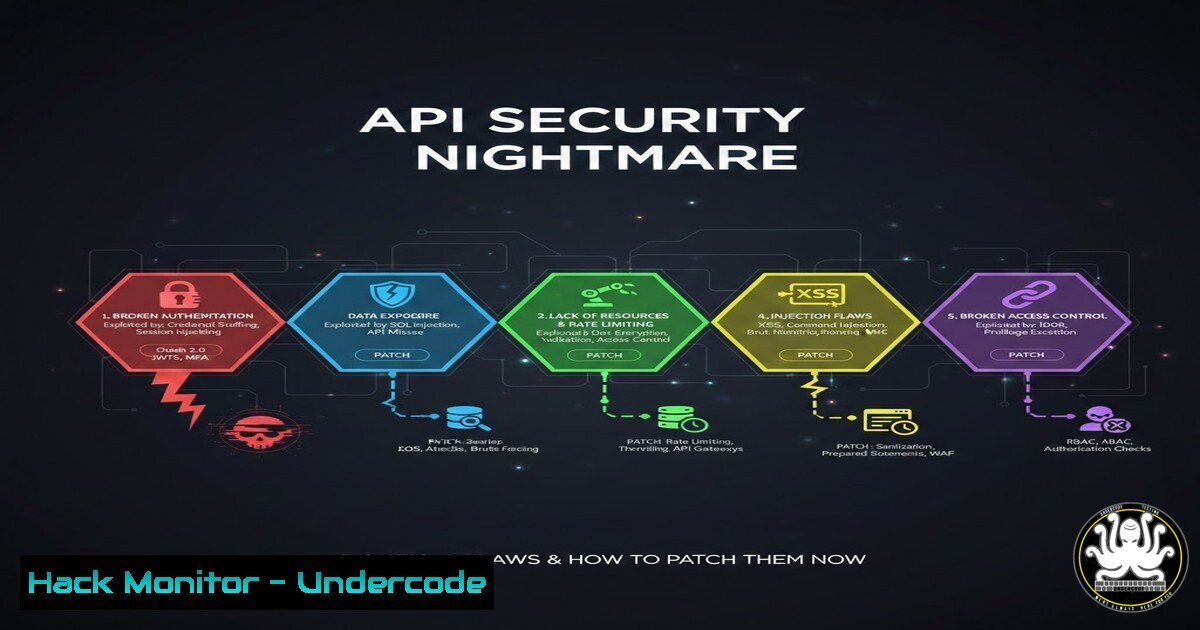
Introduction:
In today’s digital landscape, APIs are the backbone of modern applications, but they are also prime targets for cyberattacks. Understanding common vulnerabilities and implementing robust security measures is crucial for protecting sensitive data and maintaining trust in an interconnected world where AI and cloud services amplify both opportunities and risks.
Learning Objectives:
- Identify and mitigate OWASP API Security Top 10 vulnerabilities through practical configuration and code.
- Implement authentication, authorization, and encryption best practices for APIs across Linux and Windows environments.
- Harden API endpoints in cloud environments like AWS and Azure using built-in tools and automated security protocols.
You Should Know:
- Insecure Direct Object References (IDOR) Exploitation and Mitigation
Step-by-step guide explaining what this does and how to use it.
IDOR vulnerabilities allow attackers to bypass authorization by manipulating object references in API requests, such as user IDs or file paths, leading to unauthorized data access. To exploit, an attacker might use curl to sequentially probe endpoints: `curl -H “Authorization: Bearer” https://api.example.com/user/123` and change the ID to 124. For mitigation, implement server-side checks using indirect reference maps. In a Node.js/Express API, add middleware to validate ownership: app.get('/api/user/:id', authenticate, (req, res) => { if (req.user.id !== parseInt(req.params.id)) { return res.status(403).json({ error: 'Forbidden' }); } // Proceed to fetch user data });On Linux, audit logs with `grep “GET /api/user/” /var/log/api/access.log` to detect suspicious patterns. For training, refer to OWASP’s API Security Top 10 guide at https://owasp.org/www-project-api-security/.
2. Broken Authentication and JWT Token Manipulation
Step-by-step guide explaining what this does and how to use it.
Weak authentication mechanisms enable attackers to steal or forge session tokens, compromising user identities. To test JWT tokens, use Linux tools like `jq` and `base64` to decode tokens: echo "<JWT_TOKEN>" | cut -d '.' -f 2 | base64 -d | jq .. On Windows, use PowerShell: $token='<JWT_TOKEN>'; $payload=$token.Split('.')
; [System.Text.Encoding]::UTF8.GetString([System.Convert]::FromBase64String($payload)) | ConvertFrom-Json</code>. Mitigate by enforcing strong algorithms (e.g., RS256) and short expiration times. In cloud APIs like AWS API Gateway, configure IAM authorizers or use Amazon Cognito for OAuth 2.0 flows. Enable MFA and monitor failed logins with AWS CloudTrail: <code>aws cloudtrail lookup-events --lookup-attributes AttributeKey=EventName,AttributeValue=ConsoleLogin --max-results 10</code>.

<h2 style="color: yellow;">3. Excessive Data Exposure and Response Filtering</h2>

Step-by-step guide explaining what this does and how to use it.
APIs often leak sensitive data by returning full database objects. Attackers intercept these responses to harvest information. To prevent, implement response shaping. In GraphQL APIs, limit query depth and cost. For REST, use libraries like JSON API or custom serializers. In Python/Flask: <code>from flask_restful import fields, marshal; user_fields = {'id': fields.Integer, 'name': fields.String}; return marshal(data, user_fields)</code>. On Linux, use `tcpdump` to capture and analyze traffic: <code>sudo tcpdump -i eth0 port 443 -w api_traffic.pcap</code>. For cloud hardening, in Azure API Management, apply policies to strip sensitive headers: <code><set-header name="X-Internal" exists-action="delete" /></code>. Training resources include SANS SEC540 course at https://www.sans.org/cyber-security-courses/sec540-cloud-security-automation/.

<h2 style="color: yellow;">4. Rate Limiting and DDoS Protection Configuration</h2>

Step-by-step guide explaining what this does and how to use it.
Without rate limits, APIs are vulnerable to brute-force and DDoS attacks. Implement throttling at multiple layers. On Linux with Nginx, edit <code>/etc/nginx/nginx.conf</code>:
[bash]
http {
limit_req_zone $binary_remote_addr zone=api_limit:10m rate=100r/m;
server {
location /api/ {
limit_req zone=api_limit burst=200 nodelay;
proxy_pass http://backend;
}
}
}
Test with ab -n 1000 -c 50 https://api.example.com/endpoint`. On Windows, use IIS Dynamic IP Restrictions or PowerShell to block IPs:New-NetFirewallRule -DisplayName "Block API Abuse" -Direction Inbound -RemoteAddress 192.168.1.100 -Action Block. In AWS, deploy WAF with rate-based rules and monitor with CloudWatch:aws cloudwatch put-metric-alarm --alarm-name "HighRequestRate" --metric-name RequestCount --namespace AWS/ApiGateway --statistic Sum --period 300 --threshold 10000 --comparison-operator GreaterThanThreshold`. For AI-enhanced threat detection, explore AWS GuardDuty or Azure Security Center.
5. Insufficient Logging and Monitoring with ELK Stack
Step-by-step guide explaining what this does and how to use it.
Inadequate logging blinds security teams to breaches. Centralize logs using the ELK Stack (Elasticsearch, Logstash, Kibana). On Linux, install Elasticsearch and Filebeat to ship API logs: sudo filebeat modules enable system nginx. Configure Logstash pipelines to parse JSON logs. For Windows, use Winlogbeat. Example Kibana queries to detect anomalies: response.status:500 AND request.path:/api/login. Integrate with SIEM tools like Splunk or QRadar. In code, ensure structured logging with correlation IDs. In Java Spring Boot, add `logging.level.org.springframework.web=DEBUG` to application.properties. Cloud-native options include AWS CloudTrail and Google Cloud Audit Logs. Training: Elastic's Security Analytics course at https://www.elastic.co/training/.
6. Cloud API Hardening for AWS and Azure
Step-by-step guide explaining what this does and how to use it.
Cloud APIs require configuration beyond default settings to prevent misconfigurations. In AWS, enable encryption at rest for API Gateway using AWS KMS: aws apigateway update-stage --rest-api-id <api-id> --stage-name prod --patch-operations op='replace',path='////encryption',value='KMS'. For Azure, use API Management policies to validate JWT with OpenID Connect: <validate-jwt header-name="Authorization" failed-validation-httpcode="401"> <openid-config url="https://login.microsoftonline.com/tenant/v2.0/.well-known/openid-configuration" /> </validate-jwt>. Implement VPC endpoints for private APIs and use IAM roles least privilege policies. Scan for vulnerabilities with Prowler for AWS: ./prowler -g group1. For AI-driven cloud security, leverage Azure Sentinel or AWS Detective.
7. Automated Security Testing and AI-Powered Tools
Step-by-step guide explaining what this does and how to use it.
Automate API security testing to catch vulnerabilities early. Use OWASP ZAP in CI/CD pipelines: docker run -v $(pwd):/zap/wrk -t owasp/zap2docker-stable zap-api-scan.py -t https://api.example.com/openapi.json -f openapi -r report.html. For dynamic analysis, integrate Burp Suite with Jenkins. AI tools like Contrast Security or Imperva offer runtime protection. Example GitHub Actions workflow for API scanning:
name: API Security Scan
on: [bash]
jobs:
zap_scan:
runs-on: ubuntu-latest
steps:
- uses: actions/checkout@v3
- name: Run ZAP Scan
uses: zaproxy/[email protected]
with:
target: 'https://api.example.com/v3/api-docs'
For training, enroll in courses like "Advanced API Security" on Pluralsight or refer to MITRE ATT&CK framework at https://attack.mitre.org/.
What Undercode Say:
- Key Takeaway 1: API security demands a defense-in-depth strategy, combining secure coding, cloud configuration, and continuous monitoring to address evolving threats.
- Key Takeaway 2: The integration of AI into security tools enhances detection and response but requires skilled professionals to manage false positives and complex environments.
Analysis: The proliferation of APIs in microservices and cloud-native architectures has expanded attack surfaces, making traditional perimeter defenses insufficient. Organizations must adopt a shift-left approach, embedding security into DevOps pipelines. While automated tools powered by machine learning can identify anomalies faster, human expertise remains critical for contextual analysis and incident response. The shared responsibility model in cloud environments means customers must actively configure security settings, as defaults often prioritize functionality over protection. Regular penetration testing and adherence to frameworks like NIST CSF are non-negotiable for resilience.
Prediction:
In the next three to five years, API attacks will become more sophisticated with AI-driven exploitation kits capable of adapting to defenses in real-time. Quantum computing will challenge current encryption standards, accelerating the adoption of post-quantum cryptography for API communications. Regulatory pressures from GDPR, CCPA, and emerging laws will mandate stricter API security audits, driving growth in specialized training and certification programs. Additionally, the rise of IoT and edge computing will see APIs managing critical infrastructure, necessitating zero-trust architectures and automated compliance checks integrated into development workflows.
▶️ Related Video (78% Match):
🎯Let’s Practice For Free:
IT/Security Reporter URL:
Reported By: Mattvillage 30 - Hackers Feeds
Extra Hub: Undercode MoN
Basic Verification: Pass ✅


