Listen to this Post
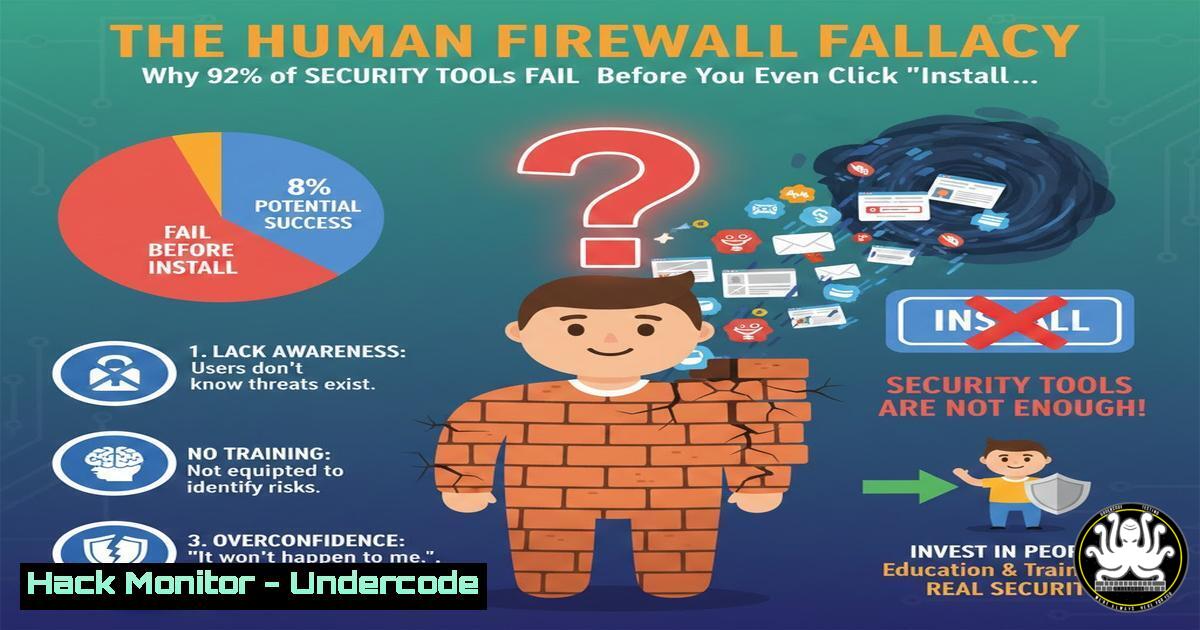
Introduction:
Most cybersecurity programs collapse under the weight of their own technology stacks. This failure stems from a critical inversion of priorities: implementing tools before establishing a human-centric strategy. True security resilience is built not in the SIEM console, but in the boardroom, through a deliberate framework that aligns business objectives with technical controls.
Learning Objectives:
- Understand and implement the Business→Risk→People→Technology strategic framework.
- Translate business objectives into actionable risk registers and security requirements.
- Deploy technical controls that support human processes, not hinder them.
You Should Know:
- Phase 1: Anchor to Business Objectives (The “Why”)
Before writing a single line of firewall policy, you must define what you are protecting and why. Security exists to enable business outcomes, not block them. This phase involves collaborative workshops with business unit leaders to map critical assets, processes, and legal obligations.
Step‑by‑step guide:
Step 1: Conduct Business Impact Analysis (BIA) interviews. Question: “What would cost this company $100,000 per hour if it failed?”
Step 2: Document crown jewel assets. These are rarely just databases; often they are proprietary algorithms, customer trust, or a manufacturing line.
Step 3: Align to frameworks like ISO 27001 Annex A or the NIST CSF’s “Identify” function. Create a simple mapping: Business Goal → Critical Asset → Security Objective.
Command Example (Data Inventory): Use a script to start mapping data locations, but remember the list is guided by business input.
 Linux: Find files containing potential "crown jewel" indicators (e.g., "contract", "proprietary") in /shared drives
find /shared -type f -name ".docx" -o -name ".pdf" | xargs grep -l "proprietary|confidential" 2>/dev/null | head -20
- Phase 2: Quantify & Prioritize Risk (The “What”)
With business objectives defined, you can now identify the risks that threaten them. This moves security from “blocking everything” to “managing what matters most.” Use a consistent risk formula: Risk = Likelihood x Impact. Impact must be measured in business terms (revenue, reputation, fines).
Step‑by‑step guide:
Step 1: Perform threat modeling. Use STRIDE or a simple “Attack Tree” for your top 3 crown jewels.
Step 2: Build a risk register. Use a scaled scoring system (1-5) for likelihood and impact. Prioritize all risks where the product is >10.
Step 3: Present risks in business language. Instead of “SSRF vulnerability,” say “Risk of financial data exfiltration from our payment API, potentially leading to $2M in fraud and regulatory penalties.”
3. Phase 3: Enable Your People (The “Who”)
Technology is defeated by human error; it is also empowered by human vigilance. This phase focuses on creating a security-aware culture and designing processes that are naturally secure. Your employees are not a “human firewall”; they are the business’s first and most intelligent sensor layer.
Step‑by‑step guide:
Step 1: Implement role-based security training. Developers need secure code training, finance needs phishing simulation, the C-suite needs breach response walkthroughs.
Step 2: Simplify secure behaviors. Deploy a password manager enterprise-wide instead of mandating complex password rotations. Use SSO.
Step 3: Establish clear, blame-free reporting channels. Test them. Use a dedicated Slack channel or a simple internal page with a reporting form.
Tool Configuration Example (Phishing Simulation): When using a platform like KnowBe4 or Microsoft Attack Simulation Training, start with educational campaigns before launching simulated phishing. Tag emails with the `X-Phish-Test: Simulation` header to aid IT helpdesk.
4. Phase 4: Implement Defensive Technology (The “How”)
Now, and only now, do you select and configure tools. Each tool must directly map to mitigating a prioritized risk or enabling a secure process for your people. This ensures budget is spent effectively and tools are adopted.
Step‑by‑step guide:
Step 1: Map controls to risks. For the risk “Unauthorized access to customer PII,” technical controls may include: MFA, EDR, and DLP.
Step 2: Harden core infrastructure. Implement configuration baselines.
Windows (Command): Audit a critical setting using PowerShell: `Get-ItemProperty -Path “HKLM:\SOFTWARE\Microsoft\Windows\CurrentVersion\Policies\System” -Name “EnableLUA”` – Ensure value is `1` for User Account Control.
Linux (Command): Check for unnecessary network services: ss -tulpn | grep LISTEN. Audit with sudo lynis audit system.
Step 3: Deploy with change management. Communicate why the new tool is being installed (e.g., “To protect our client data as we promised”).
5. Phase 5: Measure Outcomes, Not Outputs
The final, ongoing phase is to measure success based on the reduction of business risk and the improvement of secure behavior—not on the number of alerts or blocked packets.
Step‑by‑step guide:
Step 1: Define outcome-focused KPIs. Examples: “Mean time to contain (MTTC) a high-risk incident,” “Percentage of employees completing role-based training,” “Reduction in risk score for top 5 business risks.”
Step 2: Automate metric collection where possible.
Example Script Snippet (for MTTC): Query your ticketing system (e.g., Jira API) to calculate time from “High Severity” open to resolved.
 Pseudocode for metric calculation
 tickets = api_query('project=SECURITY AND severity=HIGH AND created >= "2024-01-01"')
 for ticket in tickets:
 mtc = ticket.resolved_date - ticket.created_date
 print(f"Incident {ticket.id}: MTTC = {mtc.days} days")
Step 3: Report to leadership in a one-page dashboard that ties security metrics directly to business risk and objectives discussed in Phase 1.
What Undercode Say:
- Security is a Business Enabler, Not a Tax: The most effective security programs are funded because they are framed as protecting revenue, innovation, and brand trust, not just preventing attacks.
- Process Over Product: A well-trained human following a clear process backed by a simple tool is infinitely more secure than a $1M “AI-powered” platform in the hands of a confused, overworked team.
Analysis: The pervasive failure of “tool-first” security creates a cycle of spending and breach. CISOs who lead with business strategy break this cycle by speaking the language of the board—risk and return. This framework forces alignment, ensuring that every security requirement is traceable to a business need. It turns the CISO from a gatekeeper saying “no” into a strategic partner who enables safe innovation. In an era of AI-driven attacks, this human-centered, risk-based approach is the only scalable defense, as it builds organizational adaptability rather than brittle technical perimeter.
Prediction:
Within the next 3-5 years, we will see a clear market divergence. Companies clinging to the tool-first, compliance-checkbox model will experience increasingly frequent and severe breaches despite higher spending, leading to a loss of competitive advantage. Organizations that adopt this human-strategy-first framework will see their security posture become a market differentiator—enabling faster, safer adoption of AI, cloud, and new business models. The role of the CISO will formally evolve into a Chief Risk & Resilience Officer, sitting at the core of business strategy.
🎯Let’s Practice For Free:
IT/Security Reporter URL:
Reported By: Inga Stirbytecybersecurityleader – Hackers Feeds
Extra Hub: Undercode MoN
Basic Verification: Pass ✅


